
Megève: The French Answer to St. Moritz and the Birthplace of Generations on Skis
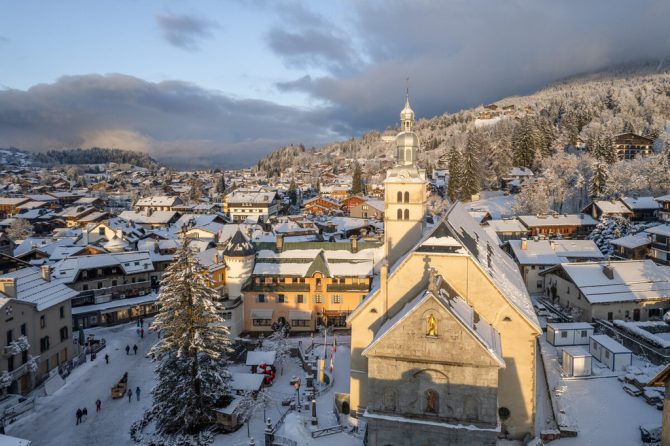

The alpine village and ski resort of Megève has held a pioneering position in the history of French skiing.
Megève, a village tucked into the French Alps in the Savoie region, has long been synonymous with understated luxury and alpine sophistication.
But that association did not happen by chance—it was carefully crafted, born out of wartime rivalry and a desire to redefine winter tourism on French terms.
The story begins in Switzerland.
St. Moritz, seen as the birthplace of winter tourism, took off in 1864 when a hotelier bet British guests they would enjoy the Alps in winter as much as in summer—and won. It soon became a favourite of Europe’s aristocracy.
One of its visitors, however, was not impressed.
Baroness Noémie de Rothschild, a member of the French banking family, visited St. Moritz after World War I and found herself alongside a German industrialist involved in arms production during the war. Europe was still reeling from the war’s divisions, and the encounter unsettled her.
So, she made a decision: if Switzerland had St. Moritz, France needed its own winter destination—with charm, elegance, and above all, a French identity.
That destination would be Megève.
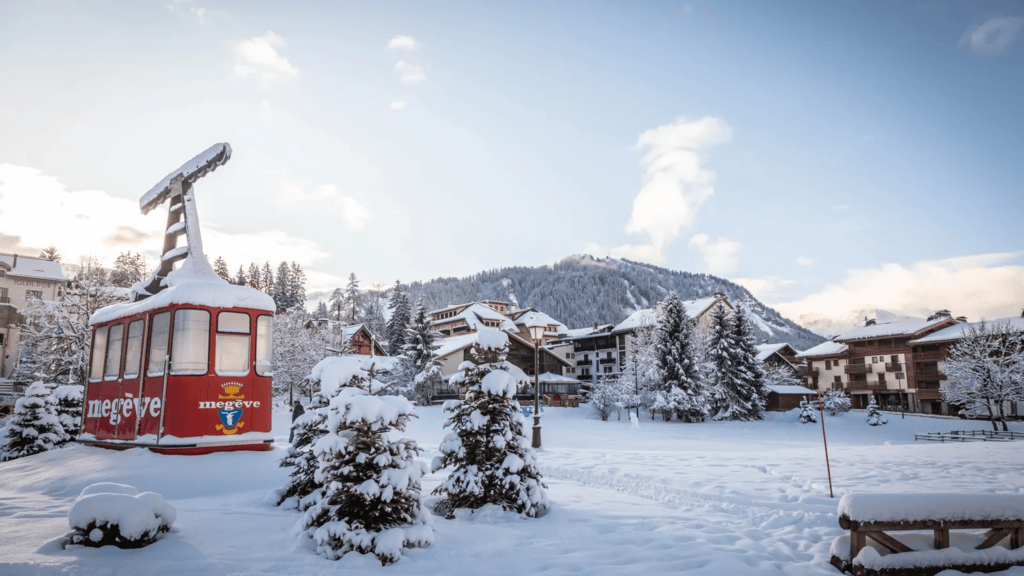
© Megève Tourism Board
In the 19th century, it was a small farming village that drew some visitors seeking “climatic cures,” as the fresh mountain air was believed to help with illnesses like tuberculosis. Still, it remained largely centred on local life.
After visiting, however, Rothschild saw its views of Mont Blanc and traditional architecture as the perfect location for her vision, and in 1921, she created the Domaine du Mont d’Arbois—France’s first purpose-built ski resort.
Promotions from the time described the resort as more than a place to ski—offering a lifestyle rooted in French culture and seasonal rhythm. By mid-century, famous figures like Brigitte Bardot regularly visited Megève, and unlike flashier resorts like Courchevel, Megève built a reputation for blending rustic tradition with quiet elegance.
Then came World War II, and tourism across Europe came to a halt.
But on December 20, 1944, as the war neared its end, a group of local ski instructors in Megève came together with a vision for the future. Among them were Rolland Allard and Louis Seigneur, who set out to revive and organize skiing in the village.
Together, they founded the École du Ski Français (ESF) of Megève—a school committed to skill, safety, and preserving mountain traditions. Just a few years earlier, in 1937, the national ESF had been created to unify ski instruction across France.
Unlike the Austrian Arlberg approach, the standard method which emphasized wide snowplough turns and slow progression, the French method was built for steeper, more unpredictable terrain. Skiers were encouraged to adopt parallel turns earlier, using quick, precise movements for better control.
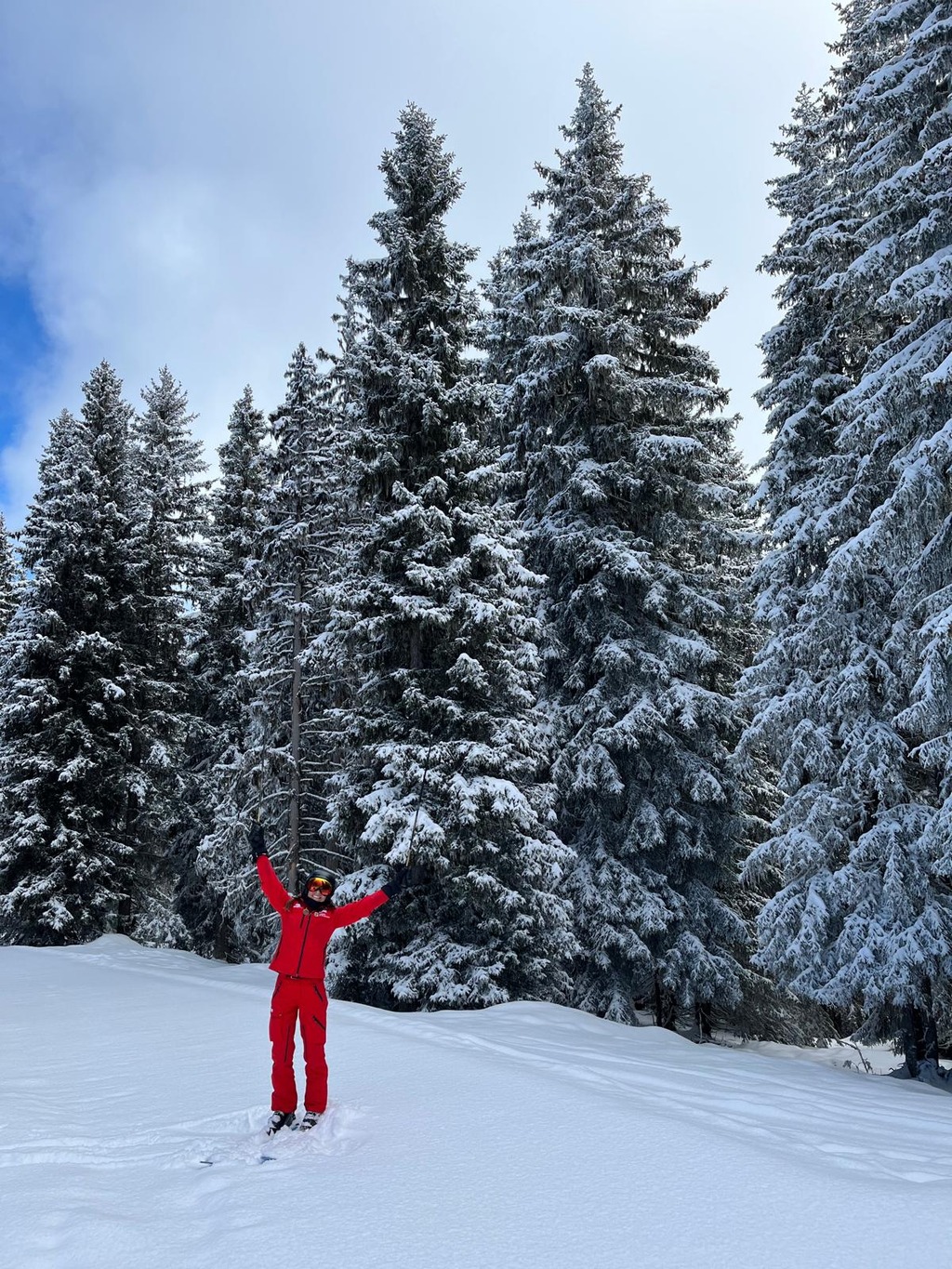
© Aurore Seigneur
From the start, ESF was about more than technique, promoting a deeper connection to mountain life. Students learned to ski, to read terrain, adapt to weather, and appreciate the history of the peaks around them.
Becoming an ESF instructor takes years of training, with rigorous testing in skiing, instruction, safety, and first aid. Certification proves instructors are skilled teachers and trusted guides.
And on the slopes, you can always spot them—their red suits stand out, a symbol of excellence and tradition.
Schools like Megève’s, founded in the final days of the war, were among the first to bring this vision to life at the local level. As early adopters of the national model, they helped shape French skiing as a sport as well as a blend of culture and tradition.

© Aurore Seigneur
When Megève’s school opened, it had 52 instructors; today, it counts 300—including Aurore Seigneur, granddaughter of co-founder Louis Seigneur.
I had a lesson with her last March. After we skied the same slopes her grandfather once helped shape, she reflected on what it means to carry forward his legacy.
She noted how much the equipment has changed—“lighter, easier to use”—along with technique and the lifts, now defined by “speed and comfort.” Yet the mission remains the same. Many of the founding principles still guide the school, and part of being an ESF instructor, she said, is to “share the local customs, landscapes, wildlife to our customers.”
Like many of her colleagues, Aurore sees Megève as more than a resort—“a village with a rich heritage”—that draws people from around the world, from expert skiers to curious first-timers seeking a blend of alpine adventure and French art de vivre.
That deep connection to place is reflected in the way the ESF instructors speak about the mountain, the changing seasons, and above all, the snow
“A wise saying from my grandmother: ‘Don’t worry, the snow will fall when we’ll need it’. Indeed, the snow, ‘l’or blanc’ in French (white gold), is essential to all ski instructors. Each year, we eagerly await the first snowflakes.”
Not long after, you’ll see Aurore back on the slopes in her red suit—a symbol of personal achievement, family legacy, and a tradition that continues to shape Megève.
“I’m really proud to wear the red ski suit every day at the ESF of Megève, as it was my dream as a kid. I do my best on the slopes hoping that my grandfather is proud of me.”
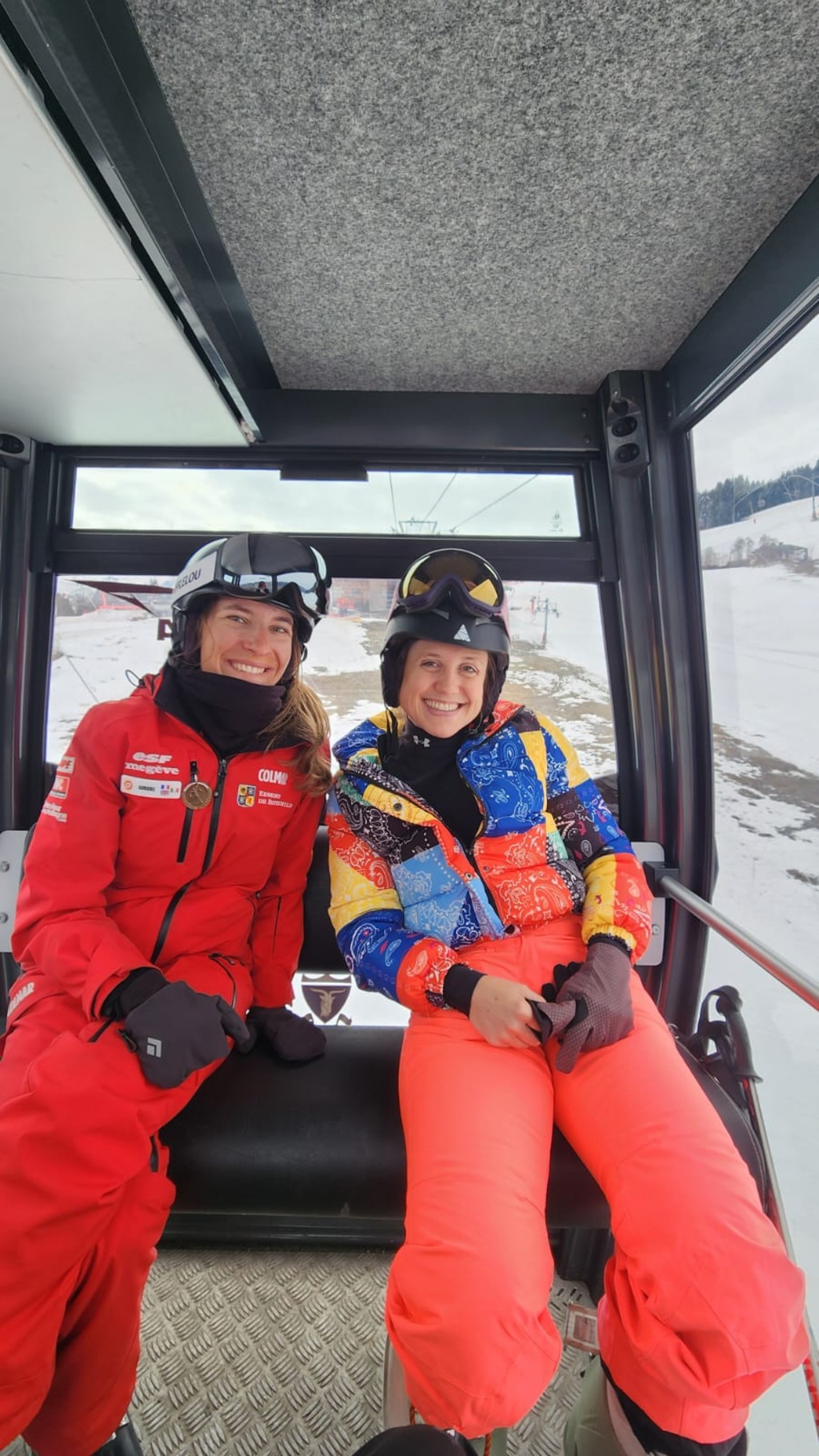
Jennifer and Aurore in Megève in March © Jen Flanagan
Lead photo credit : Image courtesy of Megève Tourism Board
Share to: Facebook Twitter LinkedIn Email
More in french alps, French history, ski resort, skiing
Related Posts


By Jen Flanagan
Leave a reply
Your email address will not be published. Required fields are marked *