
5 Notable Cemeteries to Stroll Through in France
From quiet rural graveyards and imposing city cemeteries to solemn memorials to the fallen, Justin Postlethwaite rounds up some of France’s finest resting places…
Far from being ghoulish or glum, a visit to a French cimetière (cemetery) can be both inspiring and humbling, and provide pause for reflection both on life’s grand questions and the people commemorated there.
It also offers a step back in French time to when tombs were often elaborate and impressive. Spotting the elegant French prénoms (first names) of yore is also an enjoyable exercise – many of these remain elegant classics for French newborns today, including names such as Claude, Pierre, Marcel, Joséphine, Marguerite and Séraphine.
Cemeteries also provide the chance to connect in some fleeting way with the greatest names of French history, from composers to musicians, military leaders to politicians, writers to inventors, and scientists to actors. The expatriated deceased, too, feature among the country’s must-visit cemeteries – no wander around France’s most famous and most visited cemetery, Père Lachaise in Paris’ 20 arrondissement, is complete without dropping in on Jim Morrison, Oscar Wilde or Frédéric Chopin.
Military graveyards stand apart, of course, and there are many magnificent ones to visit (see our Remembrance Guide, starting on page 119). Dedicated to soldiers from all countries who fought in both World Wars and other wars involving French soldiers, these are largely in Normandy and the northeast, for obvious reasons. The scale of loss is difficult to come to grips with, as is the tender age of so many fallen soldiers.
There are many fine cemeteries worth visiting but our selected round-up is eclectic from the large to the tiny, by the sea or in a remote rural location. Père Lachaise is so well known it needs little publicity so makes way for another of the capital’s impressive cemeteries.
1. LE CIMETIÈRE MARIN DE SÈTE, HÉRAULT
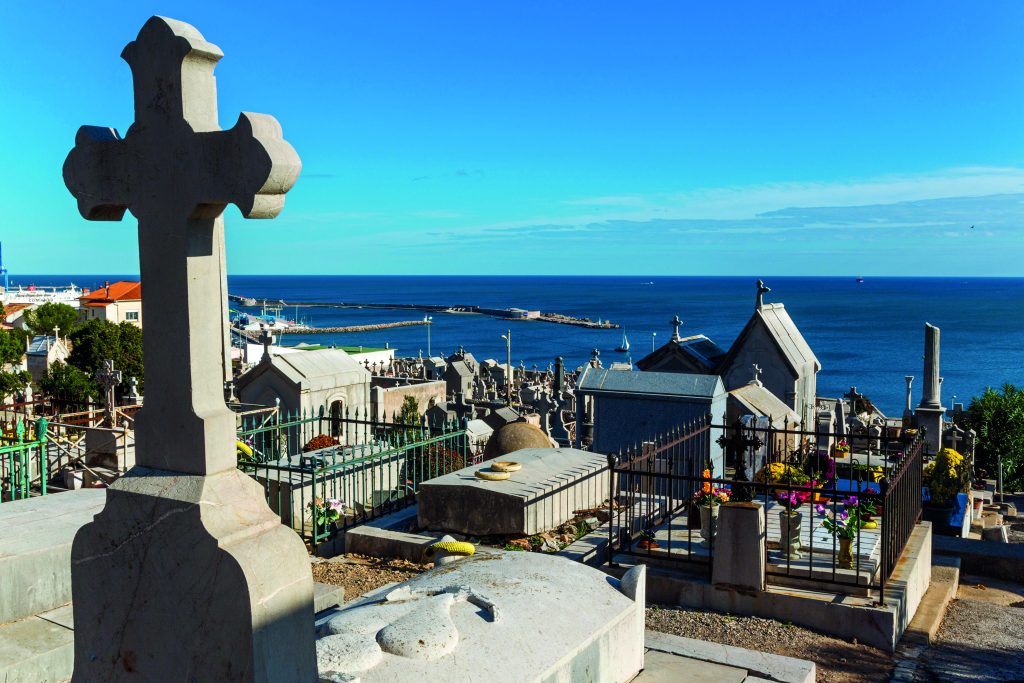
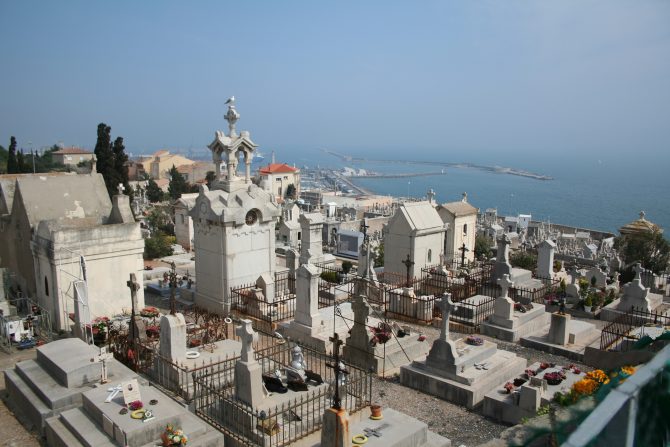
We begin beside the seaside at the Mediterranean port of Sète, flanked by the Étang de Thau in the Hérault department. Originally named Saint-Charles cemetery, it was created around 1680 to lay to rest workers who perished during construction of the Saint-Louis jetty. Its name was changed to Cimetière Marin in 1945, in reference to the poem by the Sète-born writer, poet and philosopher Paul Valéry, who had been buried there a few days earlier. The town’s other cemetery, Le Py, is where singer Georges Brassens is laid to rest.
NOTABLE TOMBS: Aside from Valéry, buried here under the family name Grassi, you’ll find the tomb of Jean Vilar, a famous Sétois actor and director who created the Festival d’Avignon in 1947.
2. LE CIMETIÈRE D’AUVERS-SUR-OISE, VAL-D’OISE
© SHUTTERSTOCK
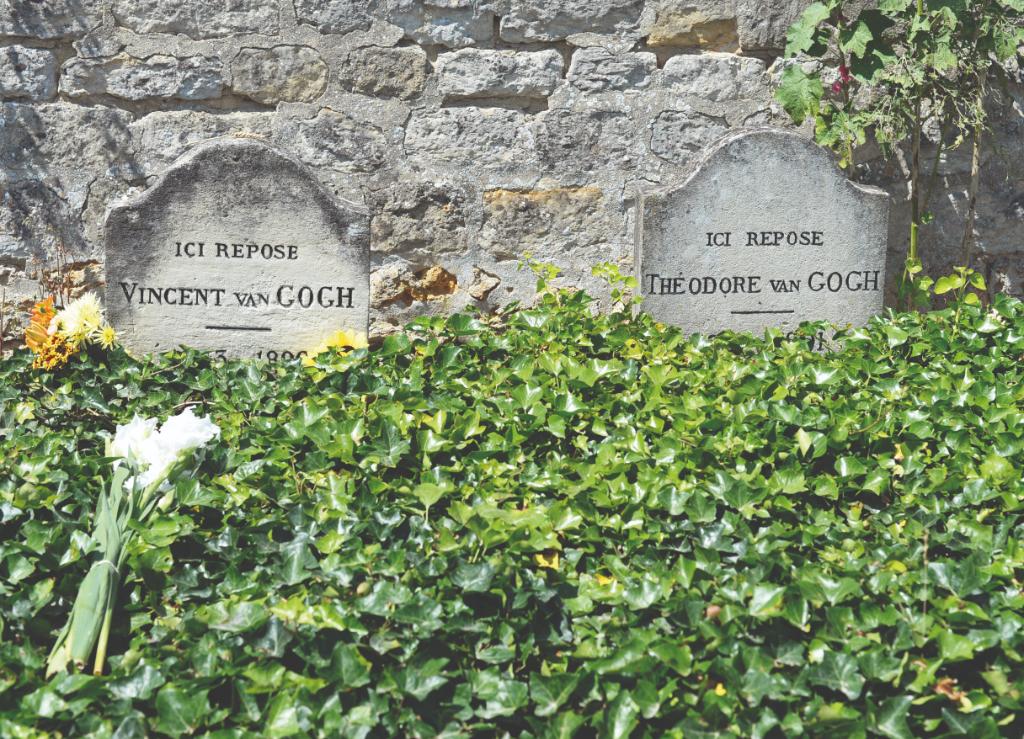
Many French cemeteries have become pilgrimage sites for art lovers, and perhaps the most poignant is that of Auvers-sur-Oise, about 30km north of Paris, for here lies Vincent Van Gogh alongside his brother, Theo. Vincent spent 70 days in the village painting Wheatfield with Crows and Portrait of Dr. Gachet – before succumbing to depression and shooting himself in the chest with a revolver on July 27, 1890. He died two days later. Of Vincent, his brother Theo wrote in a letter to his wife: “He was buried in a sunny spot among the cornfields, and the cemetery does not have that unpleasant character of Parisian cemeteries.”
Six months later, Theo died from syphilis complications and, despite being initially buried in Utrecht, Holland, his body was exhumed and laid next to his brother’s in Auvers-sur-Oise.
NOTABLE TOMBS: The Van Gogh brothers are buried beside the cemetery’s north wall, along Chemin des Vallées.
3. LE CIMETIÈRE DU MONTPARNASSE, PARIS
© ALAMY
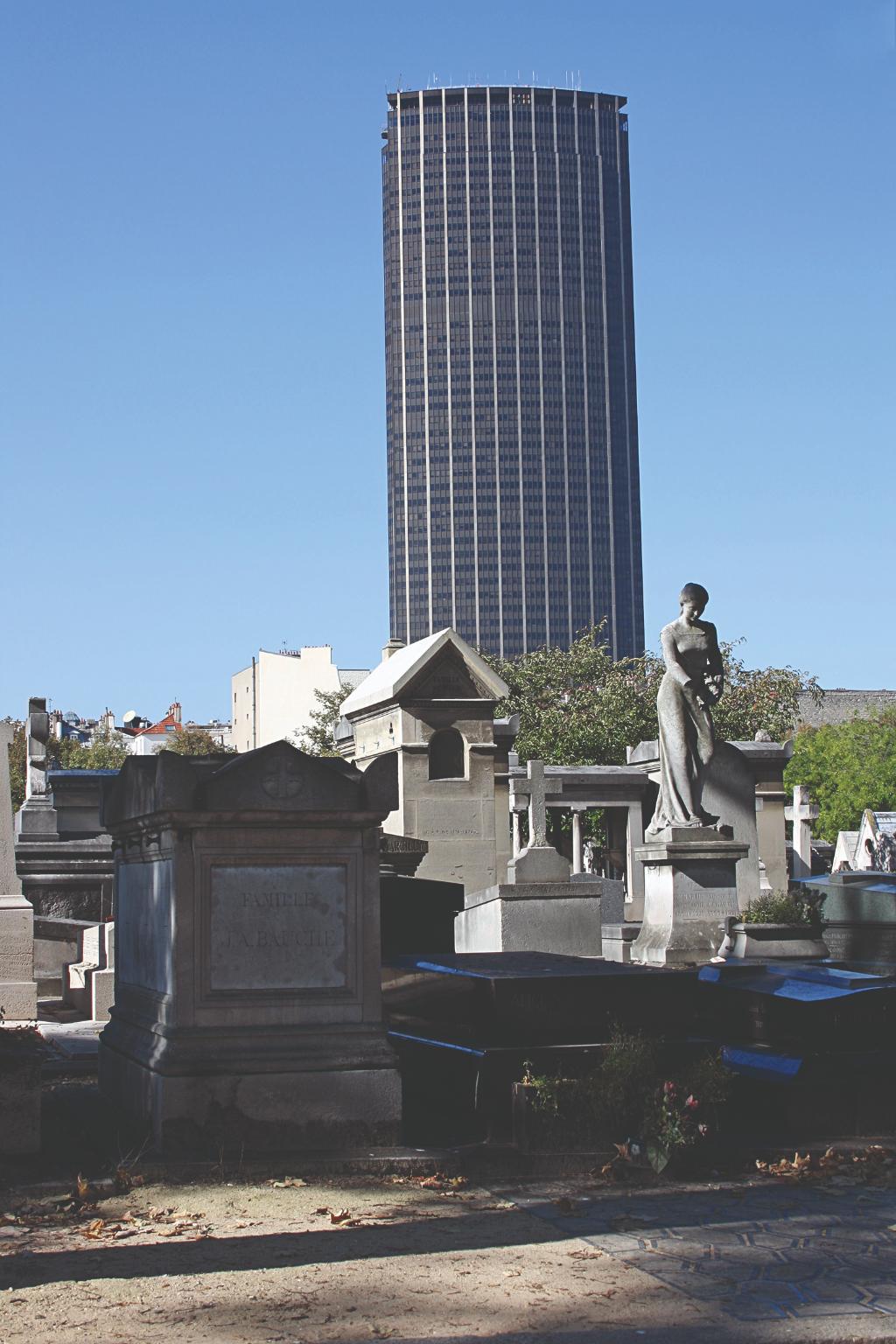
Originally called Le cimetière du Sud (The Southern Cemetery), the Montparnasse Cemetery, Paris’s second largest after Père Lachaise, is located in the 14th arrondissement and is cut in two by Rue Émile-Richard. Covering 19 hectares, it was created in 1824 as part of one of the city’s first urban planning projects to build cemeteries on the outskirts of the city. It is the capital’s largest green space, and wandering around, garden lovers will spot 40 species among the 1,200 trees, such as maple, ash, linden, thuja and conifers. Keep an eye out, too, for the Moulin de la Charité, a mill dating from 1661 that stands as the only remnant of the site’s original function, as land farmed by monks of Saint-Jean de Dieu.
NOTABLE TOMBS: Many of France’s intellectual elite are buried here – spot the tombs of Charles Baudelaire, Guy de Maupassant, Jean-Paul Sartre, Simone de Beauvoir, Samuel Beckett and Charles Garnier, among others.
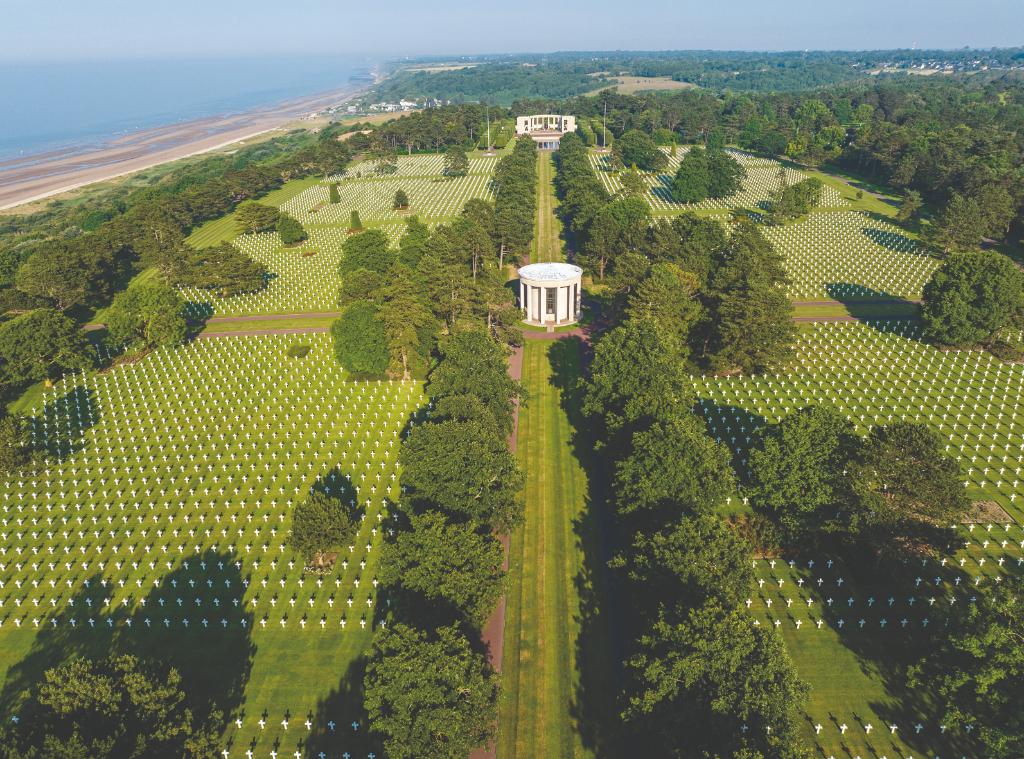
4. LE CIMETIÈRE AMÉRICAIN DE COLLEVILLE-SUR-MER, CALVADOS, NORMANDY
© SHUTTERSTOCK
If you had the time, you could spend a fortnight or longer visiting D-Day memorials and cemeteries in Normandy, all of them deeply moving, beautifully designed and lovingly maintained. One of the most impressive, for its grandeur and poignancy, is the American Cemetery at Colleville-sur-Mer. With one million visitors a year, it is the most visited of the sites managed by the American Battle Monuments Commission (ABMC). Located on a bluff high above D-Day landing site Omaha Beach, it contains the graves of nearly 9,400 war dead and features nearly 1,600 names on the Walls of the Missing. Visit the chapel, memorial and Garden of the Missing and head to the visitor centre for a detailed overview of Operation Overlord (the codename for the Battle of Normandy) through exhibitions and film.
NOTABLE TOMBS: Two of the Niland brothers, Preston and Robert, from Tonawanda, New York, whose story inspired Steven Spielberg’s Saving Private Ryan, are buried here.
www.abmc.gov | en.normandie-tourisme.fr
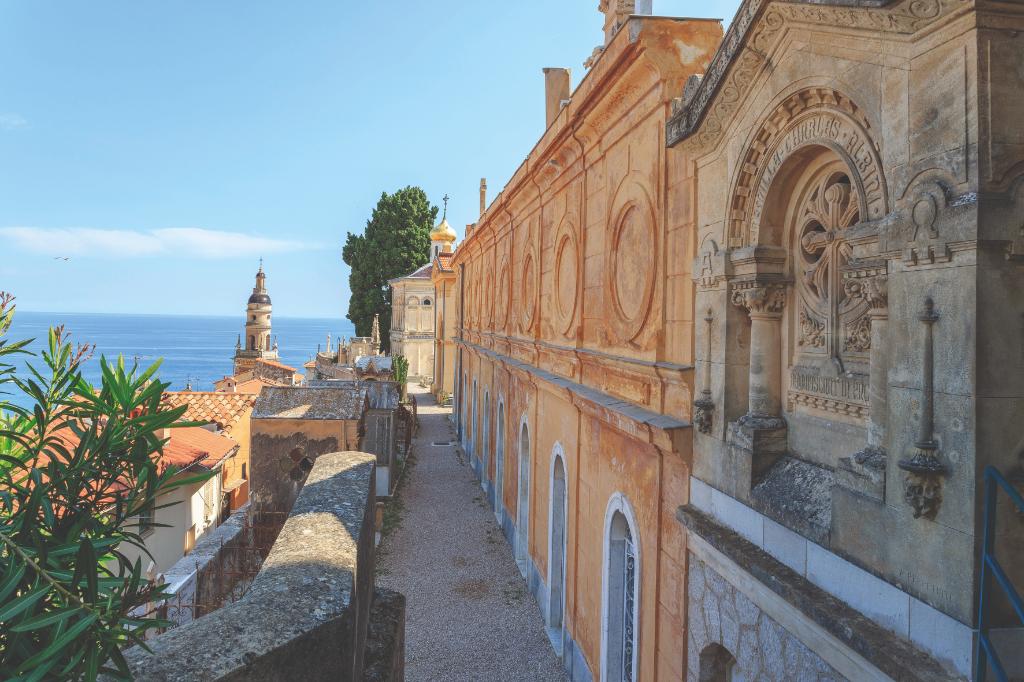
5. CIMETIÈRE DUVIEUX CHÂTEAU, MENTON, ALPES-MARITIMES
© SHUTTERSTOCK
Next time you are visiting the French Riviera, leave the beach and shops for a morning and make your way up the hill behind Menton to visit the multi-terraced Old Castle cemetery. The views over the glittering sea below are wonderful – it is located on a belvedere overlooking the old port and the bay of Garavan.
Created on the site of an old ruined castle built in 1249 and owned by the Grimaldi family, it was completed in 1902. One of the levels – the site spans 63 metres of altitude – was created in 1880 to bury Russian immigrés, part of the major influx of European aristocrats wintering on the Riviera in the 1840s and 1850s. Especially eye-catching is the domed Russian Orthodox funeral chapel (much smaller than, though bearing vague similarities to, the Russian Cathedral of Saint Nicholas in Nice), where Prince Pierre Troubetzkoy was buried after his death in 1892.
NOTABLE TOMBS: Sports fans should track down the tomb of William Webb Ellis, the inventor of rugby, who died in 1872 at the age of 66. During the Rugby World Cup held in France in 2023, many fans made a pilgrimage to the tomb to pay their respects.
Have you visited any French cemeteries? Have you spotted a famous name by chance? Send your photos and tales to us at letters@ francetoday.com
From France Today Magazine
Lead photo credit : Wikimedia Commons
Share to: Facebook Twitter LinkedIn Email
More in cemeteries, flaneur, French parks
Related Posts


Leave a reply
Your email address will not be published. Required fields are marked *
REPLY