
Bicentennial of Lafayette’s Farewell Tour of the US

It’s been 200 years since Lafayette toured the United-States and the American Friends of Lafayette are tracing his footsteps with hundreds of events celebrating the lasting impact the young general had on the US.
For a year, the American Friends of Lafayette (AFL) have been commemorating the Bicentennial of General Marquis de Lafayette’s Farewell Tour of the US in 1824 and 1825 with hundreds of events in 24 states. The final events will be held September 5-7 in Washington, DC and surrounding areas. Events will include a White House visit and a viewing at the US Capital House Chambers where a portrait of the Marquis has hung since 1825, paired with one of General George Washington. There will also be a lunch cruise sailing past Washington’s home in Mount Vernon.
The key purpose of the 13-month commemoration is to remind and educate Americans about the crucial role the 19-year old Marquis de Lafayette and France played in the American Revolutionary War, along with Lafayette’s life and legacy. At age 67, Lafayette returned to the almost 50-year old United States made up of 24 states between 1824 and 1825 at the request of President James Monroe and Congress. At that time, the US was going through a very divisive time and it was hoped that the tour to all 24 states of the last living general of the American Revolution would bring citizens together. It worked. Lafayette was welcomed with affection and gratitude and greeted as a hero by thousands in each city he visited.
“James Monroe thought Lafayette would come and instill feelings of patriotism, and that’s what happened, it actually worked,” said Chuck Schwam, Executive Director of AFL. Schwam has overseen the hundreds of events developed by the AFL Bicentennial team. “I’m not saying that we’re going to be as successful (with the Bicentennial) but certainly we’re a bipartisan organization that wants to make sure that people understand that history is important.”
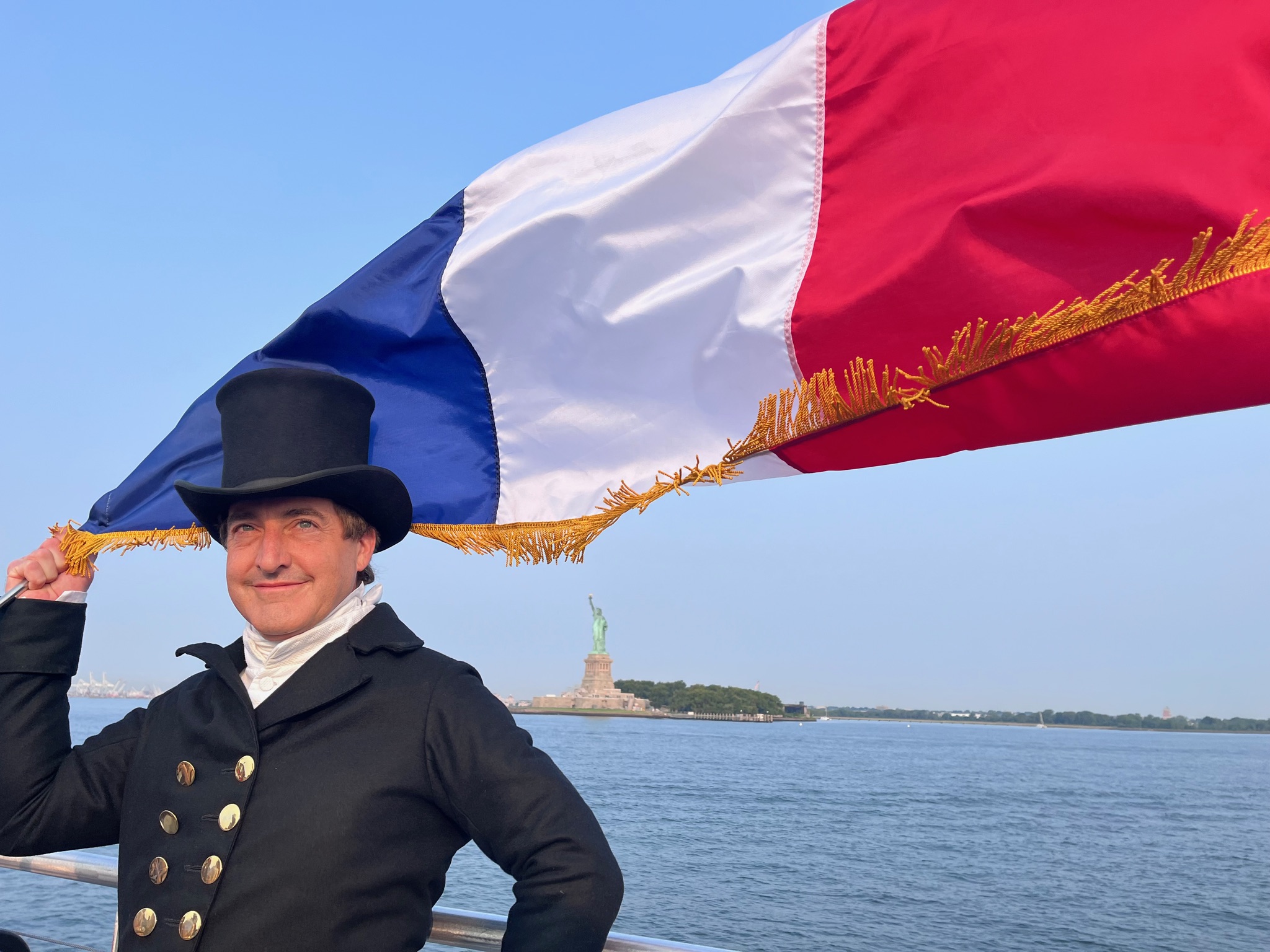
Mark Schneider portraying Lafayette © AFL
Lafayette was a young, French nobleman who was made a major general at age 19 by the French military. Because he believed in the goals of the American Revolution, he traveled to the Americas in 1777 and became close to General Washington. He fought with the Continental Army at the Battle of Brandywine and was wounded in his leg, but he rallied the troops and led an orderly pullback. He continued to lead and fight with distinction and he and Washington developed a respectful, paternal relationship.
Another key purpose of the Bicentennial is to remind us of the importance of the French/American friendship. Lafayette returned to France in February 1779 to convince the king of France, along with Benjamin Franklin, to increase French support for the American Revolution. France agreed to send ships, arms and 6,000 troops that ultimately made the key difference in American Independence success. This was shown in the decisive battle of Yorktown where troops under Lafayette’s command helped block the British army which finally surrendered, making way for the creation of the United States.
“People don’t realize that next to the US, the allied with the most troops in harm’s way were French,” said Schwam. “We would have never won the Revolutionary War without France. It never, ever, never would have happened. There were more French military personnel in Yorktown than American. And this is something that we feel is important. We tell people that without France’s involvement we would have never gained our independence.”
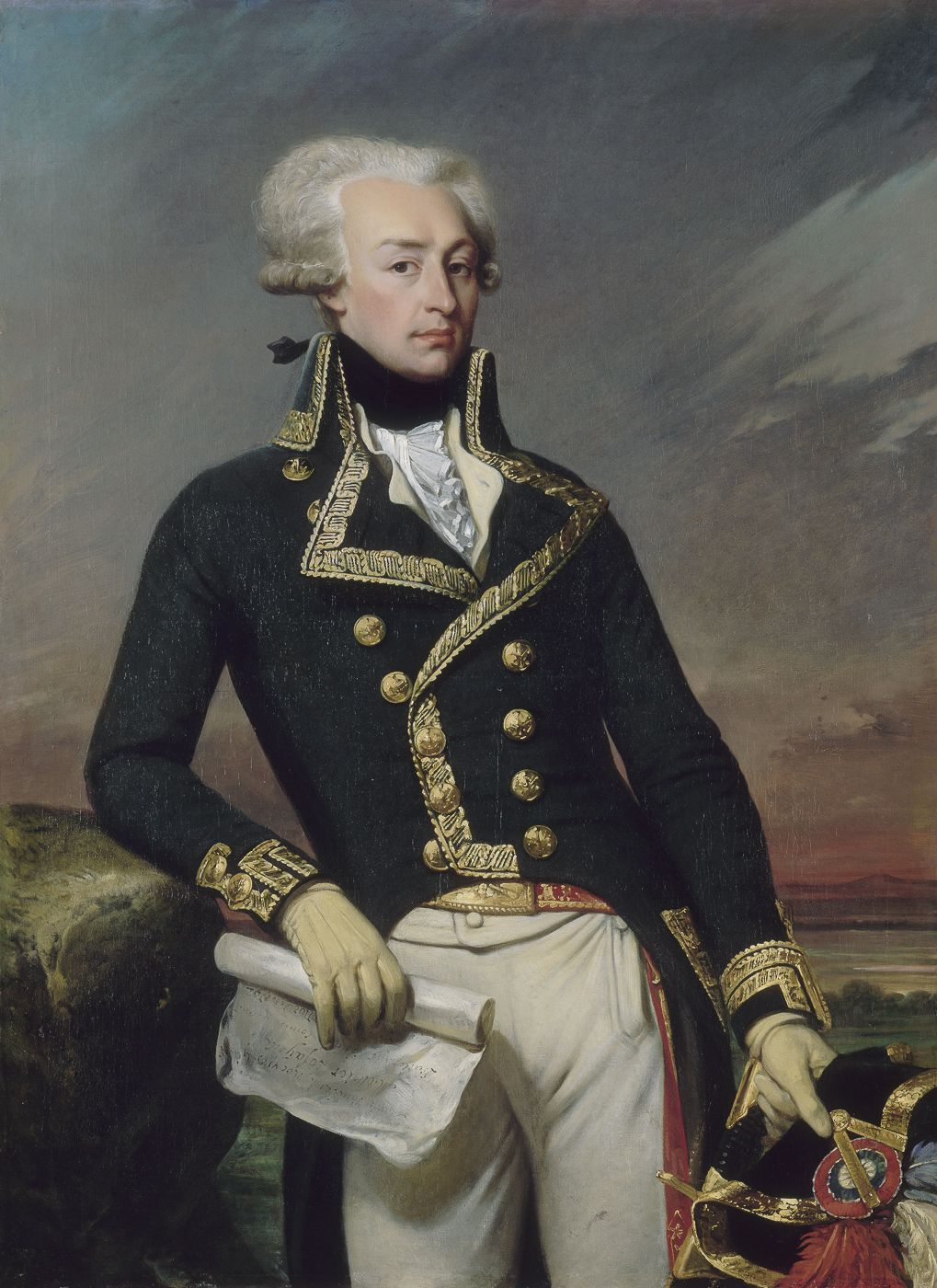
Marquis de Lafayette © Gilbert du Motier
A third message of the Bicentennial is that during and after the American Revolution, Lafayette strongly supported human rights for all. This included religious freedom, equality for women, freedom from slavery and respect for the American Indian communities.
“The thing we’re really trying to talk to people about the most is that he was a human rights champion,” said Schwam. “He was an abolitionist, he was a feminist, he was a friend of the Native Americans and he was a revolutionary. Lafayette truly believed what we wrote in 1776 that all people were created equal.”
According to Schwam, when Lafayette came to visit the US in 1824, he was very disappointed that equality wasn’t happening. He didn’t show his disappointment by scolding, he showed his disappointment by “small acts.” One of those was when he was giving a speech at Yorktown, he saw his friend James Armistead Lafayette in the crowd. Armistead Lafayette was a Black slave who was a double agent spy for the Americans working for Lafayette during the Revolutionary War. He fed false information to the British while providing British information to the Americans and received legislative emancipation for his work. He added Lafayette to his name to honor his friend.
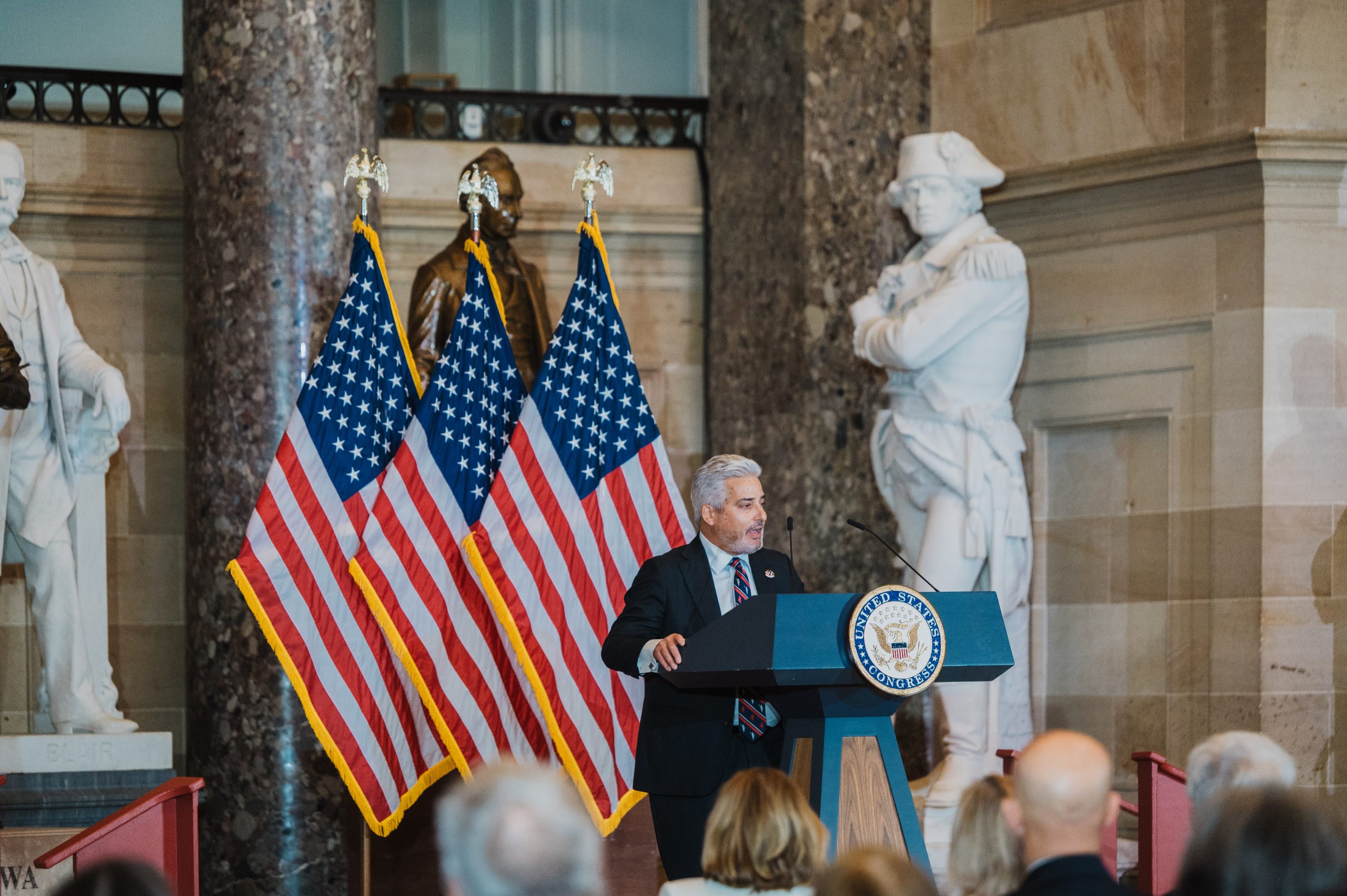
Chuck Schwam at the Capitol © AFL
“Lafayette actually stopped his speech in Yorktown and walked down the stairs and hugged him,” said Schwam. “No white people hugged Black people back then, it never happened.”
Lafayette also treated women as intellectual equals, according to Schwam. “He felt that women should be heard … and had good ideas, and consequently women followed him around in droves during his tour because he talked to them in a way most men did not.”
He also supported the American Indian community just as he supported them during the Revolutionary War. Evidently, Lafayette would leave parties early to go visit the local native American nations.
The fact that Lafayette was raised by women is an important part of his attitude about equality, claims Schwam. Lafayette’s father died when he was very young and his mother died when he was 11. His grandmother and aunt were the ones who raised him at the Lafayette Chateau Chavaniac in south-central France. Lafayette’s wife, Adrienne, was also a continuing inspiration.
“I’m sure their influence has a lot to do with how Lafayette turned out,” said Schwam. “I’m not saying he wasn’t unique, because he was unique, but I have to give those ladies some credit because he was raised by women. I think that’s a significant fact that people need to know.”

Lafayette escadrille from France © AFL
The 13-month AFL Bicentennial Farewell Tour follows Lafayette’s footsteps from the original 1824/1825 tour including large cities such as New York, Boston and New Orleans, along with the many small towns he visited. Events are educational presentations, parties and other festivities. AFL also supplies lesson plans to the schools in each area so students can learn about Lafayette’s history and impact on the US.
At most events there are Lafayette interpreters, or re-enactors, that entertain the crowds and are dressed in period clothes. The man who plays Lafayette on the AFL and the Bicentennial websites video is Mark Schneider. He’s a US Army veteran and, in addition to Lafayette, has portrayed other historical figures such as Benedict Arnold and Napoleon Bonaparte. His Lafayette is lively and curious about modern technologies, including hand-held phones, apps and non-horse transportation.
Other interpreters of Lafayette are Michael Halbert who is a retired civilian defense intelligence officer and speaks fluent French. Ben Goldman is an interpreter for the American Historical Theatre and played Lafayette in the play “On Fire for Liberty” including in front of President George W. Bush and French President Nicolas Sarkozy. Charles Wissinger is an actor featured on HBO, PBS, the History Channel and many others.
Other Washington, DC Bicentennial Farewell Tour of Lafayette events will include:
- A ceremony at the new WWI Memorial in Washington, D.C. including dignitaries from the French and American Military and descendants of pilots from the Lafayette Escadrille, France’s WW1 Air Force unit.
- A wreath laying at Mount Vernon and at the Tomb of the Unknown Soldier at Arlington Cemetery.
- A panel discussion at Woodlawn Plantation with Lafayette interpreters Ben Goldman, Michael Halbert and Mark Schneider who will discuss being Lafayette for the past thirteen months as they followed his footsteps.
The AFL was started in 1932 at Lafayette College. They secured Lafayette collectables and grew into an institution that reaches out from youths to seniors and includes every cultural and ethnic background to tell the American/French story about the Marquis de Lafayette.
“I gave my heart to the Americans and thought of nothing else but raising my banner and adding my colors to theirs,” said the Marquis de Lafayette.
“Viva Lafayette”, said Schwam.
Lead photo credit : Lafayette at Yorktown © AFL
Share to: Facebook Twitter LinkedIn Email
More in Events, French history, Lafayette, Revolution
Related Posts




Leave a reply
Your email address will not be published. Required fields are marked *