
Burgundy’s Famed Climats Celebrate 10 Years of UNESCO Recognition
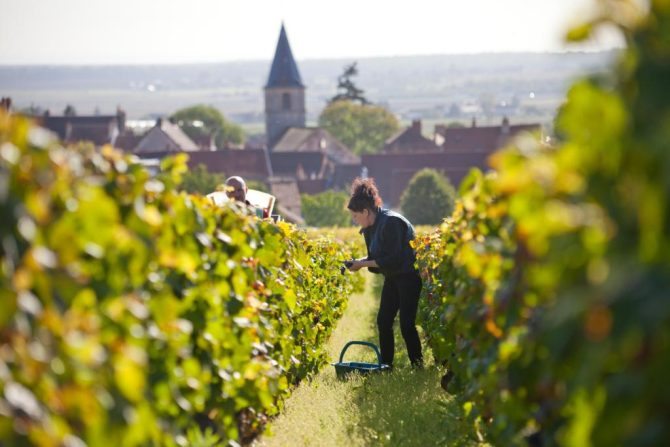
In 2015, the Climats de Bourgogne – defined vineyard plots in Burgundy, each with unique geological and climatic conditions that shape the wine produced there – were added to UNESCO’s World Heritage List. What are they exactly and what’s happening during the celebrations?
Although the word “climat” in French has the same meteorological meaning as “climate” does in English, it also has a very specific meaning when referring to the vineyards of Burgundy where “Climat” is the name given to a small plot of land on which only one grape variety is grown to produce a non-blended wine that bears the name of that Climat. Over centuries, this agricultural method has fashioned a landscape of tiny vineyards each enclosed by low, drystone walls which was put on UNESCO’s World Heritage list in 2015.
According to UNESCO: “Nowhere in the world has man shown such determination to so precisely link a wine production to its place of origin. The result is an extremely fragmented vineyard, made up of a mosaic of over 1,000 Climats extending across Côte de Nuits and Côte de Beaune. Burgundy’s Côte is the only vineyard in the world to have constantly privileged and protected the identity of its Climats for the past two thousand years.”
The UNESCO perimeter includes 140 towns and villages and 1,247 named Climats along a 60km strip of vineyards that stretch from Dijon to Santenay (just south of Beaune), amongst which some world-famous names: Chambertin, Romanée-Conti and Clos de Vougeot to name but three.
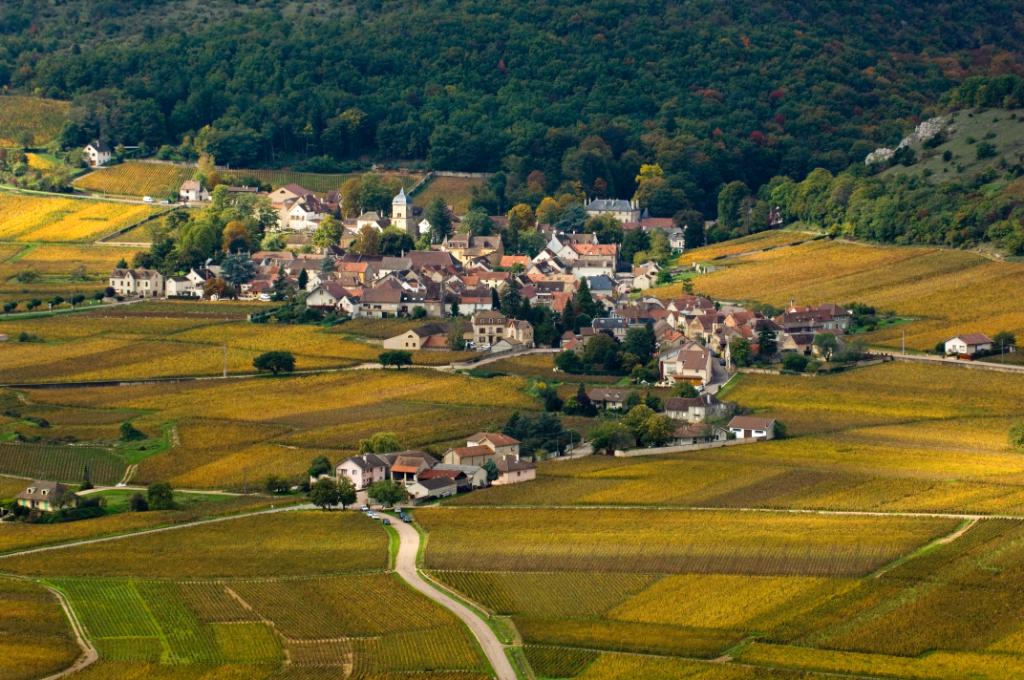
Chambolle-Musigny © MichelJoly
The Climat wine producing model is that just one type of grape (Pinot Noir for red, Chardonnay for white) is grown on each Climat which is individually picked and one wine produced from its grapes with the name of that Climat on the label. In the other wine-producing regions of France, such as Côtes du Rhône or Bordeaux, the model is unrelated: different varieties of grapes are grown in each vineyard and these are then blended to make a wine.
The word “Climat” is believed to date back to the Early Middle Ages when it was used to describe land suitable for growing grape vines. It comes from the Greek term “klima-atos” which describes the angle between a place’s location on the earth’s surface and the sun (interestingly, in modern Greek “ta klimata” designates vines). By the Renaissance, the word evolved from meaning a land, then a region, then a collection of vineyard parcels and finally a specific plot.
Why, you may wonder, in such a limited area can so many different wines be produced? The answer is that every vine plot in Burgundy has its own microclimate and geology. The wine made with the grapes grown on that plot will have specific characteristics linked to this microclimate and geology. These characteristics are what gives each wine its place in the hierarchy of crus (Regional Appellation, Village, Premier Cru or Grand Cru). And, by the way, did you know that the word “Cru” is the present perfect tense of the verb “croître” (to grow) as in “qui a crû” (which grew) linking the wine to its plot of land?
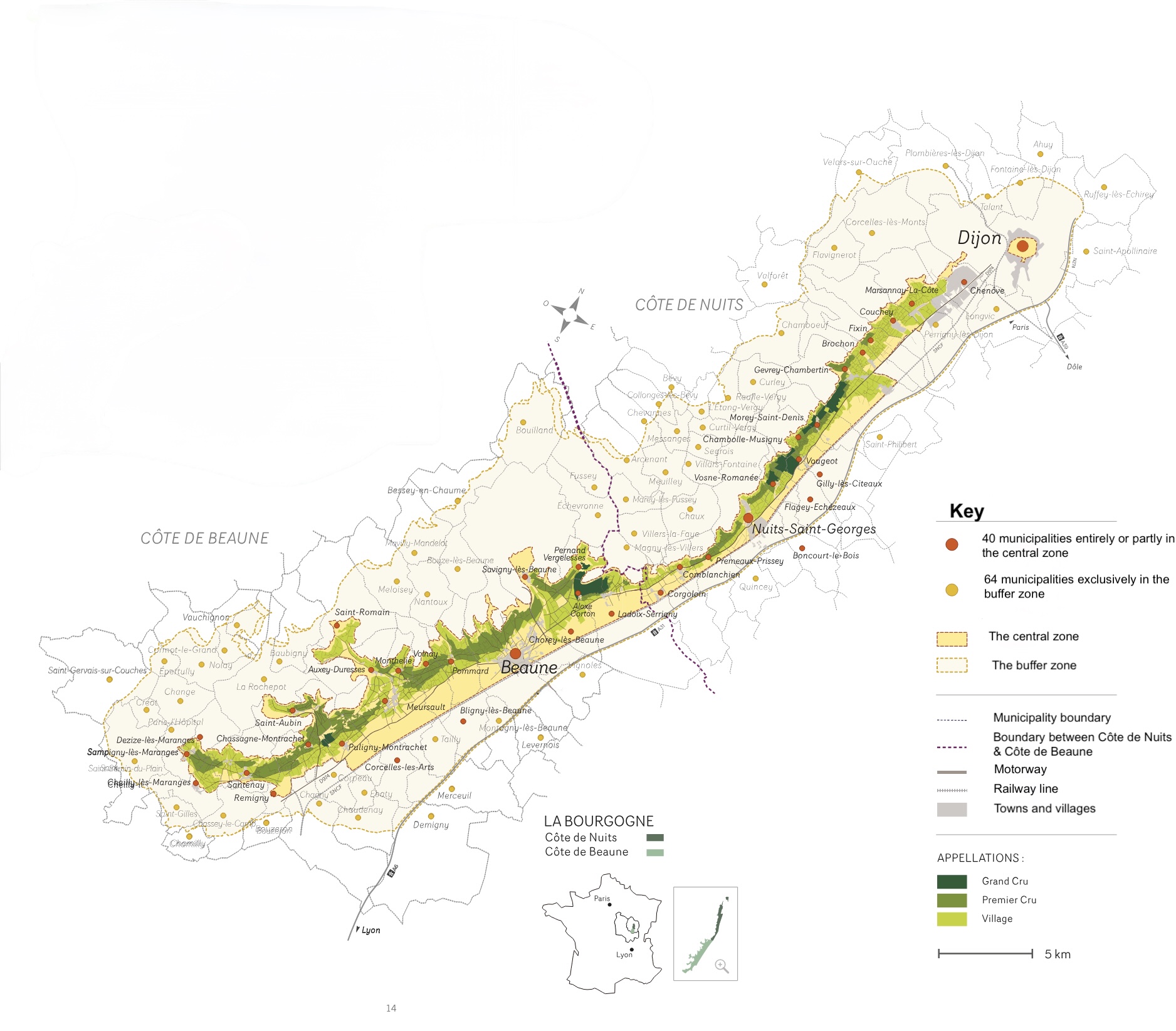
UNESCO Climats map © Christina Mackenzie
Grapes have been grown in this region of France since at least 1 A.D. Until the 7th century, most of the vines were planted on the plains. However, in the 6th century, the Burgundian Law, or lex gundobada, indirectly encouraged vines to be planted on the hilly slopes as these were not prime agricultural land. This law provided the first elements of legal protection for the vines and points to the importance of wine production in Burgundian society… an importance which has not faded over the intervening 1,500 years!
The power of the Catholic church in maintaining the vineyards cannot be underestimated. The Cistercian order (named for Cistercium, the latin name of Cîteaux near Dijon where the order was founded in 1098 by Robert of Molesme and 21 other monks) became known for its innovative agricultural techniques which included cultivating grapes. The monks not only bought land to create and work their own vineyards to produce wine for the Eucharist but they also received donations of land as tithe payments by local nobility. This is how the vineyard of Clos de Vougeot, 12km north-west of the Cistercian abbey in Citeaux, was constituted between 1109 and 1115. In order to store the grapes and make the wine this far from the abbey, the monks built a cloister equipped with four huge oakwood presses which could each press four tonnes of grapes at once. They also built a half-buried cellar with eight stone pillars supporting a wooden roof and walls punctuated by lancet windows…very church-like! Above it is a vast loft which served as a dormitory for the monks who’d come to work in the vineyard.
In 1551, the 48th abbot of Citeaux, Dom Jean XI Loisier, had a Renaissance style manor-house built in the style, no less, of King Henry II’s royal Louvre palace. Clearly the notion of an austere monastic life the Cistercian order had been founded on 350 years earlier had faded in the intervening period!
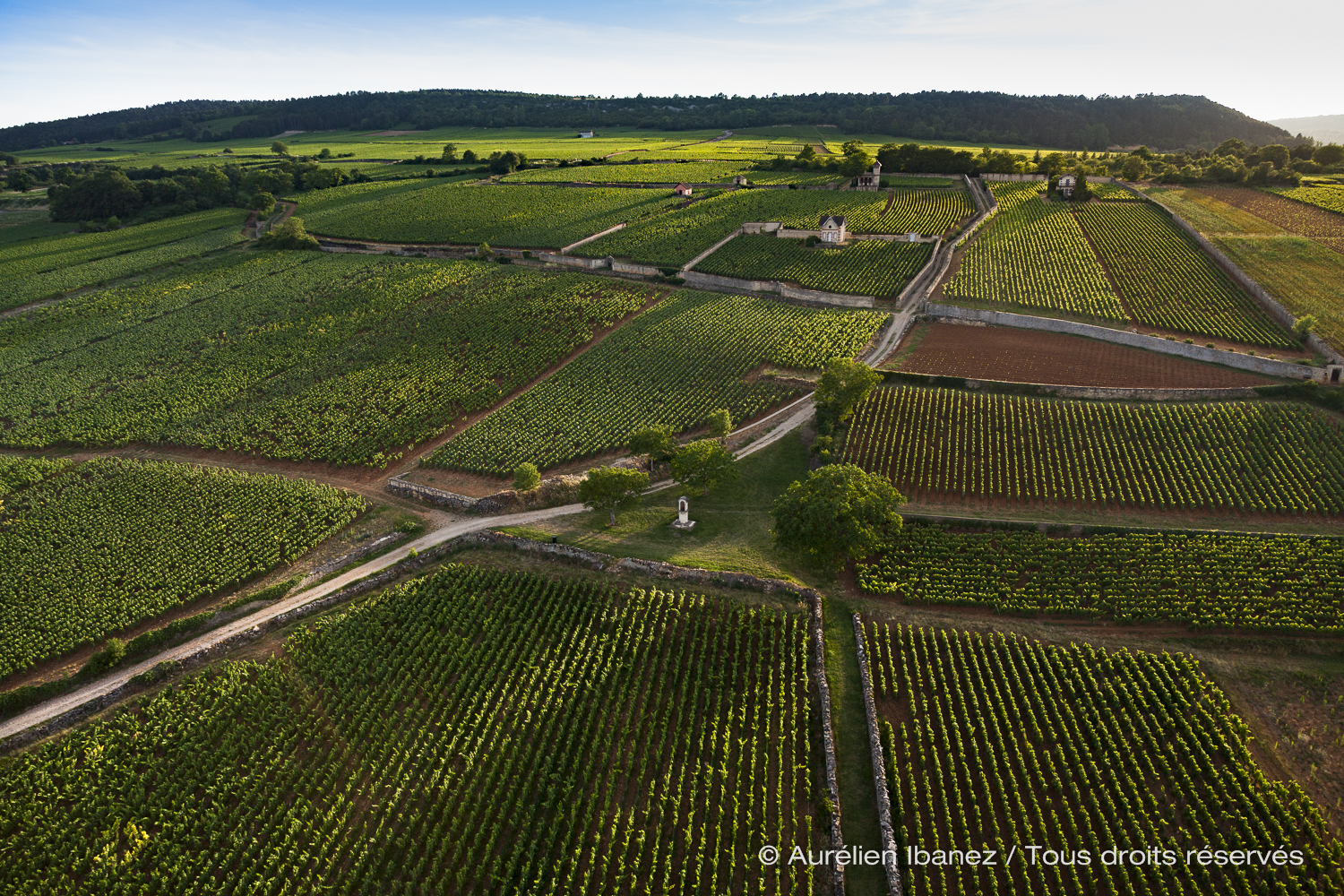
Today the 50 hectares of vineyards around the château – now the headquarters of the Climats de Bourgogne – are subdivided into 25 different Domaines (see list here) owned by a host of different people but no wine is produced at the château itself. But you can go and visit it.
The subsoil limestone which gives the wine its taste is also found in the region’s manmade constructions. In the countryside the limestone “clos” (enclosures) and ancient stone walls (220km of them!) which create a mosaic across the landscape were originally built by the Cistercian monks to delineate and protect the parcels of vines from animals and thieves. But they also help fight erosion by retaining the soil and slowing down rainwater runoff.
You’ll also note the presence of rural buildings, huts really, in various shapes and sizes dotted around the vineyards. These are “cabottes” made from stones collected when clearing the land and are used to store tools or to shelter in during bad weather. Unused stones are simply piled up into mounds known as “meurger”, a Burgundian dialect word which stems from the Gallic “morg” meaning limit or boundary. They also help retain soil.
In towns and villages limestone is used to build both simple homes and monuments such as the Hospices de Beaune and the Palace of the Dukes of Burgundy in Dijon.
A UNESCO World Heritage label entails duties to safeguard the site in question. These include protecting the Outstanding Universal Value of the Climates by studying the impact of certain projects (wind turbines, urban development, etc.) and by working to safeguard, sustain and build an inventory of the landscape, the built heritage, and the intangible heritage of the listed site. Between 2015 and 2017, for example, authorities realised whilst making an inventory and geo-localising the 220km of walls which surround the Climats that many were in a poor state of repair. This led to the creation of the Fonds Patrimoine (Heritage Fund) to help owners finance the restoration of these walls. Since then, 7.5km of stone walls and 16 “cabottes” have been repaired.
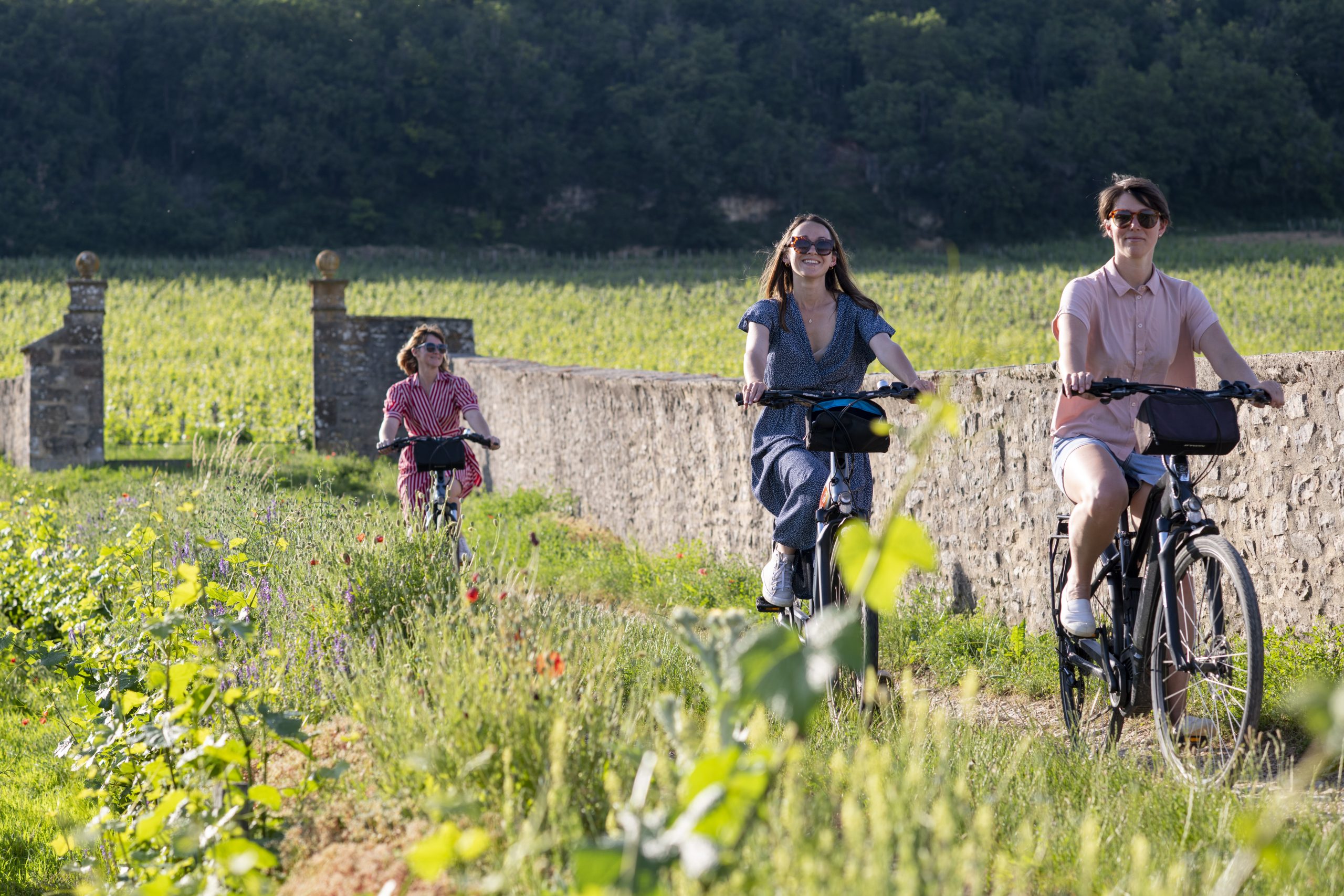
Exploring Burgundy’s vineyards by bike © Michel Joly
The UNESCO label also demands that the site’s biodiversity be maintained so a Biodiversity Fund has been created which has already helped finance and accompany two projects: the Organisme de Défense et Gestion de Chassagne-Montrachet, a project involving 18 wine producers to manage and defend the eponymous domaine and the Paysage de Corton association involving about 40 wine producers to do the same thing.
The Climats de Bourgogne association must also continue to boost scientific research and produce publications as well as increasing understanding and dissemination of the concept of Climats and the values of World Heritage to a wide audience. So, between 2018 and 2021 ethnologists undertook 44 interviews and held a dozen meetings to collect an oral history of the wine-producing trades. In addition, educational programmes have been designed to raise awareness among young people and schoolchildren in parallel to training and awareness-raising for professionals. And they must share the site’s universal values through cooperation and experience sharing.
Climats des Maranges
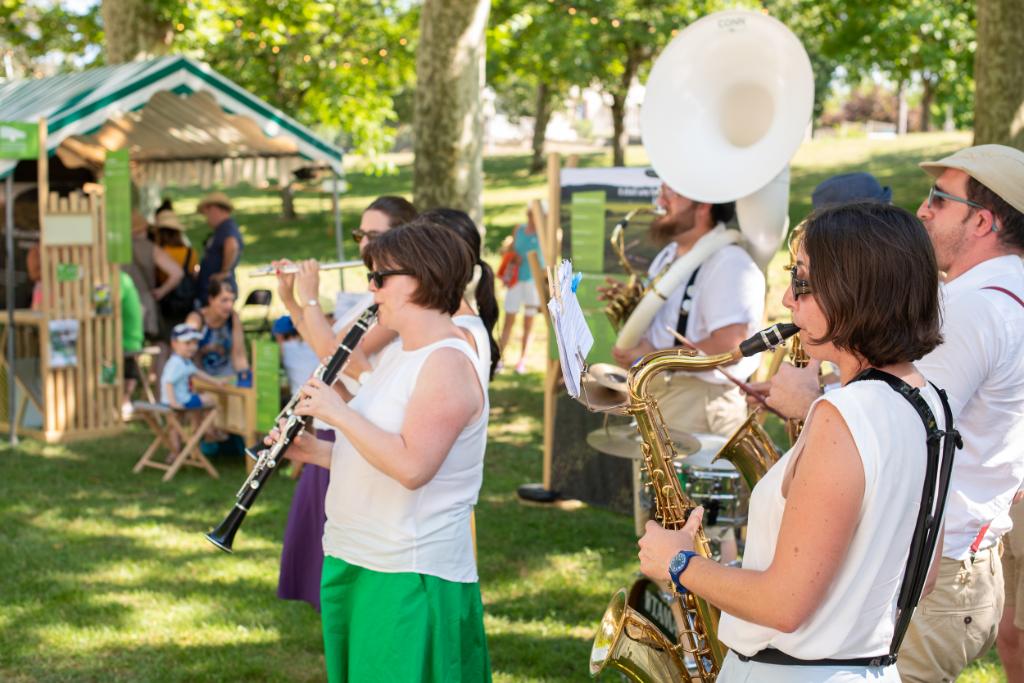
So this year, the 10th anniversary of the UNESCO inscription, is an excellent one in which to visit the region which has organised a host of events to mark the anniversary, notably on 4th July (the date of the UNESCO inscription) in Puligny-Montrachet where the free public event starts at 16:00. Visitors will be invited to wander amongst the vineyard to find 10 actors, dancers and musicians. There’ll also be to hand: a caricaturist; a silhouette artist who, with a simple pair of scissors will cut the shape of your silhouette out of paper in a few seconds; a make-up artist; and a tattoo-artist who will give you a temporary Climats-inspired tattoo using natural ink.
Starting at 18:00 there’ll be an €18 per person (you need to reserve here) wine-tasting of six wines accompanied by local food where you can meet the producers and then at 21:30 there’ll be a show involving fire, dancing, music and storytelling before everyone is invited to participate in an open-air dance until midnight. If you’re still feeling energetic the next day, hop on a bicycle and ride along the 22km of cycle route that winds through the vineyards between Dijon and Santenay but please, don’t wander into the grapevines because you’ll really upset the owners.
If you can’t make it to the main 4th July celebration have no fear because there are celebrations throughout the year. Check out the programme here.
Lead photo credit : ©armelle
Share to: Facebook Twitter LinkedIn Email
More in Burgundy vineyards, Climats de Bourgogne, French wine, vines
Related Posts


Leave a reply
Your email address will not be published. Required fields are marked *