What History Lies Behind Cartier Jewellery?

The history of the famous French jewellery brand favoured by the rich and famous is as glittering as it is intriguing.
With almost $100m of jewellery up for sale, the atmosphere in Sotheby’s New York City auction house on June 8, 2023, was understandably excited – tense even. ‘Magnificent Jewels’ was the name of the sale, and two of the items on offer – the Estrela de Fura ruby from Mozambique and the Eternal Pink diamond from Botswana – ended up selling for $34.8m each.
As the auctioneer wielded his gavel, many of the world’s greatest jewellery collectors, or at least their humble representatives, looked on, enthralled. Others were bidding remotely. This was a room where you needed to keep your wits about you – a mere scratch of the nose and you might become the unwitting owner of an antique necklace or a priceless gemstone.
That day two beautiful pieces of jewellery had experts particularly excited. Both had been manufactured by the French luxury-goods brand Cartier. The first, a 33.51-carat Burmese sapphire ring, sold for $3.3m, while a matching necklace with five Kashmir sapphires went for an equally impressive $2.8m.

Louis Cartier
An upper-class clientele
Back in 1847, When young Louis-François Cartier first set up his tiny business as a manufacturer of “jewellery, fancy decorations and novelties”, he would never have believed it possible that items bearing his name might one day sell for millions of dollars each. During that period, the average wage was two francs a day $3m would have constituted the GDP of a small nation.
Despite a faltering launch, which coincided with the French Revolution of 1848 and the accompanying financial crisis, Louis-François was soon making a name for himself from his workshop on Rue Montorgueil, in the centre of Paris. After Louis-Napoleon Bonaparte had created the Second French Empire three years later, conditions were favourable again for luxury goods. Louis-François bought a new showroom at 5 Rue Neuve-des-Petits-Champs, in the fashionable Palais-Royal quarter. Suddenly he was drawing in the wealthy, upper-class clients he had always dreamed of. His first truly top-drawer client was the Comtesse de Nieuwerkerke, the wife of Paris’s superintendent of fine art, who bought more than 50 pieces. But it was Princesse Mathilde Bonaparte, the niece of Napoleon Bonaparte and owner of “the most beautiful neckline in Europe”, who cemented Cartier’s reputation as jewellery-maker for the aristocracy. Initially asking him to repair one of her necklaces, she then became a regular customer, eventually buying more than 200 items from him.

© Nils Herrmann © Cartier, from Cartier Nature Sauvage, Flammarion
An enterprising outlook
Aristocratic and celebrity customers were to prove crucial for Cartier’s global dominance of the jewellery trade. For his coronation in 1902, King Edward VII ordered 27 tiaras, later issuing the company with a royal warrant. “King of Jewellers and Jeweller of Kings”, he called them. By the start of the 20th century, with Louis-François’s grandsons, Louis, Pierre and Jacques, now overseeing an international brand, Cartier had become official supplier to Tsar Nicholas II of Russia, Alfonso XIII of Spain, George I of Greece, Queen Marie of Romania and King Chulalongkorn of Siam, among others. Louis Cartier ran the Paris branch from the headquarters on Rue de la Paix, while the middle brother, Pierre, set up branches in London (on New Burlington Street) and New York City (on Fifth Avenue), later ceding the London branch to the youngest brother, Jacques. As the 20th century progressed, so did Cartier’s brilliant designs. The garland-style jewellery, the Art Deco pieces, the stunning clocks, the innovative wristwatches, the famous gemstones, the clever use of platinum – they all ensured that the great and the good continued to be dazzled by their creations.
In 1925, India’s Maharaja of Patiala spent the modern-day equivalent of $2.5bn on jewellery from the French brand. Grace Kelly’s engagement ring from Prince Rainier III was Cartier, as was the Princess of Wales’s wedding tiara. Elizabeth Taylor, Brigitte Bardot, Yves Montand and Pablo Escobar also spent their hard-earned cash on the brand.
Rachel Garrahan is co-curator of a new Cartier jewellery exhibition at the Victoria & Albert Museum in London. She stresses how much of the company’s success was down to the genius of the three brothers, Louis, Pierre and Jacques. “They were very sophisticated in their approach to marketing and advertising,” she says. “They had this dream to take the business global at a time when most people wouldn’t have even left their country, let alone set up a business abroad.”
Garrahan says Louis was the most creative of the trio, with a brilliant vision for the future. When it came to gemstones, it was Jacques who was the most knowledgeable – indeed, his 1911 trip to India imbued future Cartier jewellery with an eastern style that proved very popular. And Pierre was the great entrepreneur of the three.

Royal warrant
The charm offensive
The brothers were also brilliant at wooing potential clients. “They built their business by establishing these very strong relationships with very influential people whether it’s the British royal family or the Indian maharajas or the Russian royal family,” Garrahan adds. “They were really known for their discretion, their understanding, their charm. Once clients knew this, it won them more business.”
But at the core of the company’s enduring appeal was the famous ‘Cartier style’, as it became known. Francesca Cartier Brickell is the author of The Cartiers: The Untold Story of the Family Behind the Jewelry Empire. “At its crux was the understanding that everything comes from what came before,” she writes. Indeed, the Cartier brothers refused to imitate other jewellery designers and often quoted their famous slogan, “Never copy, only create”.
“Sometimes the innovation would come from the use of new materials: platinum before it became a precious metal, a vanity case made of steel, or glow-in-the-dark hands on a clock,” adds Brickell, who is Jacques’s great-granddaughter. “More often than not, though, it was in the design: ideas from the past were valuable only if they could be reinterpreted for a modern audience. Underlying everything was an appreciation of proportion and symmetry and a focus on the highest quality.” Here are eight of the most famous Cartier designs ever created, which encapsulate that inimitable Cartier style…
SANTOS WATCH, 1904
Brazilian flying ace Alberto Santos-Dumont was friends with Louis Cartier and complained to him one day that it was too risky to consult a pocket watch while flying a plane. In a stroke of genius, Louis then devised a smaller watch face with a built-in wrist strap so that Santos could check the time without taking his hands off the controls. Although women had previously worn wristwatches, this was believed to be the first one designed for men. “Louis had to effectively change the public’s perception of a watch,” Brickell writes. “Fortunately, he had the best brand ambassador in town. The aviator was a global celebrity.”
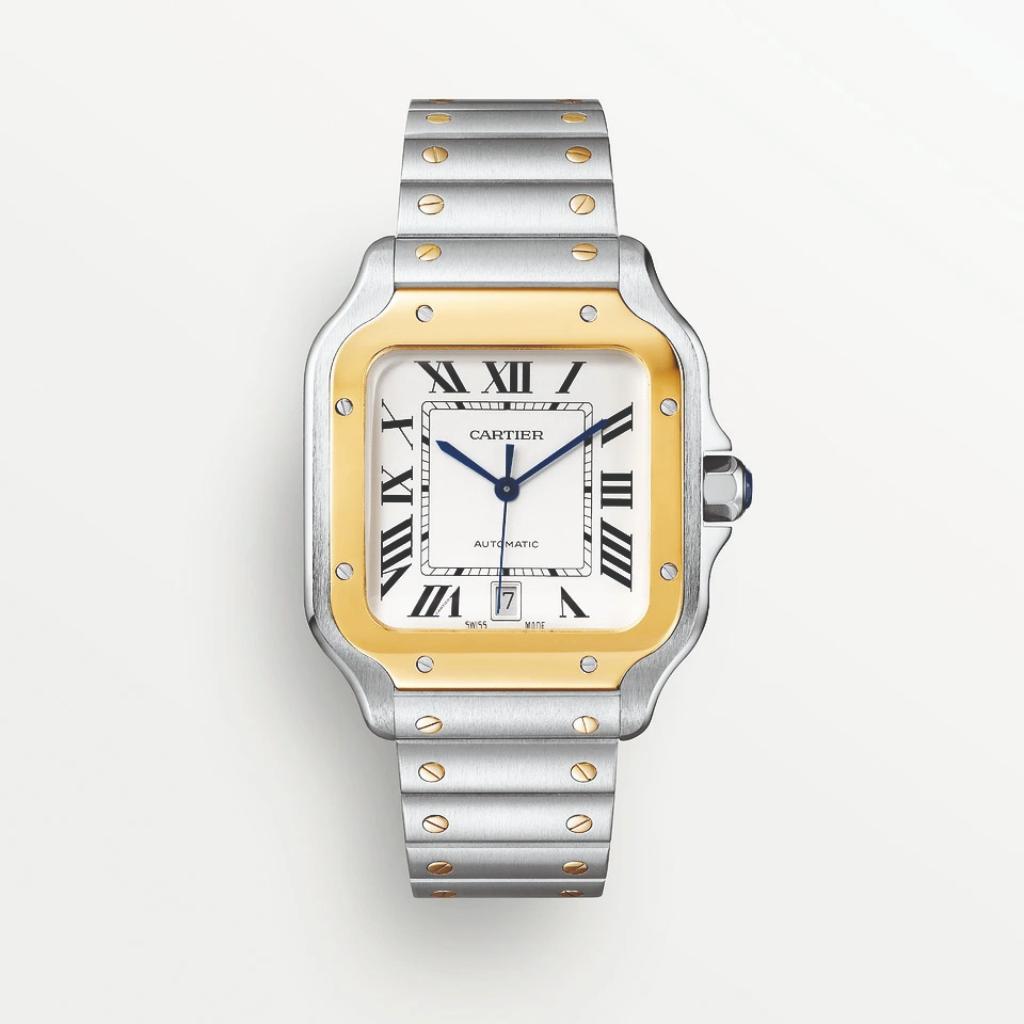
Santos watch
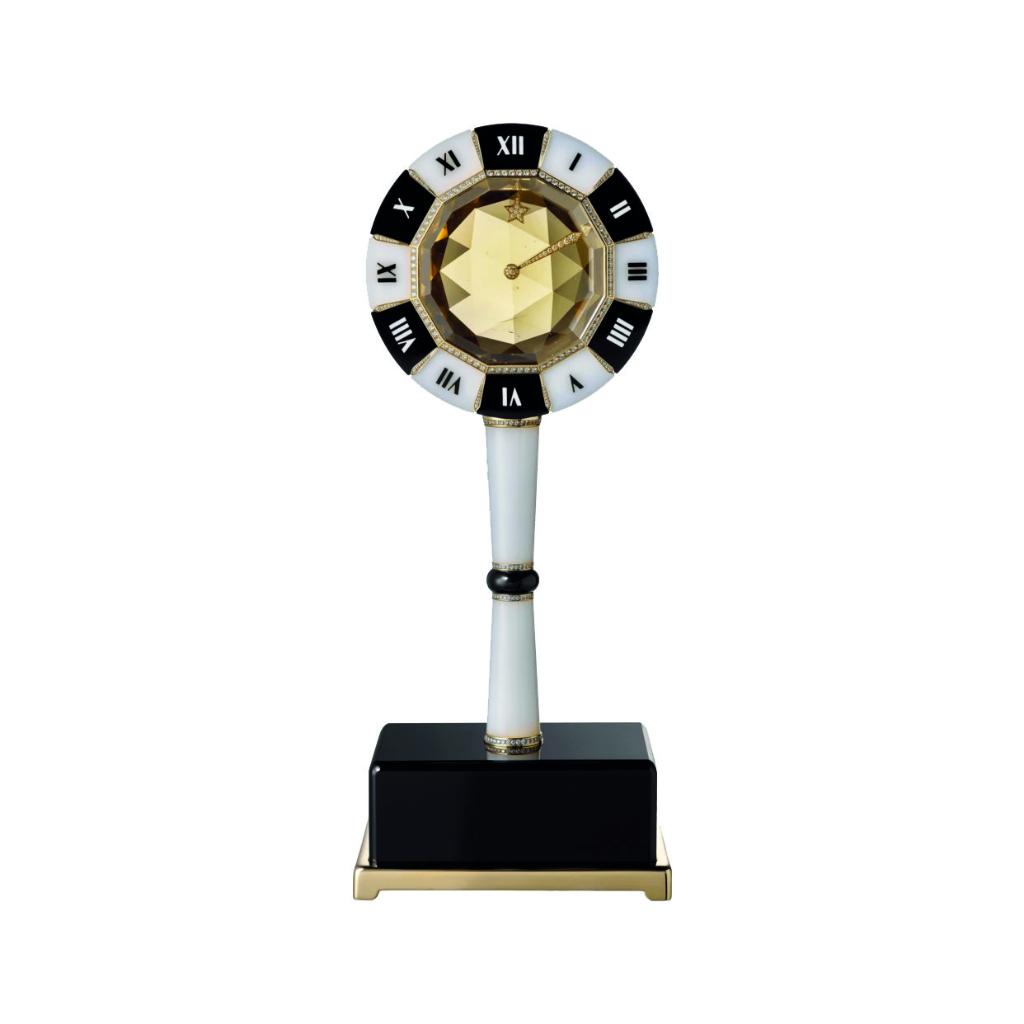
MYSTERY CLOCK, 1912
Devised by famous clockmaker Maurice Couët, it featured a transparent dial and hands that appeared to hover in thin air. The first Cartier mystery clock took a whole year to make and no one except the makers and the Cartier family knew how it worked. Even the salesmen were kept in the dark, which added to customers’ awe.
TANK WATCH, 1919
It was claimed that Cartier’s Tank watch, designed by Louis, was inspired by the tanks used in World War I, the vertical bars on the side of the watch, known as brancards, mirroring the caterpillar tracks on the vehicle. At the time, men still favoured pocket watches over wristwatches, but by giving his watch a geometric design and naming it after a war machine, Louis succeeded in making it appeal to male customers. Tanks were worn by Jean Cocteau, Duke Ellington, Rudolph Valentino and John F. Kennedy. The later famously said it was “France’s greatest gift to America since the Statue of Liberty”.

Tank watch
TRINITY RING, 1924
First manufactured in platinum, yellow gold and rose gold (the platinum was later replaced with white gold), this ring featured three interlocking bands with no beginning and no end, as a symbol of everlasting love. Legend has it the design was inspired by Jean Cocteau after he dreamt of the rings of Saturn.
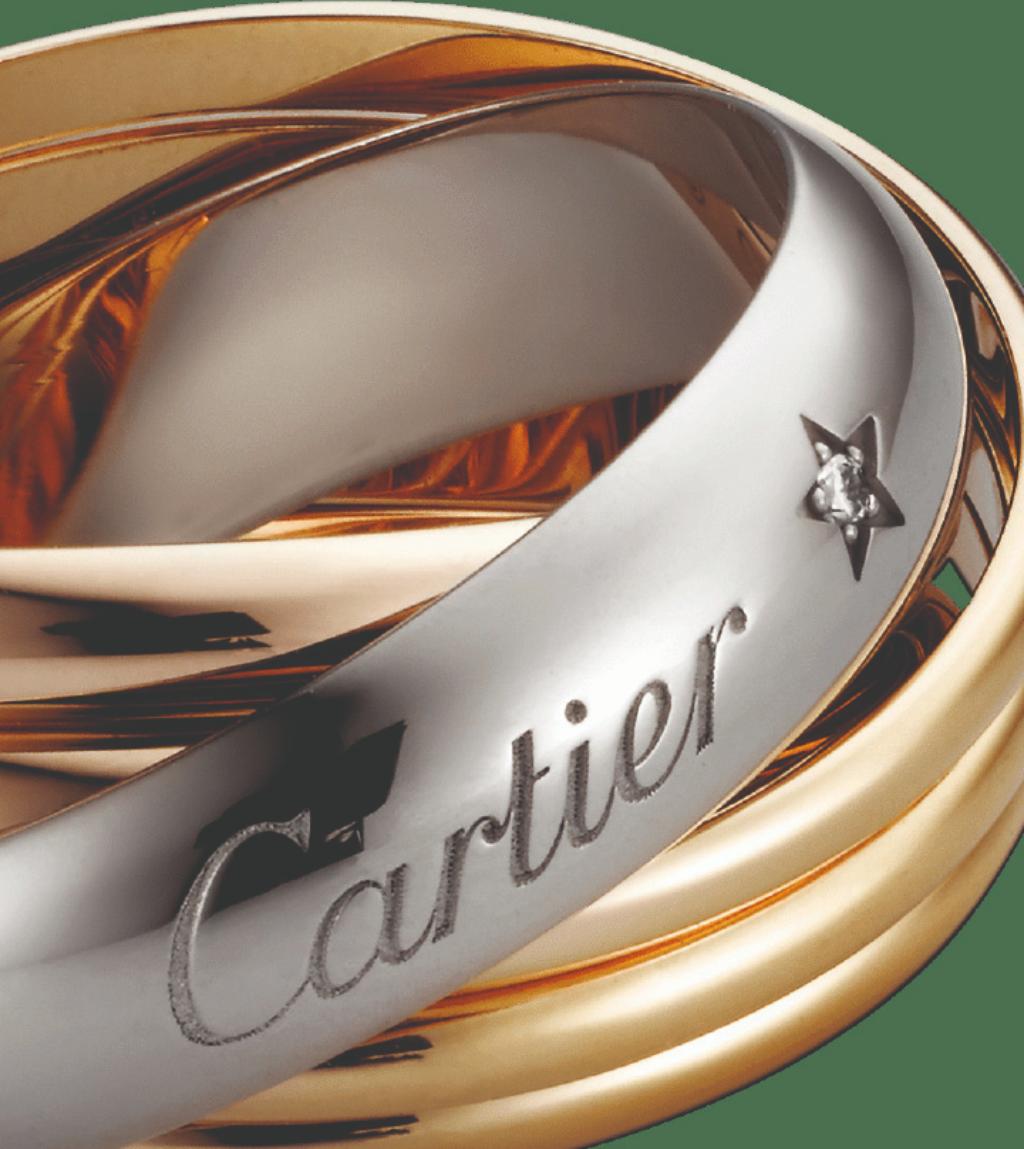
Cartier-Trinity-ring
TUTTI FRUTTI DESIGNS, 1925
It wasn’t until the 1970s that Cartier’s brightly-coloured Indian-style Art Deco necklaces and bracelets were given the name “Tutti Frutti’. Combining an eye-catching mix of emeralds, rubies and sapphires, they were popularised in no small way thanks to Daisy Fellowes, the American heiress who famously commissioned the Collier Hindou in Cartier’s Tutti Frutti style. In the early 1990s it sold for $2.66m.
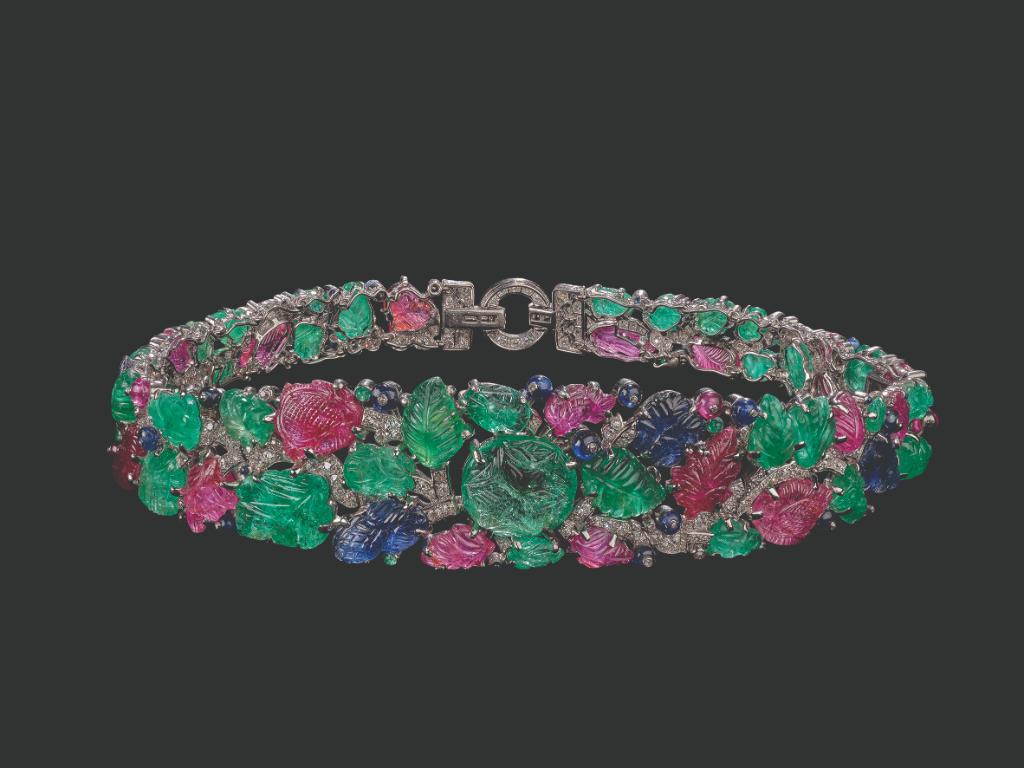
Tutti Frutti design, 1928 credit Victoria and Albert Museum, London
CRASH WATCH, 1967
Some say this strange-looking watch was inspired by a normal-shaped Cartier watch which melted in the flames of a car crash. Others say it was influenced by the melting clocks in Salvador Dali’s 1931 painting, The Persistence of Memory. In her book, Brickell claims it was simply a response by Jean-Jacques Cartier and the designer Rupert Emmerson to customers’ requests for non-conformist designs.

Crash watch
THE PANTHER MOTIF, 1948
Shortly after World War II, the Duke of Windsor commissioned Cartier to make a gold and onyx panther clip brooch for his wife, Wallis Simpson. She loved it so much she ended up acquiring a total of 12 panther-themed accessories from the company, including bracelets, clips and a pair of lorgnette eyeglasses. Jeanne Toussaint, Cartier’s director of fine jewellery, was the driving force behind the brand’s signature panther.
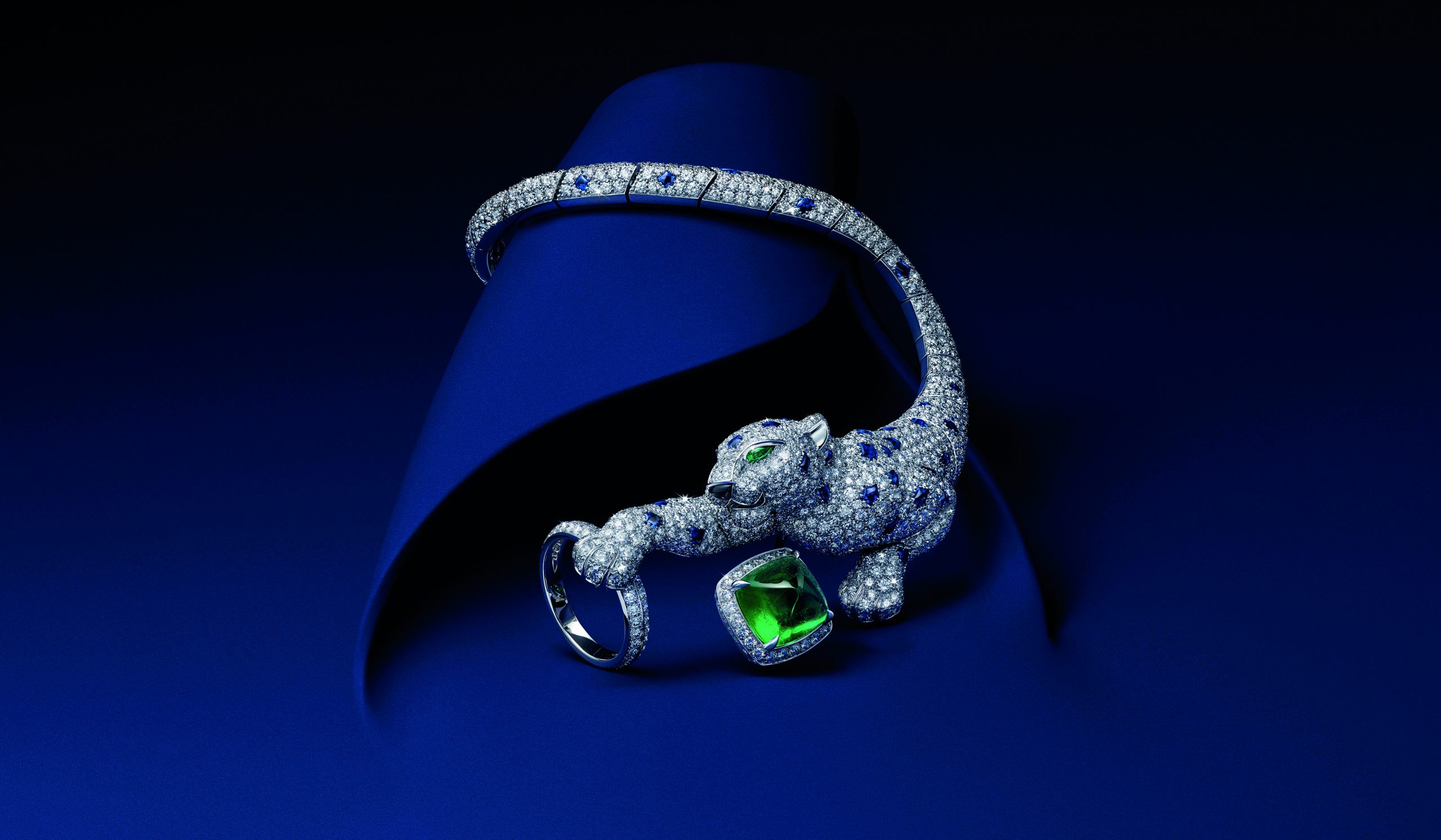
Panther motif © Iris Velghe © Cartier, from Cartier Nature Sauvage, Flammarion
ARTICULATED SNAKE NECKLACE, 1968
It was Mexican actress and singer Maria Félix who first commissioned this life-size snake necklace. Set with hundreds of diamonds, it could articulate around her neck, just like a real snake might.
From France Today Magazine

Articulated snake necklace cut

The Cartier exhibition is at London’s Victoria & Albert Museum from April 12 to November 16. More information at www.vam.ac.uk
Cartier: Nature Sauvage -High Jewelry and Precious Objects by François Chaille and Hélène Bouillon is published by Flammarion, €95.
Lead photo credit : Panther motif © Maxime Govet © Cartier, from Cartier Nature Sauvage, Flammarion