
Is it Time to Say Goodbye to the French Bise
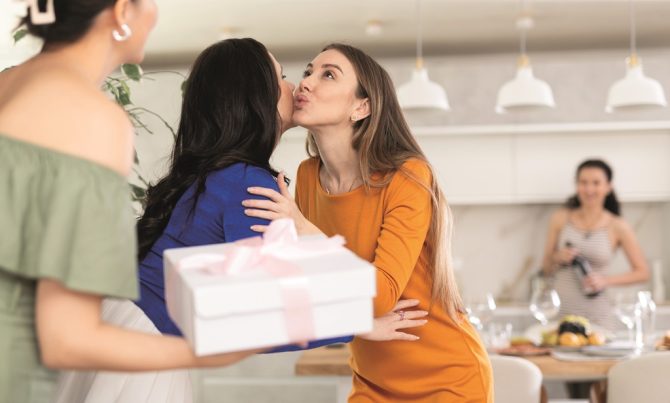
Justin Postlethwaite ponders the complex and sometimes baffling culture of greeting friends and acquaintances with a kiss… or four.
Prior to the Covid pandemic, French people knew where they were with la bise – the traditional, if sometimes perplexing (to us non-French), cheek-kissing protocol employed when greeting people you know. (Or is it also those you don’t know? Yes, I think, I can’t be sure). Now, several years on, it seems that while the original rules of engagement have not changed (it’s in the French DNA), people’s willingness to carry out this most Gallic of formalities to the letter of the (unwritten) law just might have. Recently, French newspaper columnists and reader polls have suggested that la bise should be served a serious demotion and be kept strictly for family and friends, with work colleagues and other acquaintances now spared what many deem an unnecessary, antiquated ritual. Has what began as an enforced social distancing measure during a worldwide health disaster morphed into a bona fide symptom of dwindling social bonds?
I must admit, sometimes I don’t know if I’m coming or going with la bise – which is ironic, given that when you see an acquaintance, you ritually give them a kiss when you arrive and also when you leave, even if there’s only a 60-second period of interaction in between.
There are several elements to the confusion. The first is because it is particularly difficult for us non-French arrivistes to adopt la bise as if it were completely natural to us. Non-engagers have two origins: first, those of us with a background in either a cool handshake, single cheek peck, a warm embrace, or that old favourite amongst male friends, the semi-hug with a double-tap-on-the-back-and-release. And secondly, those who prefer not to engage in any physical form of greeting at all, especially anyone not keen on kissing strangers. The Covid bise ban offered not merely self-preservation but blessed awkwardness relief for this group.
Cheek to cheek
Next, it’s a major quandary knowing who to kiss or not. French people will kiss the same parents at the school gates every morning and every afternoon at 4pm, but they would never kiss the boulanger when they pick up a baguette on the way home, even though they see him every day too.
Finally, and perhaps most bafflingly, is the question of how many times our cheeks should touch if we do go in for the bise. The various regions of France all have general preferences ranging from one to four pecks (parents in bise hotspots like Yonne and Aube are guaranteed eight smackers a day minimum, even if they only know one person at the school).
My own bafflement also extends to which cheek goes first – there seems to be no uniformity, with research by dialectologist Mathieu Avanzi finding that France is divided in two in this regard (see map below).
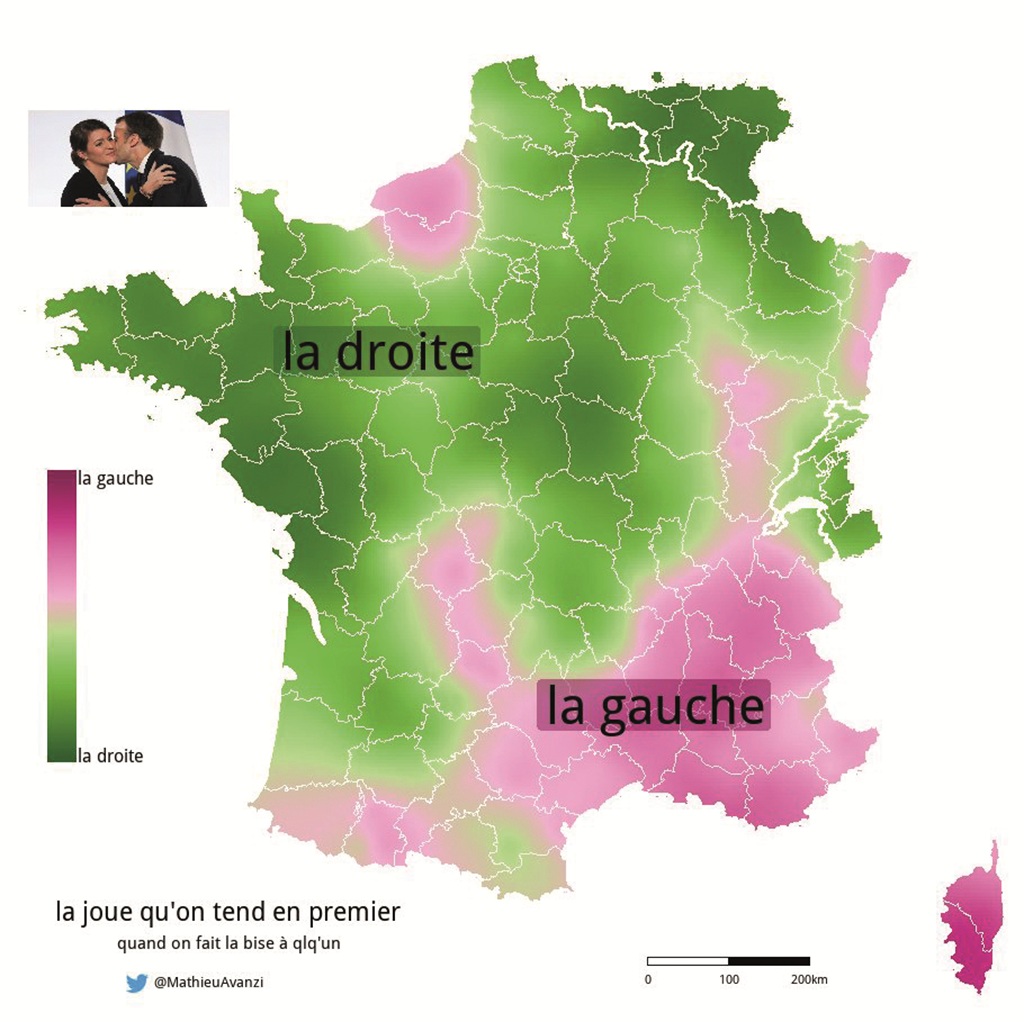
Mathieu Avanzi Twitter CUT
My advice? If you’re unsure, why not let the French person take the lead? They may even say ‘on se fait la bise?’ (shall we kiss?). In my experience, the French are not as judgmental as their reputation suggests. Even for them, since the pandemic, the kiss has become a minefield of manners… c’est comme ça!
There is a brilliant summation of the non-French person’s la bise anxiety by comedian Paul Taylor on YouTube, and you can also enjoy reading how our columnist Kristin Espinasse’s grapples with la bise dilemma.
Share your own experiences of la bise in France: email [email protected]
From France Today Magazine
Share to: Facebook Twitter LinkedIn Email
More in French habits, french language, greetings, la bise
Related Posts



Leave a reply
Your email address will not be published. Required fields are marked *