
Le Fair-Play, a French Trait?

It appears that once behind the wheel, the usual French rules of fair play are abandoned without a second thought.
Driving around in France, I often wonder if French drivers, when buying a sparkling new voiture, are able to select a factory-fresh model whose indicators (clignotants) have either been removed or not installed at all, thus facilitating the oh-so-French habit of declining, je vous en prie (you’re most welcome), to reveal to other road users one’s directional intentions.
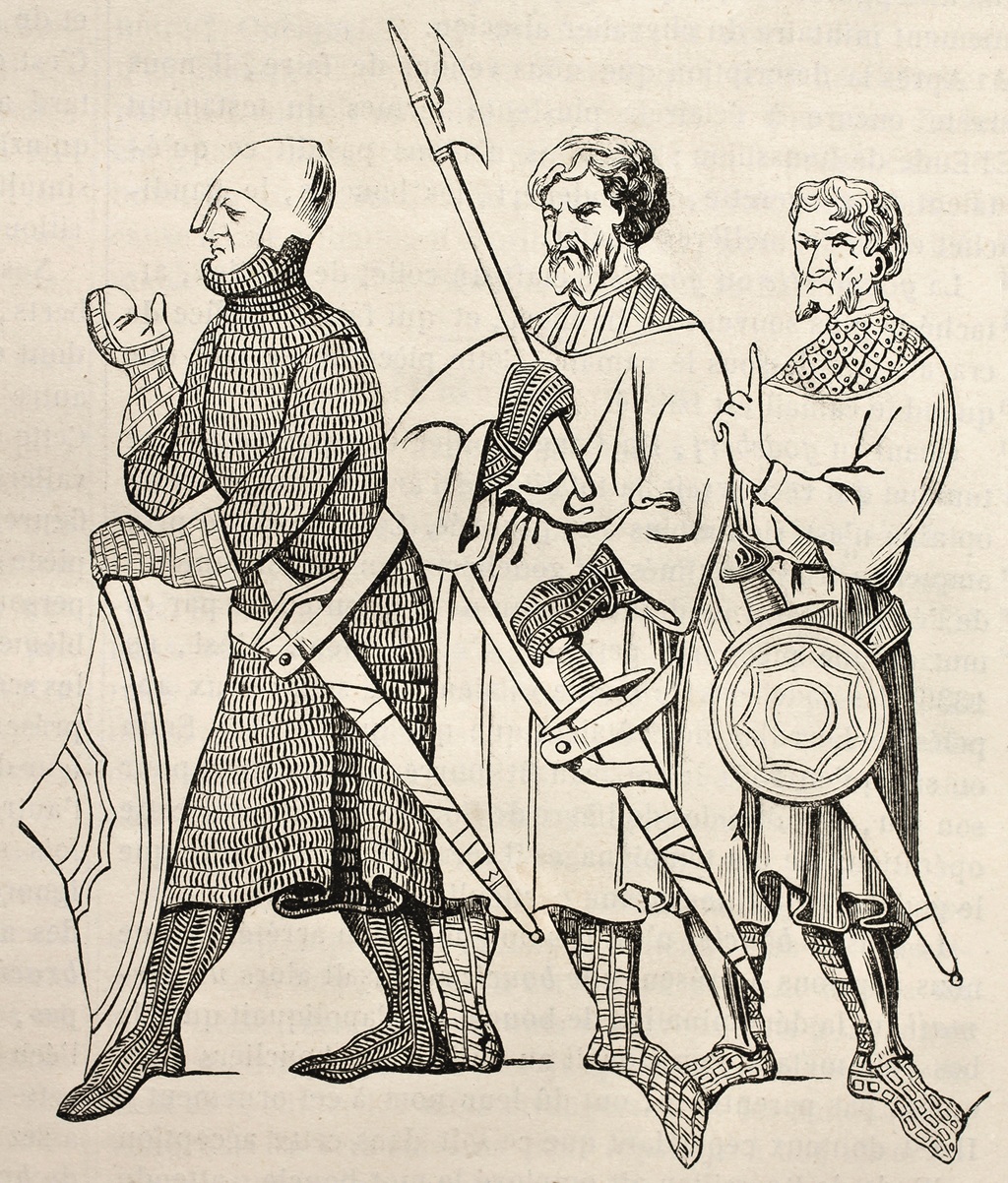
French fair-play draws from character traits of knights © Shutterstock
A cautious approach
Perhaps it is part of a State-approved programme to encourage ‘so Frenchy’ behaviour at any given opportunity?
Possibly not, but one thing is for sure – be it at rond-points (roundabouts, of which the Hexagone is famously fond) or a simple intersection (junction) – this shoulder-shrugging disregard for the code de la route (highway code) is a nationwide malaise.
While not necessarily dangerous – my own experience has convinced me to adopt a cautious, untrusting approach to other drivers as I approach a roundabout – it is, at best, infuriating. Yet here is the rub: I am happy to admit the occasional lapse in indicator etiquette myself, and it leads to much horn-honking and furious gesticulating from the ‘wronged’ French driver. But you can bet the price of a maison de maître in Monbazillac that the very same driver will have displayed the very same disregard at least ten times already that day.
This ‘do as I say, not as I do’ attitude – the phrase has a direct French equivalent, faites ce que je dis, pas ce que je fais – along with never admitting to one’s mistakes or shortcomings, is a set-in-stone French trait. At its root is how the French adopt (or not) the notion of le fair-play, a phrase fondly used by Shakespeare and which the French are happy to use themselves without inventing their own translation.
Scathingly, in the 1979 spy novel by American writer Trevanian (the nom de plume of Rodney William Whitaker), the character Le Cagot, who had been educated in France, says: “The concept of fair play is totally alien to the mentality of the French, a people who have produced generations of aristocrats, but not a single gentleman; a culture in which the legal substitutes for the fair; a language in which the only word for fair play is the borrowed English.” Harsh, indeed. Fair play harks back to chivalrous notions developed among knights and included such rules as:
- ne pas attaquer un ennemi désarmé – do not attack an unarmed enemy
- défendre les faibles, être fidèle (à son royaume, son souverain) – defend the weak, be loyal (to your kingdom, or your sovereign)
- être courageux – be courageous
- être généreux et hospitalier – be generous and hospitable
- tenir parole – keep your word
- avoir de bonnes manières – have good manners
In France, politician Charles de Montalembert was the first to use the expression in 1856, to advocate for “the need to hear all sides of the question discussed, to give the floor to all interests, to all parties” in political debates. The irony is that history has shown the French to possess all of the above qualities in spades; on a personal note, when not driving, the number of times I have encountered anything resembling a lack of fair play can be counted on the fingers of one hand. It seems that once behind the wheel, however, it goes out the window like a discarded Gauloise. And that is because, well, c’est comme ça…
Share your driving in France experiences: email [email protected]
From France Today Magazine
Lead photo credit : Photo: Shutterstock
Share to: Facebook Twitter LinkedIn Email
More in customs, driving, life in France
Related Posts



Leave a reply
Your email address will not be published. Required fields are marked *