
The Ninth Art: How Comics Became a Cultural Institution in France
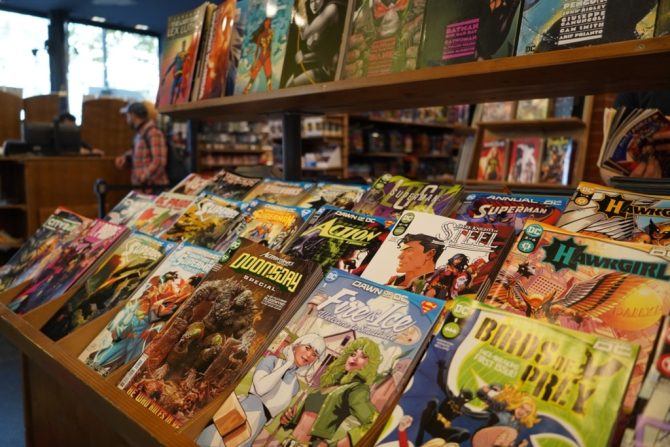

Few places in the world cherish the comic book medium like France.
The country is home to Europe’s largest comic book festival—the Festival International de la Bande Dessinée d’Angoulême—which attracts thousands of fans and industry professionals annually.
Sales of bandes-dessinées (BD) have surged, with 1 in 4 books sold in France now being a comic book. Between 2019 and 2021, the market nearly doubled from 48.4 million to 87.2 million sales per year, driven by the COVID-19 pandemic and a government-supported Culture Pass that subsidised book purchases for young people. Even as the market adjusted in 2023 with an 11% decline, the highest-selling book of that year was Astérix et le Griffon, selling over 1.5 million copies.
My introduction to the captivating world of graphic novels occurred when I was given a copy of L’Arabe du Futur by Riad Sattouf upon its release in 2015. This profoundly changed my perception of comics, and since then, I have regarded the medium as one of my favourite ways of consuming non-fiction and autobiographical accounts.
Comics remain a dominant force in the French literary landscape—and I understand why.
Different genres: manga, graphic memoirs, journalistic comics
To begin, it is important to understand the many different types of comics. Comics in France encompass a wide range of genres and subgenres, appealing to all tastes and interests. Some key categories include
- Graphic novels (romans graphiques): Often tackling more serious themes, these include autobiographical and investigative works like L’Arabe du Futur by Riad Sattouf, Algues Vertes (on environmental activism), and Persepolis by Marjane Satrapi.
- Classic BD (bande-dessinée): Beloved titles such as Tintin and Asterix have defined generations of readers and continue to sell millions of copies worldwide.
- Journalistic Comics: These use the graphic novel format to tell real-life stories, providing insightful commentary on politics, history, and social issues, such as Cent Mille Ans by the reporters Pierre Bonneau and Gaspard d’Allens.
- Manga & Manfra: While Japanese manga dominates sales, the rise of “manfra” (French-originated manga) showcases a unique fusion of styles and storytelling.
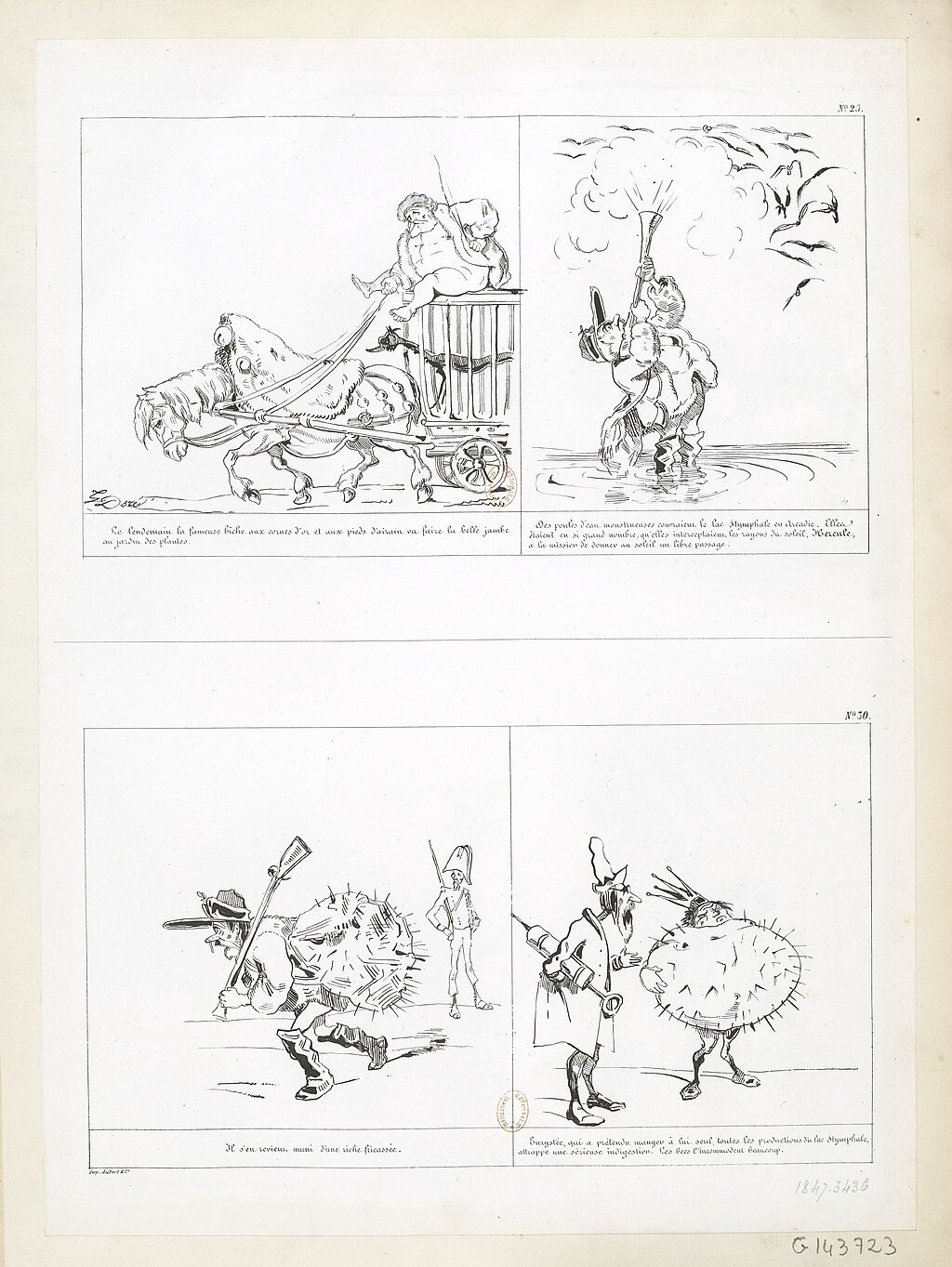
Gustave Doré’s ‘Les Travaux d’Hercule’ was one of the first comic book strips in France
The origins of BD
The history of bande-dessinée stretches back centuries, with its roots in illustrated narratives dating as far back as medieval manuscripts and early woodcut prints. However, the modern comic format began to take shape in the 19th century. One of the earliest pioneers was Gustave Doré (1832–1883), better known today for his grandiose illustrations of Dante’s Inferno and scenes from the Bible. However, in his youth, Doré was a prolific comics artist. In 1847, at the age of just 15, he embraced the BD format, producing thousands of illustrations and four full-length comic books, including The Labours of Hercules. He was regularly published in Le Journal pour rire, a satirical periodical established by Charles Philipon. Despite Doré’s later renown as a fine artist, his contributions to BD remain largely unrecognised.
By the late 19th and early 20th centuries, the BD medium flourished in European newspapers and magazines, particularly as serialised comic strips. Illustrated periodicals such as L’Illustration and Le Petit Journal featured humorous or adventurous stories told through sequential art, a format mirrored in American newspapers of the time.
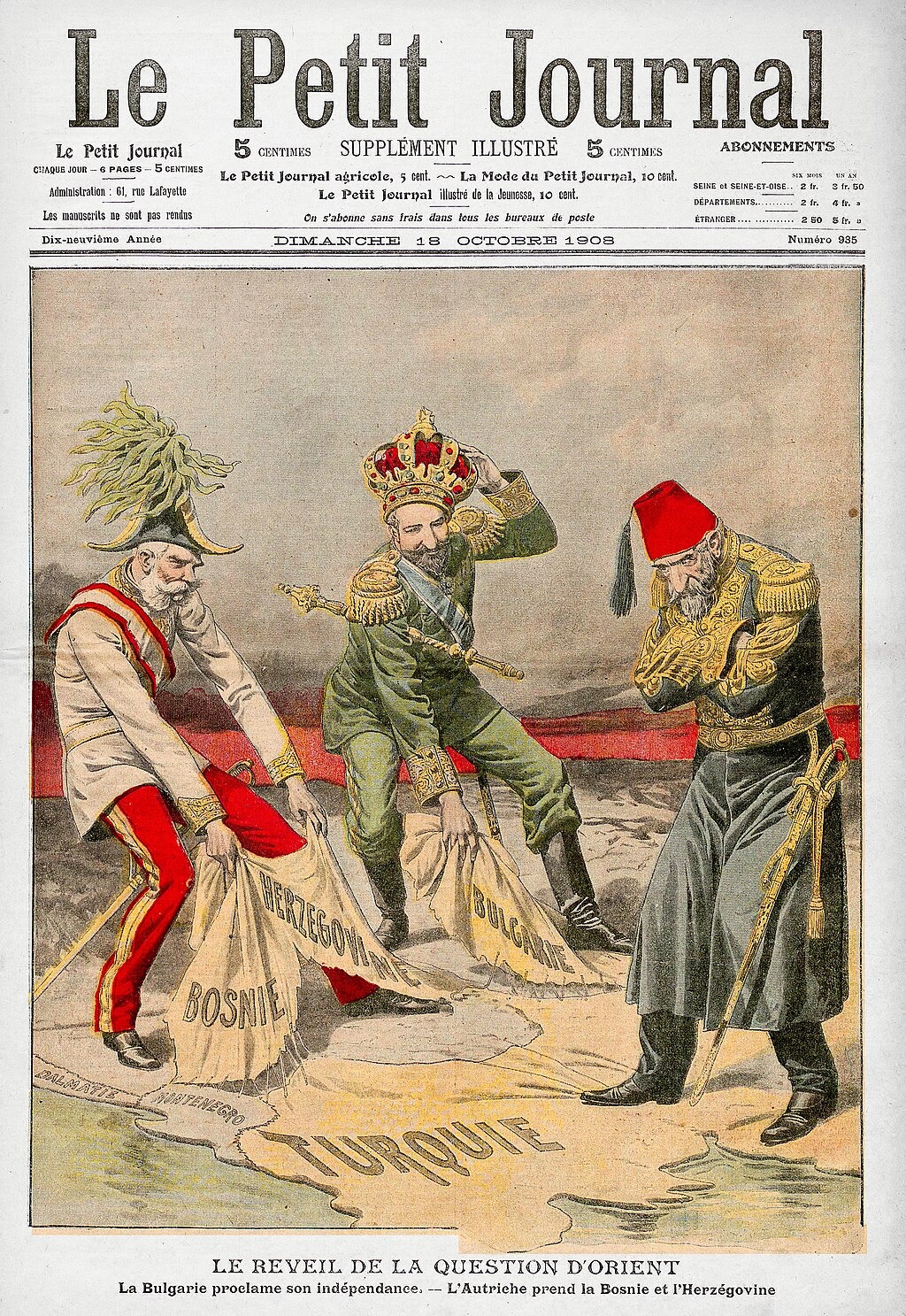
Le Petit Journal used illustrations with satirical captions to depict the news. Here, the Balkan crisis in 1908.
The bande-dessinée under siege in post-war France
In the aftermath of World War II, the French government took measures to control the influence of foreign comics, particularly American imports, which were seen as culturally invasive and potentially harmful to young readers. This led to the 1949 Law on Publications Aimed at Youth (Loi du 16 juillet 1949 sur les publications destinées à la jeunesse), which imposed strict regulations on comics, effectively prohibiting many foreign imports while also censoring content deemed inappropriate.
This law not only limited access to American superhero comics and crime thrillers but also placed constraints on French creators, pushing the BD industry toward more “acceptable” content. Despite these restrictions, the Franco-Belgian comics industry continued to develop, with figures such as Hergé (Tintin), André Franquin (Spirou et Fantasio), and René Goscinny (Astérix) cementing the medium’s cultural significance.

René Goscinny (left) in Amsterdam
Why in French?
The modern Franco-Belgian BD tradition traces back to the early 20th century, with Tintin (1929) by Hergé and Asterix (1959) by Goscinny and Uderzo becoming global icons. Though Belgium is a key player, many of its most famous comics are in French, broadening their appeal beyond Flemish-speaking audiences. The medium’s literary and artistic respectability grew over time, particularly in the 1970s and 1980s, when figures like Moebius and Enki Bilal elevated BD to an art form worthy of museum exhibitions and government recognition.
The 1970s onwards: the renaissance of BD as an art form
The perception of BD in French society underwent a radical transformation in the 1970s and 1980s. Once dismissed by many as mere children’s entertainment, comics began gaining recognition as a serious artistic and literary form. This shift was partly due to the emergence of avant-garde publications such as Métal Hurlant, which pushed the boundaries of storytelling and artistic style, and partly due to institutional support.
Recognising BD as an important part of French cultural heritage, Minister of Culture Jack Lang launched the Quinze mesures nouvelles en faveur de la Bande Dessinée (15 new measures in favour of BD) policy plan in 1982. His efforts helped BD gain official recognition as Le Neuvième Art (the ninth art), a status reaffirmed by cultural authorities in 1997.
Jean “Mœbius” Giraud became one of the most celebrated figures of this movement, receiving multiple civilian knighthoods and posthumous honours. His influence extended far beyond France, with exhibitions of his work held at prestigious institutions such as the Fondation Cartier pour l’Art Contemporain.
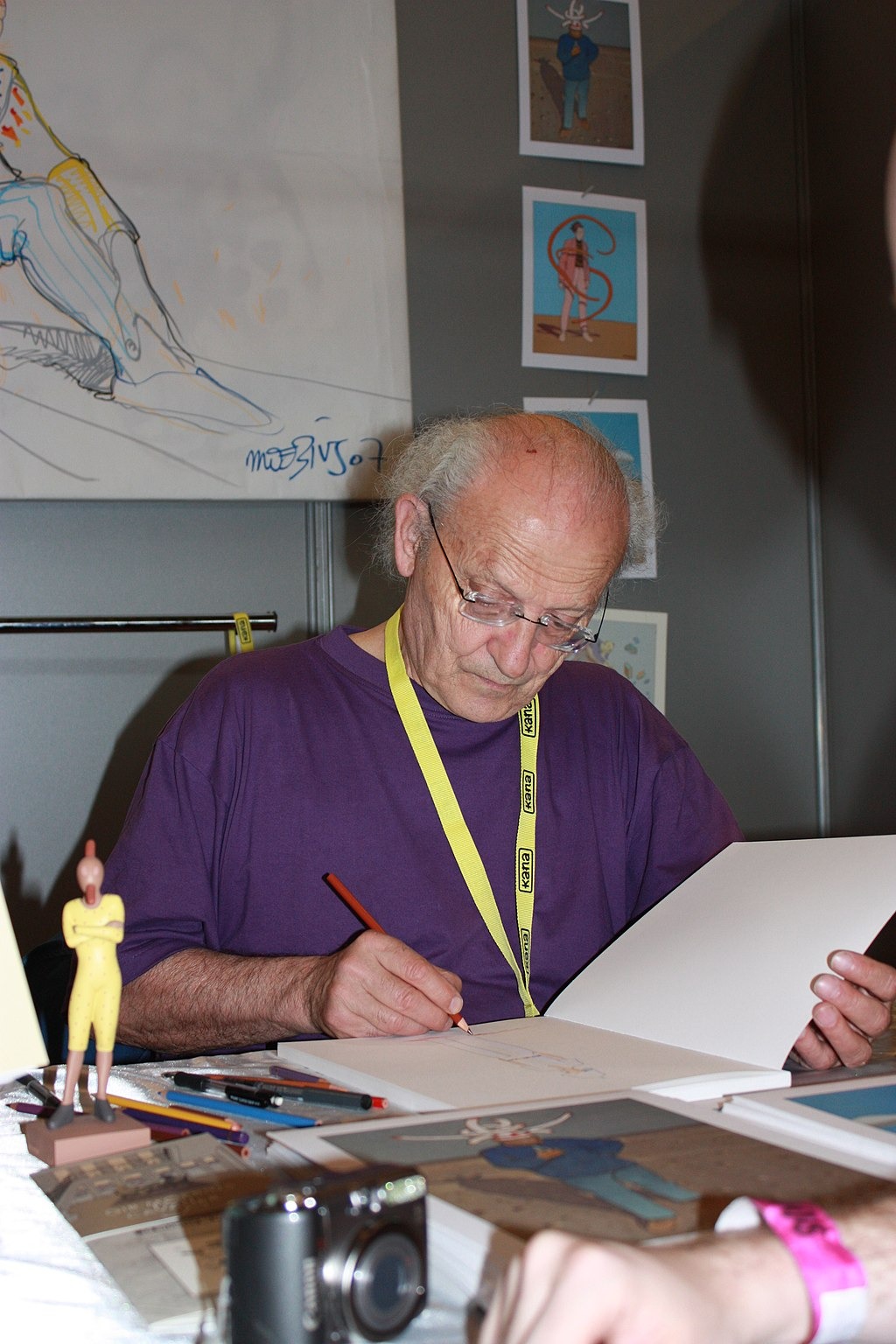
Jean Giraud aka Moebius at a book signing in Japan
Comics as journalism, comics as controversy
Throughout the 20th and 21st centuries, comics have played a crucial role in journalism and public discourse. Before World War II, comic strips were a staple of newspaper tabloids, often providing humorous or political commentary. In France, Charlie Hebdo became one of the most well-known satirical publications, using comics as a tool for political critique and social commentary.
Graphic novels and comic journalism are uniquely capable of conveying stories through a blend of text and imagery, often humanising complex or traumatic events in ways traditional media cannot. For marginalised voices, comics offer an accessible and powerful platform to highlight underrepresented perspectives. Joe Sacco’s Palestine and Footnotes in Gaza brought the realities of conflict zones to a global audience, while Marjane Satrapi’s Persepolis used the BD format to share a deeply personal account of growing up during the Iranian Revolution. In these contexts, comics are not just entertainment or reportage—they are instruments of cultural resistance, memory, and provocation.
Art Spiegelman’s Maus—a Pulitzer Prize-winning graphic novel that recounts the Holocaust through anthropomorphic characters—is another landmark work at the intersection of comics and journalism. Maus not only expanded the boundaries of what comics could achieve in terms of historical narrative and personal testimony, but also ignited controversy in school boards and censorship debates around the world. Its continued challenges in educational settings underscore the enduring tension between artistic freedom, historical memory, and public sensitivities.
Both the 2005 Jyllands-Posten Muhammad cartoons controversy and the 2015 attack on Charlie Hebdo also underscored the power—and the dangers—of political cartooning. The satirical magazine’s willingness to challenge authority through caricature made it both a beacon of free speech and a target of violent extremism.
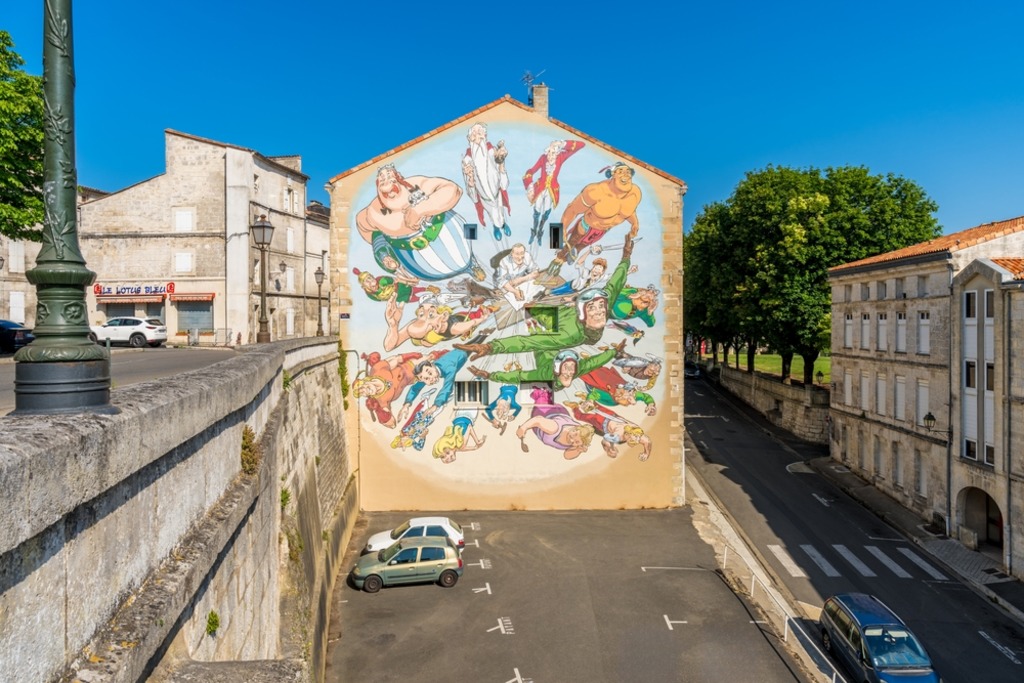
© Shutterstock
Rise of manga in France
Japanese manga has transformed the French comic book market, now accounting for more than half of all BD sales. Unlike in English-speaking markets, where Japanese publishers operate separately, France’s major publishing houses license, translate and distribute manga alongside traditional BD. This integration has allowed manga to flourish, with titles like One Piece, Demon Slayer, and Chainsaw Man dominating bestseller lists.
Yet, despite the popularity of manga, French comic book creators face financial struggles. According to a 2014 study, 53% of French BD authors earn less than the minimum wage. This issue has prompted discussions about better financial support for artists. At the Angoulême International Comics Festival, Rachida Dati, French Minister of Culture, acknowledged these concerns, stating, “My priority is not just comics but the people who make them.”
Government Support of BD
Whilst speaking to journalists at this Comics Festival in January 2024, French Culture Minister Rachida Dati also reinforced the importance of comics. “In recent years, comic books have been the fastest-growing sector in the publishing industry, not just in terms of content, but also in format,” she stated. And she had a point.
France’s government has historically recognised the cultural significance of comics and literature. The Pass Culture, a government initiative, subsidises cultural purchases for young people, including comic books. However, recent budget cuts in March of this year have reduced funding, limiting access for many adolescents. The initiative, which initially offered €300 to 18-year-olds, has been halved to €150, with other age groups seeing reductions or eliminations in their subsidies.
The decision to scale back the Pass Culture comes amid France’s broader efforts to rein in a ballooning national deficit, currently hovering at around 110% of GDP. Public spending on culture in 2023 stood at approximately €11 billion, yet the Cour des Comptes (France’s public audit authority) argued that the Pass Culture was not achieving its objectives efficiently. Culture Minister Rachida Dati defended the cuts, stating that the focus was shifting towards those most in need. The debate continues, with many young readers lamenting the reduced support for literature and comics.
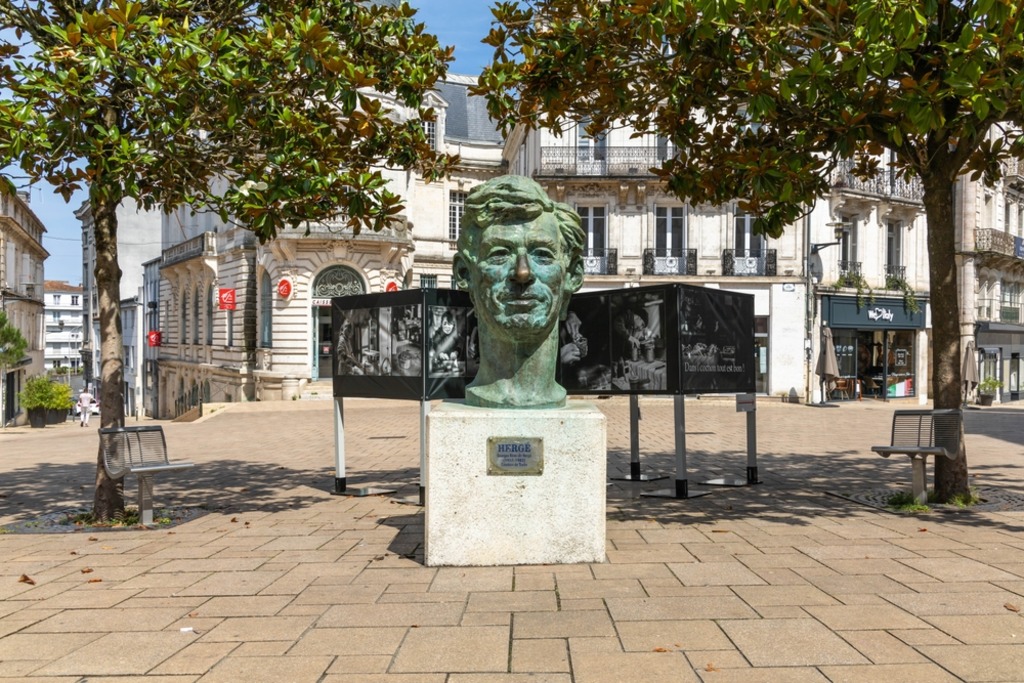
Statue of Hergé in Angoulême © Shutterstock
Museums and cultural recognition
France and Belgium remain at the forefront of BD appreciation, with both countries investing heavily in museums and cultural institutions dedicated to the art form. In Belgium, the Centre Belge de la Bande-Dessinée in Brussels, established in 1989, attracts over 200,000 visitors annually. The museum, housed in a historic Art Nouveau building designed by Victor Horta, showcases Belgium’s rich comic heritage, from Hergé’s Tintin to Peyo’s The Smurfs.
In France, the Cité internationale de la bande dessinée et de l’image in Angoulême stands as Europe’s largest BD museum. Announced in 1984 as part of President François Mitterrand’s cultural initiatives, the museum opened in 2009 and has since become a cornerstone of France’s BD scene. The annual Festival International de la Bande Dessinée d’Angoulême, held since 1974, remains the most prestigious comics festival in Europe, further cementing BD’s role in French cultural life.
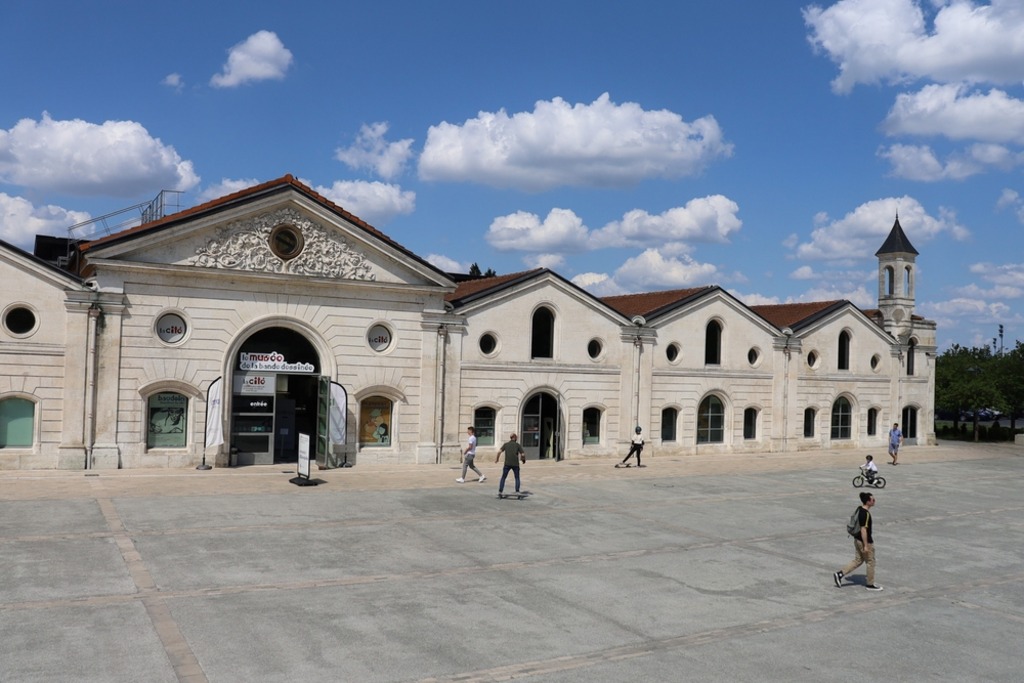
Musée de la Bande Dessinée, Angoulême © Shutterstock
My Top 5 Graphic Novels:
And if this has inspired you to pick up a graphic novel for yourself, here are 5 that I return to again and again—works that showcase the incredible range and depth of the medium:
- L’Arabe du Futur by Riad Sattouf – A sharp, autobiographical coming-of-age chronicle that blends humour and political insight to portray life across France, Libya, and Syria during the 1980s and 1990s.
- In the Kitchen with Alain Passard by Christophe Blain – A delightful blend of culinary insight and artistic flair, this graphic reportage invites readers behind the scenes of a Michelin-starred kitchen through charming sketches and storytelling.
- Persepolis by Marjane Satrapi – A powerful graphic memoir recounting the author’s youth in revolutionary Iran, told with bold black-and-white imagery and piercing emotional clarity.
- Algues Vertes: L’Histoire Interdite by Inès Léraud & Pierre Van Hove – An investigative graphic exposé uncovering the environmental and political scandal of toxic algae blooms on France’s Brittany coast.
- Duo Mambo by Philippe Dupuy & Charles Berberian – A visually poetic and loosely plotted comic covering the intimate rhythms of relationships.
My favourite BD shops in Paris include:
- Album BD, 5th arrondissement – A haven for BD enthusiasts with an extensive collection.
- Le Monte-en-l’air, 20th arrondissement – A unique space combining literature, comics, and art.
- Librairie Super Héros, 3rd arrondissement – Perfect for fans of both BD and superhero comics.
- Bulles en Vrac, 5th arrondissement – Hidden gem with passionate staff.
- La Caverne des BD, 12th arrondissement – An enchanting and welcoming spot for BD.
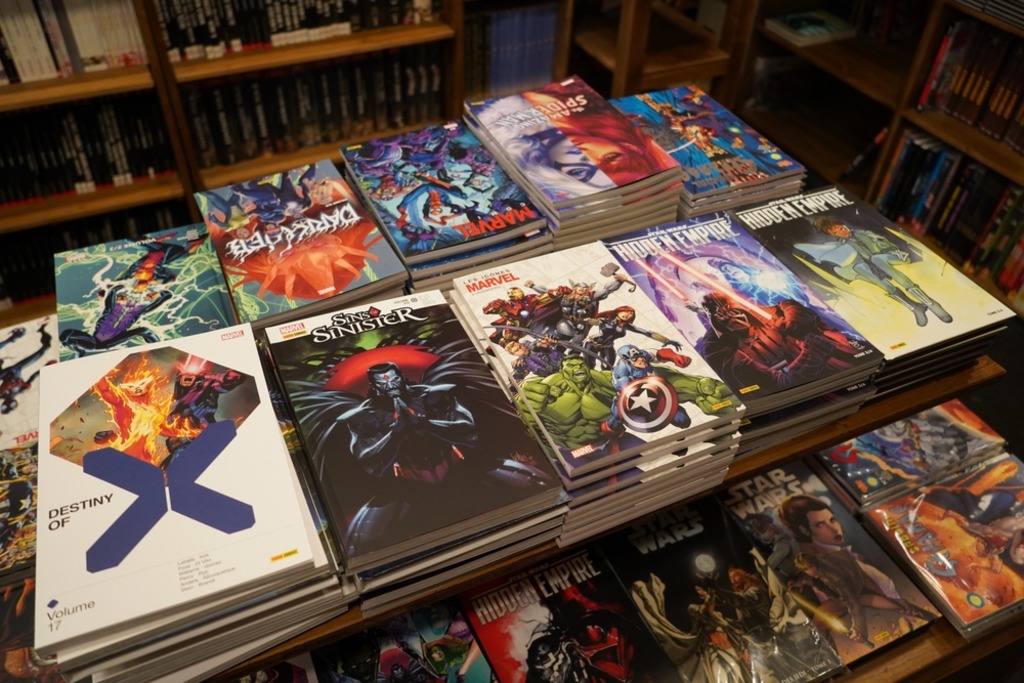
© Shutterstock
France’s deep-rooted appreciation for bande-dessinée has solidified comics as an essential part of the country’s literary and artistic heritage. From the classic adventures of Tintin and Asterix to the cutting-edge works of graphic journalism and the surge in manga readership, BD remains a vital and evolving medium. Despite challenges such as reduced government funding and financial struggles for creators, the cultural significance of comics in France endures.
With its dynamic blend of tradition and innovation, the world of French comics continues to captivate audiences, reflecting the broader cultural landscape of the nation. Whether through government initiatives, international festivals, or the everyday enthusiasm of readers, bande-dessinée remains not only a form of entertainment but an essential pillar of French culture.
Lead photo credit : © Shutterstock



REPLY