
In the Footsteps of Maurice Ravel
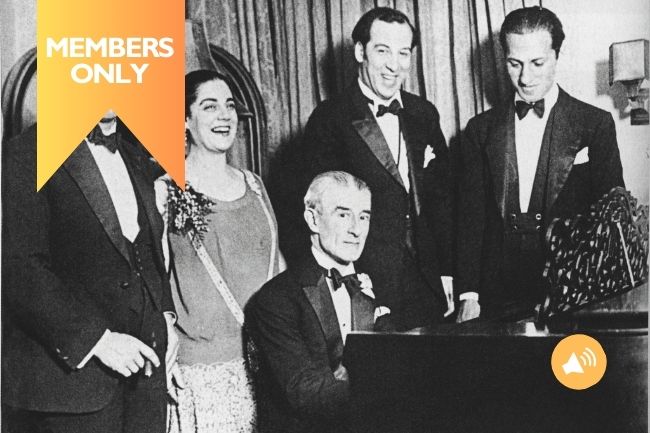
Adored across Europe and in America, Maurice Ravel was famous for his melodic compositions. On the 150th anniversary of his birth, we dive into his life story and the places that shaped his music.
📢 As you scroll through the beautiful images, why not listen to our narrated article? It’s a great way for France Today Members to dive deeper into the story while enjoying the visuals. We hope you love this experience, and we’d love to hear what you think—feel free to share your thoughts in the comments below! Happy listening!
It’s 150 years since the birth of Maurice Ravel who, in the 1920s and 30s, was celebrated as France’s greatest living composer. The anniversary will be marked at the Philharmonie de Paris, where concerts and an exhibition are planned, and at the Belvedere, the little house in Montfort-l’Amaury, about 40km west of Paris, where Ravel spent his last years. Here, he led a quiet country life between the tours which took him to many of the grand concert halls of Europe and America.
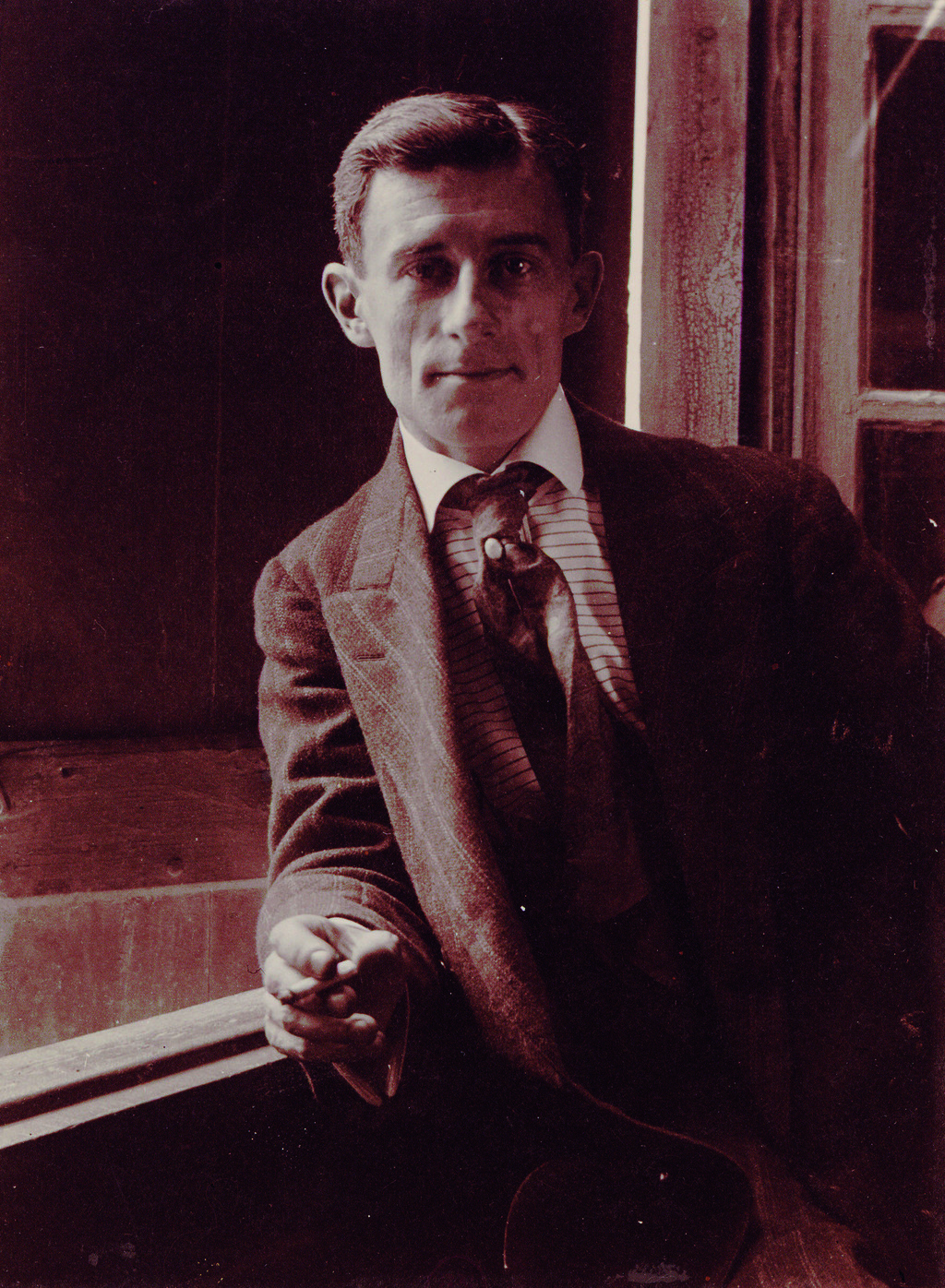
Maurice Ravel © Bibliotheque nationale de France
Ravel was born on March 7, 1875, and lived in Paris from the age of 3 months. As a small child he was influenced by the Basque songs his mother sang to him, and at 7, he began to learn the piano, encouraged by both parents. Clearly musically talented, he entered the Paris Conservatoire when he was 14, but his history there was a chequered one. When he failed several times to win the coveted Prix de Rome prize for composition, there was uproar.
His supporters were so outraged that old-school members of staff found his music ‘too advanced’ that the director of the Conservatoire was forced to resign. Nevertheless, some of his best-remembered pieces date from early in his career, including the graceful Pavane for a Dead Princess, written for piano in his early 20s and adapted as an orchestral piece a decade later. It was influenced by his Basque mother’s culture, both in his choice of a pavane, originally a Spanish courtly dance, and by the inspiration he took from the princesses he’d seen in Velázquez’s paintings. It’s an early example of his quest for perfectionism, for he explained that “I never leave a piece until I am sure that I can’t make it any better”. Similarly, when Sergei Diaghilev commissioned a score, Daphnis et Chloé, for the Ballets Russes, it was 3 years before it premiered at the Théâtre du Châtelet in Paris.
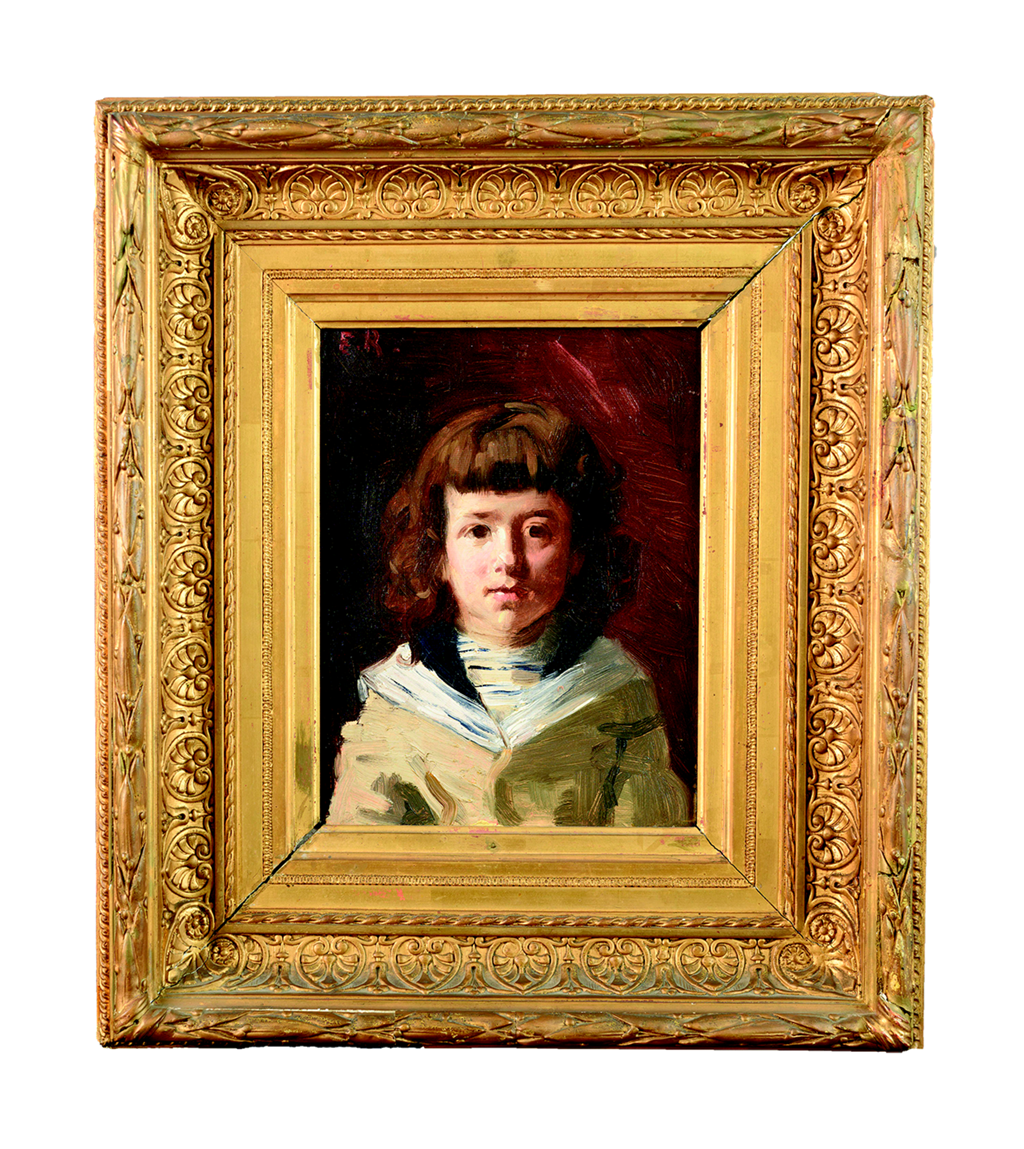
During World War I, Ravel served in the 13th Artillery Regiment, driving munitions lorries under heavy German bombardment. He had been rejected by the army several times on health grounds, but was determined to do his bit. He was discharged in 1917 and when his beloved mother died the same year, he fell into ‘a horrible despair’.
Unsurprisingly, he did not compose very much during this period. In 1921, however, his life took a new turn. He bought a house, the Belvedere, in the little town of Montfort-l’Amaury on the edge of the Rambouillet forest and settled there for the rest of his life.
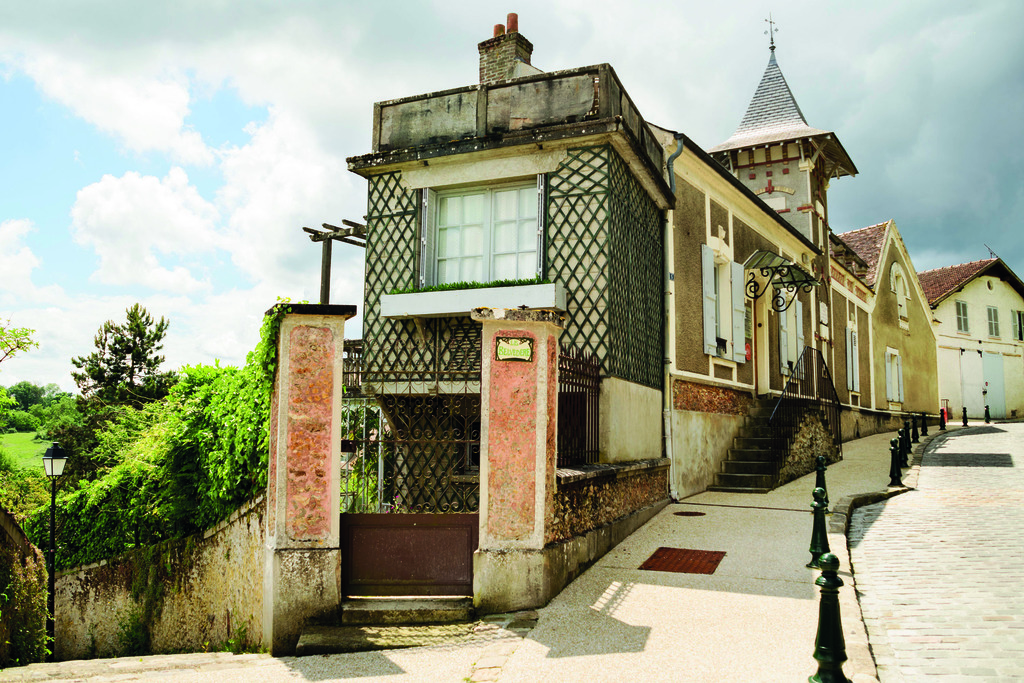
Ravel’s house © Julie Toupance
Big in America
His time was spent writing music, doing a little teaching and socialising with a group of close friends. He went into Paris quite frequently for concerts and to visit jazz clubs and he undertook tours at regular intervals, proving popular with appreciative audiences. In 1923-4, for example, he toured London, Belgium, Holland and Spain, but it was his 1928 tour to America which made the biggest impression. He loved America, especially for its jazz and spirituals and America loved him back. At one New York concert, where the programme was exclusively Ravel, he was greeted by a standing ovation as he took his seat. Surprised and flattered, he remarked, “This doesn’t happen to me in Paris”.
Well-known works from this period include an opera, The Child and the Enchantments, a magical tale based on a story written by Colette. The stand-out star from his entire repertoire, Boléro, was competed in 1928. Again, he had spent several years on it, calling it “a symphonic poem, without a subject, where the whole interest will be in the rhythm”. It was another Spanish-inspired piece, notable for its insistent beat, which he said was rooted in the sound of castanets and in which, over 17 minutes, “one long, very gradual crescendo” forms. Of it he remarked, drily, “I’ve only written one masterpiece, Boléro. Unfortunately, there’s no music in it”.
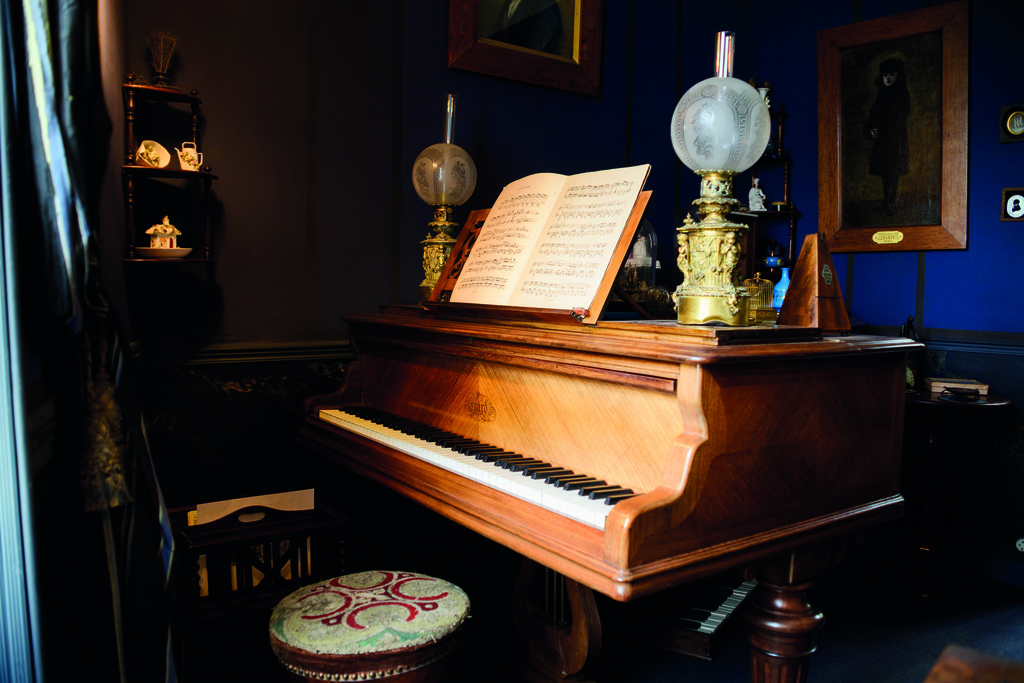
The piano in Ravel’s house © Julie Toupance
At weekends, it is possible to visit Ravel’s house at Montfort-l’Amaury (guided tours only, by arrangement) and there you get a sense of his personality. Of the décor, a stylish mix of patterned wallpapers and carpets in black, brown, cream and gold, he proudly claimed “I designed it all myself”. The piano and phonograph speak of his musical life, the battered suitcase, complete with his initials, is a reminder of his travels. There are family portraits, favourite games and puzzles and examples of the eccentric objects he liked to collect: a musical box designed as a bird in a cage, a macabre jack-in-the-box, a garish cup and saucer set. It’s said that his friends competed to bring him ever more outlandish gifts to amuse him.
Ravel was a private person who did not marry and who once remarked he thought it would be “impossible for anyone to live with an artist”. But he had a small, intimate group of friends, one of whom, Marguerite Long, recalled “his good humour and cheerful character” and his “legendary absent-mindedness”, always losing his luggage, his watch, his train ticket. There is much to suggest that he took great care with his appearance. His biographer, Roger Nichols, describes a photo of him taken in 1901, “impeccably dressed, in a straw boater, dark suit, striped socks and white shoes”, while a pupil he taught at home in the Belvedere recalled his stylish Japanese dressing gown, “black, with gold embroidery”, surely chosen to match the décor of the house!
The last few years of Ravel’s life were sad and difficult. Suffering from aphasia, he gradually lost first the ability to write music and then even to speak. He died in December 1937 after an unsuccessful operation to relieve the pressure on his brain. In his final years, his company was limited to his friends, but he was not forgotten: after his death a series of concerts in his memory was held in Paris. His repertoire may have been smaller than that of his contemporaries, but he was held in such regard that he was offered France’s highest honour, the Légion d’Honneur, although he refused it.
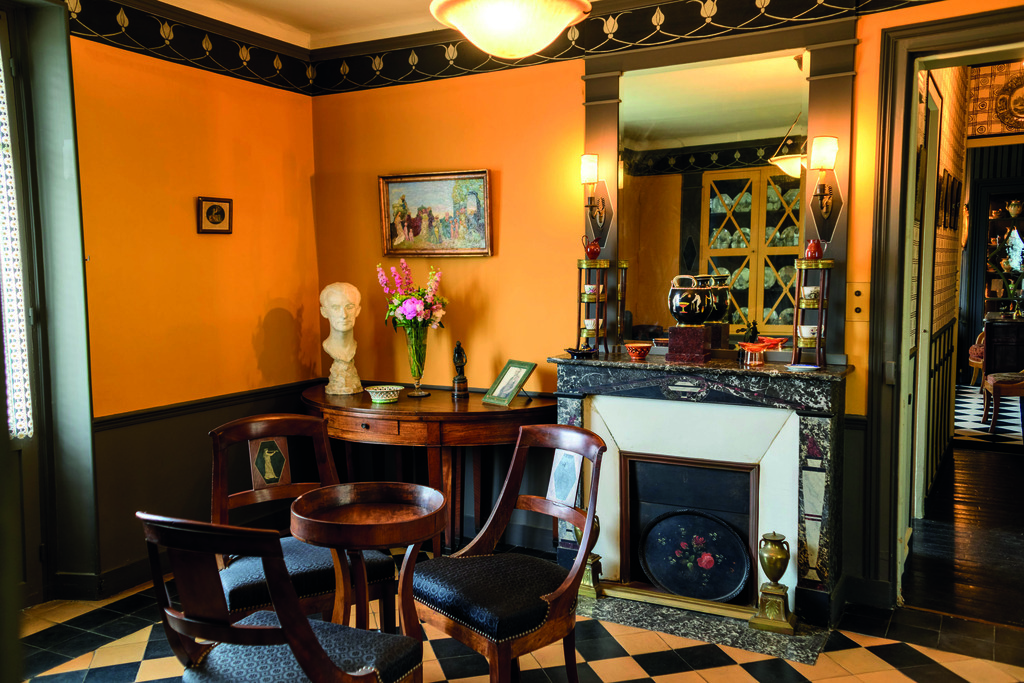
Inside Ravel’s home © Julie Toupance
A proud legacy
Today, Ravel is remembered as one of the 20th century’s finest composers, and the Philharmonie de Paris is using this anniversary year to offer a programme of concerts in his honour, along with a multi-sensory exhibition which will run until June 15. Many personal items will be on display, from his writing desk and concert waistcoats to some of his favourite mechanical toys and puzzles.
But the star of the show will be Boléro: a giant screen projection of the piece being played in surround sound by the Orchestre de Paris will form the centrepiece of the exhibition.
Ravel was born in the 19th century and composed in the early 20th, but his music is still played today in concert halls all over the world. He would surely be delighted to know how his work has lasted and to read comments such as this one, posted recently on Reddit, explaining the enduring popularity of Boléro: “It’s catchy as hell and it has a sort of optimism and cheeriness to it.”
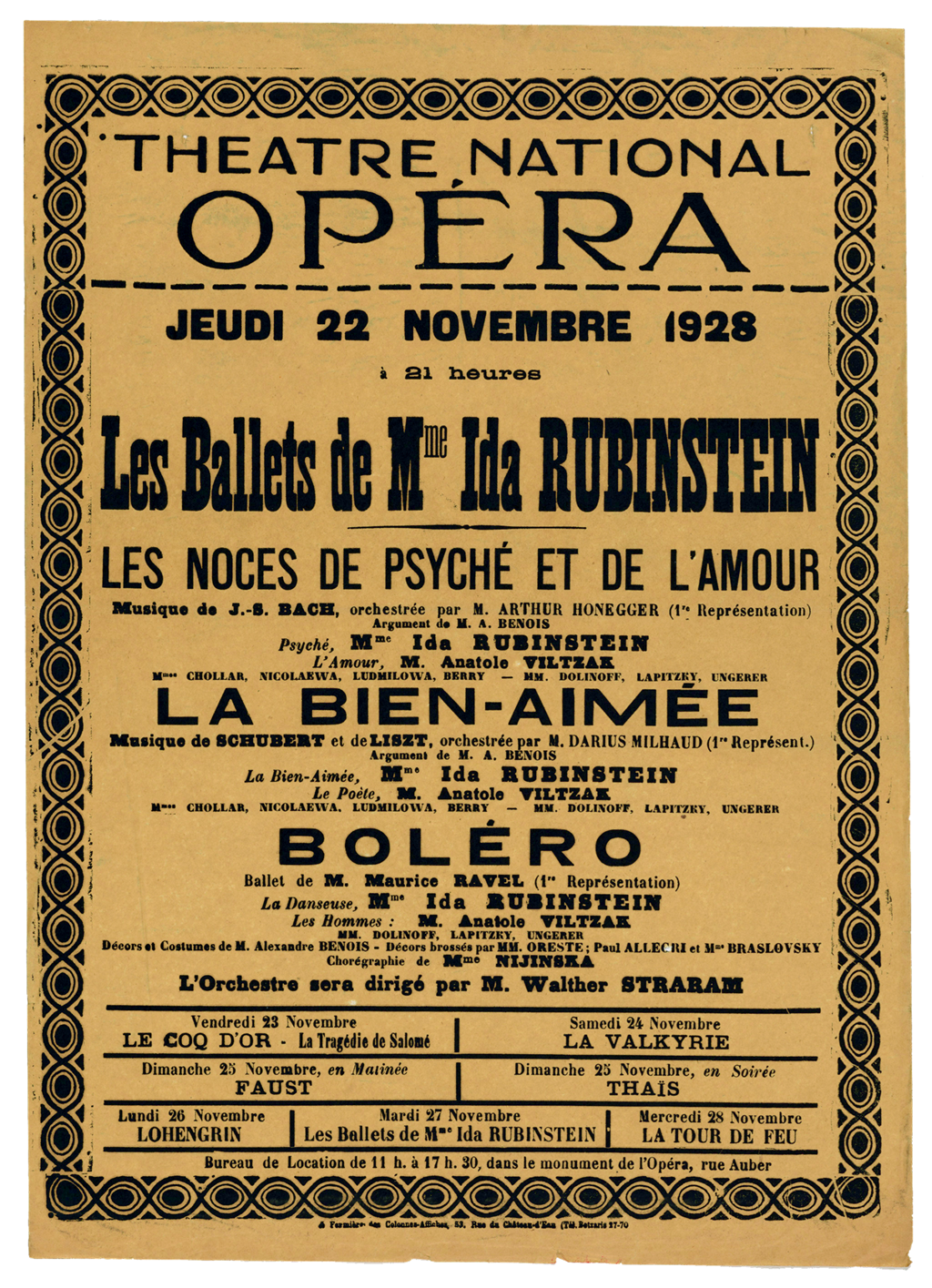
Guided tours of Ravel’s house at Montfort-l’Amaury https://bit. ly/3ZiUOMx
Philharmonie de Paris concert and exhibition hall philharmoniedeparis.fr/en
From France Today Magazine
Ohlala! It looks like you’re not a Member yet
Join to view this content!
(If you are a Member, log in or reset your password below or contact us so we can help)
- Log in
- Forgot password
Share to: Facebook Twitter LinkedIn Email
More in art, classical music, France Today Membership, French composer
Related Posts


By Marian Jones
Leave a reply
Your email address will not be published. Required fields are marked *