
The Ultimate Art Spring in Paris
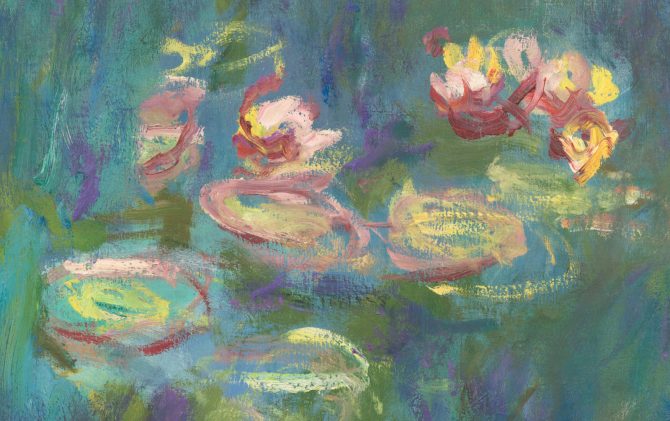
Cherry trees puff into bloom along the Seine, Linden trees flower on the Place des Vosges, crocuses prickle across pois-green lawns, and boulangeries unfurl decorated eggs and bells. It’s springtime in Paris, and the city is perking up and populating the pavement tables.
However, spring 2026 feels particularly special. Matisse, Rousseau and Renoir shows open this March in the glass and wrought-iron Belle Epoque splendour of the Grand Palais, L’Orangerie, and Musée d’Orsay respectively, forming a dialogue with the blossomy city outside, and all within strolling distance of each other.

Grand Palais
‘I was so prepared to leave this life behind that I feel like I am living a second life.’ Aged nearly 80, following health problems and an operation in which he nearly died, and subsequently mostly working from bed or his wheelchair, Matisse’s near-death experience transformed his art. The artist created in a dazzling frenzy. Matisse 1941–1954: The Urgency of Reinvention, opens on 24 March (until 26 July) at the Grand Palais, and covers this late-in-life flowering. Art poured out of him like daisies speckling the Bois de Boulogne.
‘It is a kind of springtime,’ says Claudine Grammond, the curator. His subject matter at this time, she explains, was often from his memories of Tahiti, where he had been almost 20 years before, with ‘floral metaphors, with representations of flowers, trees, algae; biomorphic vocabulary, which is everywhere in the last years of his creation.’

The exhibition opens in the intimacy of Matisse’s studio, then unfolds outward, each room expanding in scale and ambition, from modest works on paper to his most enveloping architectural visions. He drew incessantly, often through sleepless nights, and, in lieu of painting, began the cut-outs. Grammond observes that “using scissors to cut shapes…reminds you of something from your childhood; it’s very fresh.” These works, born of physical limitation, nevertheless radiate colour and irrepressible vitality.
Like octogenarian David Hockney, whom she invokes as similarly connected to the natural world, Matisse underwent his own surge of creativity. Curator Grammond’s personal highlight is Jazz, where his 20-page book, rarely shown in its entirety, is installed in a circular room. Here is the wonder of the elderly artist ‘drawing with scissors’ from his bed: fables, of Icarus, of circus, accompanied by specially composed music – it’s hard to imagine art more alive.
Musée de l’Orangerie
A short walk from the Palais-Royal, across the crocus-carpeted Tuileries, another kind of blooming awaits. At the Musée de l’Orangerie, Henri Rousseau: The Ambition of Painting (25 March to 20 July) gathers the artist’s jungle dreams in a show that feels like an arrival. Rousseau belonged to a younger generation, yet, like Matisse in his final years, he worked less from observation than from the theatre of his imagination.

For the first time, the Barnes Foundation in Philadelphia has allowed nine paintings on loan: jungles, portraits, and allegories dense with stylised foliage, their deliberate, almost devotional detail contrasting and complementary to Matisse’s late abstractions.
Rousseau did not commit himself fully to art until the age of forty-nine, having spent decades as a customs officer, and the exhibition follows his transformation. Seen in the light of the Paris spring, his painted worlds, at once strange and precise, seem to breathe.
Musée d’Orsay
Walk across the Seine on the pedestrian-only Passerelle Léopold-Sédar-Senghor (strung with rusting love locks) with distant views of reborn Nôtre Dame, to find Renoir & Love A Joyful Modernity (17 March to 19 July) the Musée d’Orsay, perhaps the most springlike of all the three. Older than Matisse, and one of the first impressionists, Renoir’s passion was intimacy and human connection, painting the emerging bourgeoisie, leisure, pretty clothes and faces.

The show includes Le Déjeuner des canotiers [Luncheon of the Boating Party] (1880-1881), on loan from the US, where the escapist tableau of the crowded lunch, fruit, a dog, and an array of the young and beautiful feels like an escape from the everyday trials of life. Renoir said, ‘I know very well how hard it is to make people admit that a painting can be truly great painting while remaining joyful.’
His reputation for focussing on loveliness, has, according to the show’s curators, ‘sometimes led to his being marginalized among the great painters of modernity.’ This exhibition proposes otherwise, making a case for joy, and these depictions of dances in the park, or sun-dappled picnics, feel as if they have a direct connection to the leisure outside, the green-painted chairs in the Tuileries, the petanque courts and the brasserie tables. This is painting where the glass of wine is always half full.
Musée Rodin

Of course, spring is just an ideal time to be in Paris. Just beyond Orsay is the Musée Rodin, where daffodils are already pushing through the clipped lawns, the gilded Les Invalides’ dome still visible through the sharply pruned trees. Farther north, at the Musée de Montmartre, the garden that Renoir once painted from his studio windows is beginning its annual return, the bare branches softening, the first flowers emerging. Walk in any gravelly Parisian park, or under the riverbank blossom and you’ll find the same drama of renewal and of flourishing that once preoccupied these great artists.
To enjoy the exhibits at their best, a stay in Batignolles, in the 17th arrondissement, has a sense of neighbourhood life, largely untouched by mass tourism. Tucked onto a residential street, the Hôtel Joli Môme has long balconies overlooking a tableau of lives lived opposite in Parisian apartments. There’s popcorn in reception and wine and cheese for aperitif – Renoir would approve of these small pleasures. From here it’s just a half hour walk to Montmartre, the artists’ neighbourhood, still with vestiges of its bohemian past.

Stepping outside the galleries, you’ll find the painted gardens give way to real ones; Rousseau’s jungles dissolve into clipped hedges and chestnut trees; Matisse’s paper flowers, his stained glass, his jazz, created with an otherworldly light; Renoir’s dancing couples, a waltz away from attaching a padlock to a bridge. The boundary between art and the city, never absolute, seems to disappear most this spring.
Eurostar from £39 one way (2hrs 16 minutes)
Hotel Joli Môme (doubles from £100)
Lead photo credit : Les Nymphas Musée d’Orsay ©
Share to: Facebook Twitter LinkedIn Email
More in museums in Paris, Paris, Paris museums, Spring in Paris
Related Posts


Leave a reply
Your email address will not be published. Required fields are marked *