
On the Cheese Trail in Northern France
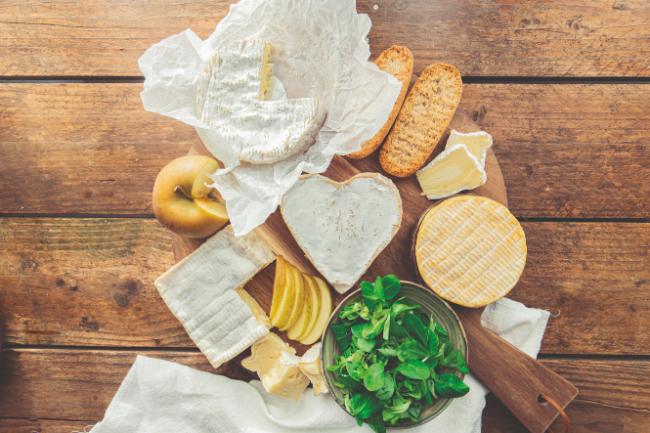

From fromage so controversial it is banned in the USA to one which saw a king dicing with death, we explore some cheeses of northern France and their impressive history.
Every Francophile knows there are few things more quintessentially French than fromage. In fact the country is so notorious for it that former President Charles de Gaulle once jokingly quipped: “How can anyone govern a nation that has 246 varieties of cheese?” However, despite strong competition from Roquefort in the far south, with the tiny village’s cheese previously winning the seal of approval of King Charles VI, the north takes its cheeses very seriously too – so much so that statues have even been erected in honour of the inventors of France’s favourite flavours.
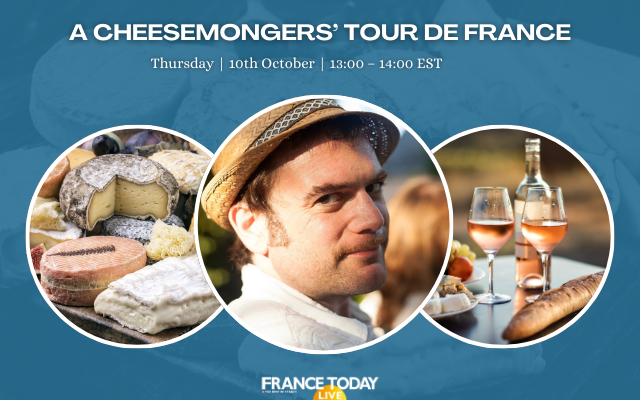
Don’t Miss! A Cheesemongers’ Tour De France
Join us on Thursday 10th October for an exclusive talk featuring Ned Palmer about his new book “A Cheesemongers’ Tour de France”. We’ll be giving three copies of the book away to viewers so make sure to stick around until the end for your chance to win!
A touch of magic
Leaving the bright city lights of Paris behind, it’s not far to travel to reach Meaux, the authentic home of Brie, arguably France’s most famous cheese. The aim is to discover the real Brie – a flavour so refined it’s a million miles away from the ultra-processed, industrially produced pasteurised version you might sample anywhere else. Meaux is a mere stone’s throw from Disneyland Paris, and unlike many of the cheese pilgrimage sites in the north, it’s surprisingly accessible by public transport, taking just 25 minutes by train from Gare de L’Est. Driving takes almost as twice as long. Here you can sample a cheese that is illegal in some countries of the world. The USA, for instance, has banned all imports of Brie de Meaux because its trademark recipe uses unpasteurised milk. According to American rules, all raw milk cheeses must be aged for a minimum of 60 days before being imported.
However, following those rules would mean Brie would lose exactly those qualities which give this melt-in-the-mouth cheese its distinctive flavour. Besides that, some argue that pasteurising cheese robs it of important nutrients. That said, the heating process does kill bacteria. Anyone who is very young or elderly, pregnant, or immunocompromised may want to avoid raw milk cheese but for many foodies who are able to consume it safely, the taste is so irresistible that they’ll never return to a bland, rubbery, industrially produced supermarket Brie ever again.
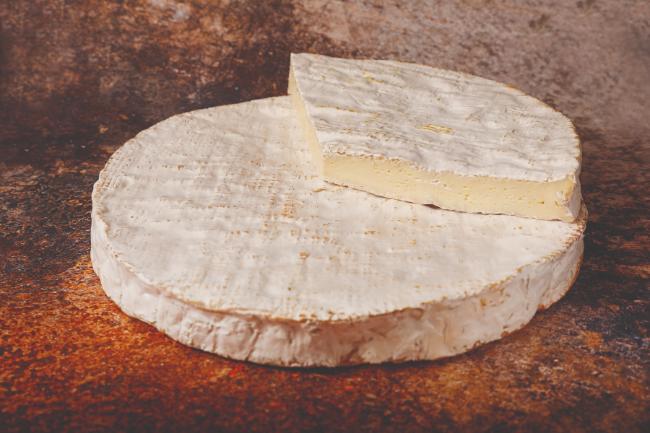
the town of Meaux; Brie de Meaux is made from raw cow’s milk, © SHUTTERSTOCK
Sweet, creamy and boasting a taste and scent of everything from mushrooms to hazelnut to apples, it is produced by several farms in the region, including the only one in the country which makes the cheese by hand. The Ferme des 30 Arpents, in the nearby town of Favières, exclusively uses the freshest milk sourced directly from its herd of 230 cows before staff painstakingly spend hours moulding it manually until it transforms into the cheese turophiles know and love.
Brie de Meaux was rumoured to have been part of the infamous final supper of King Louis XVI, just moments before the capture that would lead to his death. At the height of the French Revolution in 1791, he’d been forced to flee furious mobs in Paris, but stopped in Varennes (in the Meuse) and had a bite to eat – one that would ultimately prove fatal. As he lingered to enjoy his Brie plate, the revolutionaries discovered where he was, captured him and dragged him back to Paris to face his death. While “let them eat Brie” has never quite caught on as a catchphrase, visitors will want to know where to sample a cheese so good a king risked his life for it. Head to the Maison du Brie de Meaux (bookable in advance), which gives the lowdown on production methods, from milk harvesting to cultivation in cellars. On some days there are tastings, while on others, historical re-enactments take place, and men can be spotted wearing huge round hats designed to resemble a round of Brie.
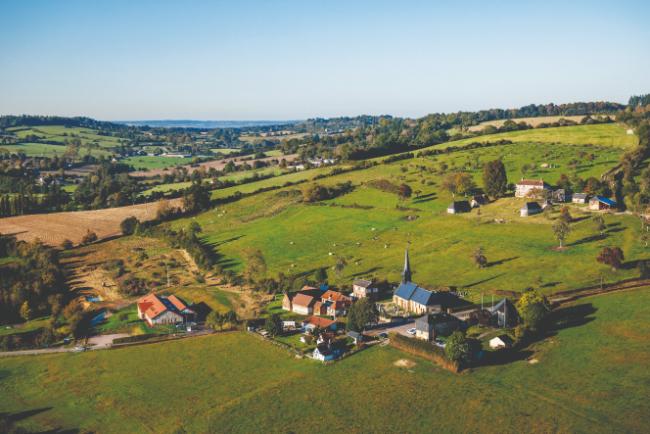
The village of Camembert © The Explorers
The rise of Camembert
Plenty of restaurants nearby, from La Maison Meldoise to Les Bistro Zof, include authentic Brie de Meaux in their menus too. A walk through Jardin Bossuet, which is a floral paradise in spring, is highly recommended to enjoy a taste of the countryside. Meanwhile, if you’re looking to head totally off the beaten track, drive to Favières (25 minutes south) and visit the Brie farm there.
Brie de Melun is a less famous – but still tasty – alternative to Brie de Meaux, with a memorable, slightly salty after-taste. Made in the same region as Brie de Meaux, but using lactic acid instead of animal rennet, it’ll appeal to vegetarians, and should be looked out for on menus.
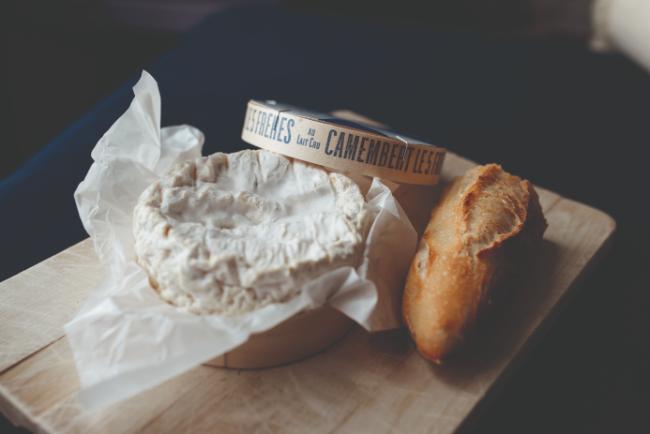
Of course, a top contender for Brie’s crown as the “King of Cheeses’ is Normandy’s Camembert. Venturing to the village of the same name will definitely require a car, but it’s worth the effort. It’s here that, just two years after the French Revolution began, another melt-in-the-mouth cheese was born. The same year that King Louis XVI sampled his last ever bite of Brie, a priest fleeing the Brie region due to religious persecution from atheists gave a farmer’s wife, Marie Harel, an insight into one of his secret recipe techniques. He’d been sheltering at her farm at the time. Following his tips, she launched a cheese that was so relished by soldiers during the First World War, it became a national symbol of resistance, and which today is one of the most famous cheeses in the world. Tragically for Harel, she died before she could see the full impact her creation would have. It was lifted from obscurity to national notoriety in 1863, when Napoleon III was inaugurating a railway line route between Paris and Granville. Harel’s grandson offered him a taste of the cheese, which didn’t yet even have an official name, and he was so mesmerised by its flavours, he set about having it served regularly at the Tuileries Palace, which was burnt to the ground less than a decade later. The villagers never lost their gratitude to Marie Harel for putting their village on the map, and in 1856, they erected a statue of her. It was destroyed by Allied forces in the Second World War, but was lovingly rebuilt afterwards.
Today, the Maison du Camembert teaches the production secrets of the famous cheese via a museum, factory visit and tasting session all in Camembert itself. This is the place to go if you’re short on time as the tastings here give the option of an introduction not just to Camembert de Normandie, but to the cheeses of Livarot, Pont-l’Évêque and Neufchâtel too. All four, named after the villages they come from, are the only ones in Normandy to hold the prestigious AOC certification. Meanwhile, the factory here aspires to become one of the best producers of organic AOP cheese in the country, while remaining true to traditional values and ladle-moulding the product by hand.

On the trail
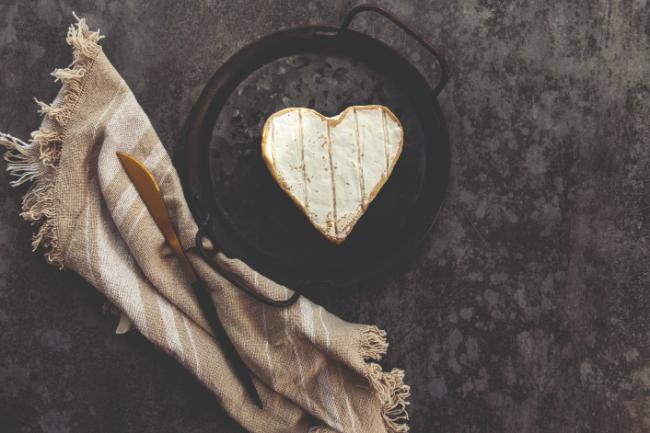
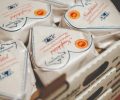
Surrounded by peaceful countryside, grazing cattle and historic half-timbered buildings, there’ll be a temptation to linger here for some slow tourism, especially as there’s an additional museum dedicated to Camembert in the nearby Orne town of Vimoutiers. The Normandy cheese trail also boasts Livarot and Pont- l’Évêque, with their own tasty fromageries – yet many visitors find there’s a special place in their hearts for Neufchâtel. Don’t be fooled by the heart shape – it’s surprisingly salty. That said, it has a sweet history: during the Hundred Years War, dairy maids would gift the cheeses to English soldiers to show their affection, hence the distinctive shape. These are just some of the unmissable highlights for anyone with cheesy travel ambitions in northern France and there’s no doubt they’ll capture any foodie’s heart.


TRAVEL ESSENTIALS
GETTING THERE
BY AIR/TRAIN
Take a flight from any major UK city to Paris, or catch a Eurostar train from London St Pancras International, then proceed by car (45 minutes) or train (25 minutes) to Meaux. For the Normandy trail, the village of Camembert is 2h40m from Paris by car, while from there it’s a 16-minute drive to Livarot, a further 35 minutes to Pont-l’Évêque, and then 1h30m to Neufchâtel-en-Bray.
BY FERRY
Brittany Ferries runs a service between Portsmouth and Caen, From there, Pont-l’Évêque is 37 minutes by car, while the village of Camembert is just over an hour’s drive away. After arriving in Normandy, the cheese trail is easy to follow. However, getting between some villages by public transport is virtually impossible, so a vehicle is advised throughout.
TOURIST INFO
Main tourist office for Normandy: en.normandie-tourisme.fr
Tourist office for Meaux: Meaux Marne Ourcq Tourisme, meaux-marne-ourcq.com
From France Today Magazine
Lead photo credit : You will find a fine assortment of delicious cheeses in northern France, along with museums which explain their production, ©MATHILDE BOCLET
Share to: Facebook Twitter LinkedIn Email
More in French cheese, French food, gastronomy, northern France
Related Posts
By Chloe Govan
Leave a reply
Your email address will not be published. Required fields are marked *