
The Summer of Cézanne

Celebrate Cézanne in Aix-en-Provence this summer with exhibitions, tours, and tributes to the pioneering painter.
“When you’re born here, it’s hopeless, nothing compares,’ the artist Paul Cézanne wrote of his hometown Aix-En-Provence. It doesn’t take long ambling the cobbled streets flanked by sandstone mansions or perusing its famous markets, to fall under the city’s Provençal charm. Step out into the glorious surrounding countryside, catch a glimpse of the majestic Sainte-Victoire Mountain and it’s easy to see why Aix and its landscapes were a lifelong muse for the artist. Without doubt Cézanne is Aix’s most famous son. This summer, the city is doing something it never quite managed in his lifetime: honouring Paul Cézanne with the recognition he long deserved. Cézanne 2025, is a season of international exhibitions, guided experiences and major site reopenings that trace the footsteps of a man who changed the course of modern art.
In 1861, aged 22, Cézanne left Aix for Paris determined to make his mark. “With an apple, I will astonish Paris,” he famously declared. His still lifes, provençal landscapes, and paintings of bathers gave generations of artists permission to break the rules. He was more interested in emotion as a driver rather than painting realistically. The history of painting would never be the same.
Today, he is celebrated as a founding figure of modern art. Picasso and Matisse both referred to him as “the father of us all.” But during his life, recognition was hard won, especially in his hometown. The Musée Granet, now at the heart of this summer’s celebrations, once refused to display his work. A former director even said Cézanne would never be exhibited there during his lifetime.
Now, that same museum is staging the most important Cézanne exhibition in years.
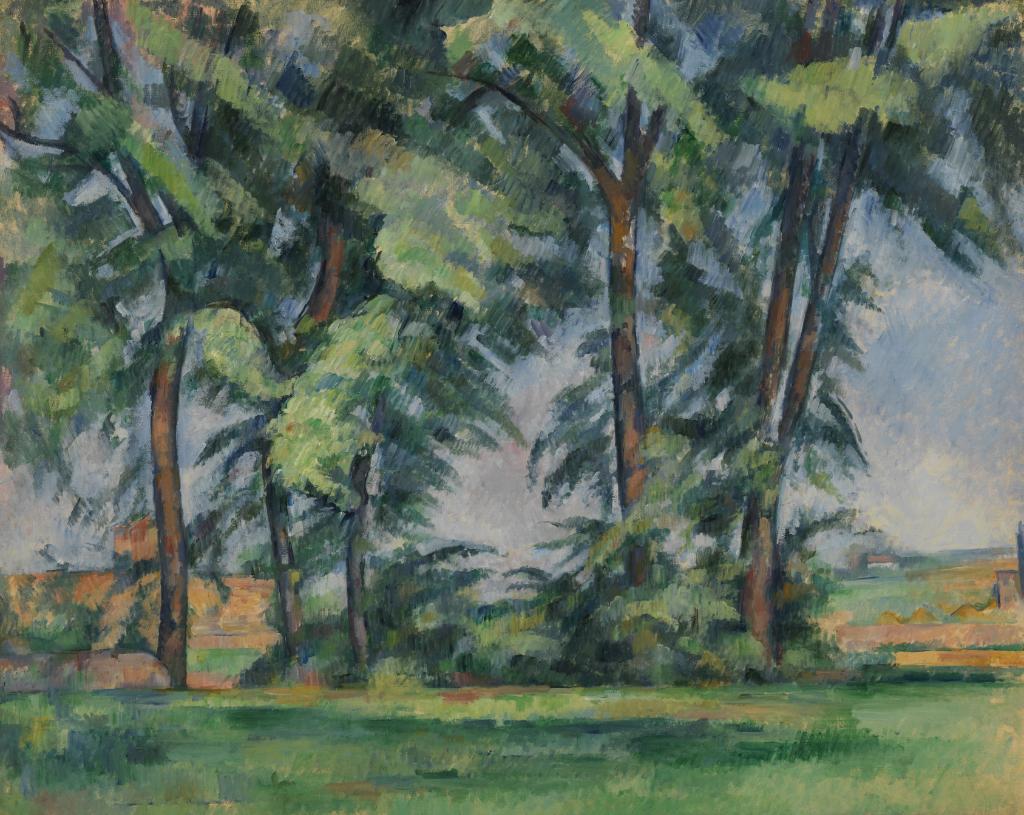
Paul Cezanne, Les Grands Arbres au Jas de Bouffan, vers 1883 © The Courtauld
Cézanne au Jas de Bouffan – A Landmark Retrospective at Musée Granet
From June 28 to Oct. 12, the Musée Granet will host an extraordinary international retrospective featuring more than 130 works, including paintings, drawings and watercolours. The exhibition offers an intimate portrait of Paul Cézanne and highlights his deep connection to his family home, le Jas de Bouffan, and the surrounding landscapes of Provence.
Organized thematically, the exhibition presents all the major subjects that defined Cézanne’s body of work. Visitors will encounter his iconic bathers, still lifes, and portraits, as well as evocative landscapes painted at the Jas de Bouffan estate. His self-portraits, arranged throughout the galleries, provide a personal counterpoint to the broader themes.
The works have been loaned from museums and collections across the globe, including the Musée d’Orsay Paris, the Kunstmuseum Basel, the Art Institute of Chicago, the Fitzwilliam Museum in Cambridge, the National Gallery in London, the Getty Museum in Los Angeles, the MOMA New York, and from as far as Tokyo.
The result is a comprehensive and deeply personal exhibition that places Cézanne back in the heart of the city where his art began.
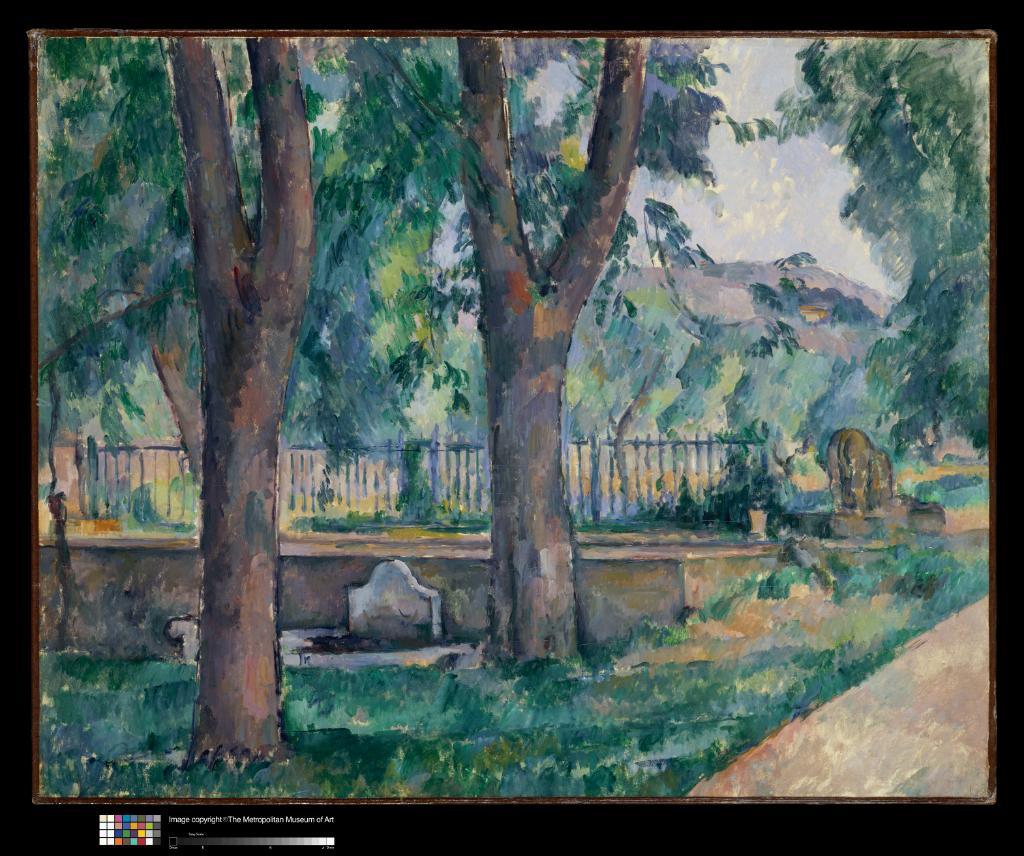
Paul Cezanne, Bassin et lavoir du Jas de Bouffan, vers 1885–1886 © The Metropolitan Museum of Art, Dist. GrandPalaisRmn _ image of the MMA
Jas de Bouffan: Cézanne’s Family Home Reopens
Just outside the city centre, the Cézanne family estate, Jas de Bouffan, is set to reopen to the public from June 28 to November 2, 2025, after extensive restoration. The estate, which remained in the Cézanne family for 40 years, was acquired in 1859 and served as both a home and studio for Paul Cézanne. The 5-hectare grounds inspired numerous works, including 36 oil paintings and 17 watercolours. Notably, Cézanne painted “The Card Players” here.
During renovations inside the manor’s Grand Salon, where he painted directly on the walls, a newly discovered mural fragment was recently uncovered beneath layers of plaster. Believed to be one of his earliest known works, it adds an exciting new dimension to the story of his artistic beginnings. It is a place that shaped and was shaped by the artist.
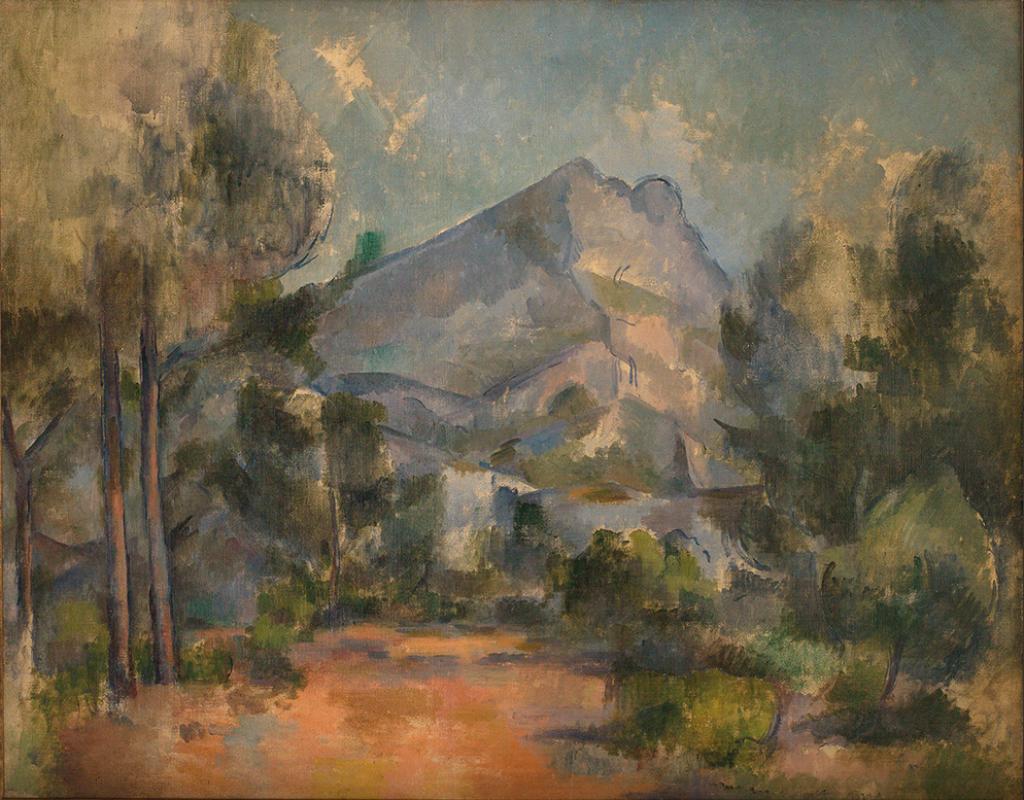
Paul Cezanne, La Montagne Sainte-Victoire, 1897 [email protected]
Bibémus Quarry and the Geometry of Nature
Cezanne loved to be in nature to create. One of his favourite escapes was to the Bibémus Quarries, where the artist painted some of his most geometric and abstract landscapes that paved the way for cubism.
Between 1890 and 1904, Cezanne spent long periods here, capturing the structure and nuances of the quarry’s honeycomb-coloured rocks. Today, visitors can walk guided trails through the exact locations seen in many of his famous works. The light, angles and atmosphere remain largely unchanged.
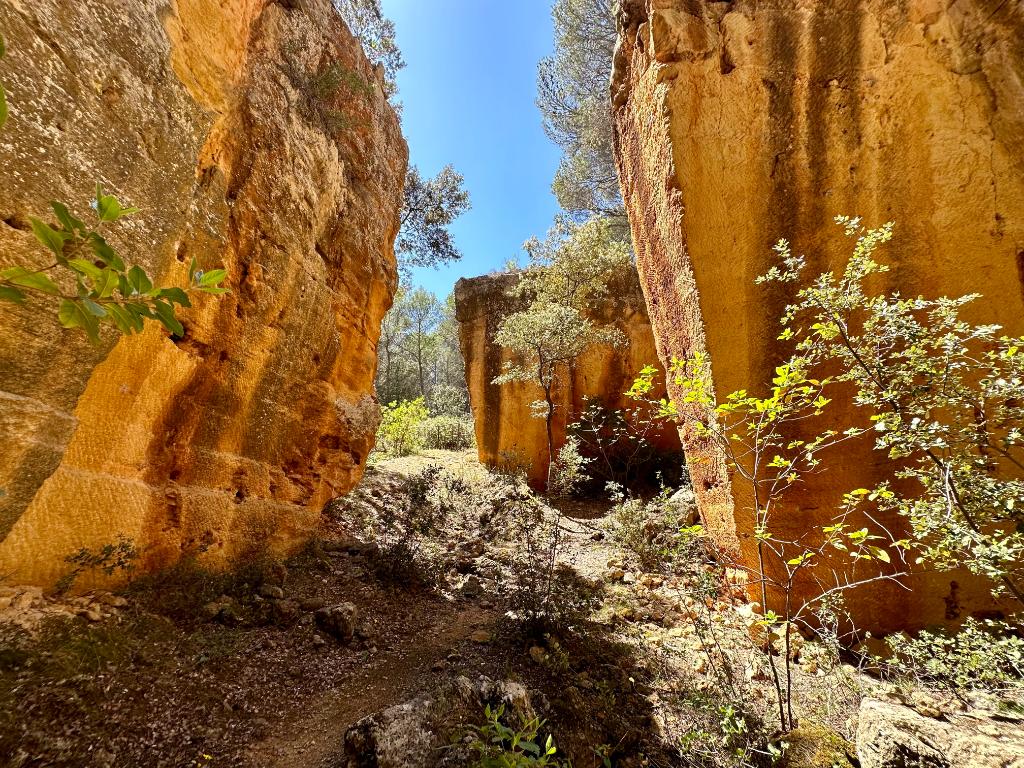
Bibémus quarries, Aix-en-Provence © photo M. Fraisset -1
The Lauves Studio
On a hillside above Aix, Cezanne’s final studio in Les Lauves has reopened following a two-year restoration. Designed by the artist in 1901, it was here that he created some of his most iconic late masterpieces, including The Bathers. The studio has been preserved with quiet authenticity. Providing a fascinating insight into how and where he worked right up until his last days. Nearby, take in the sweeping view of the Sainte-Victoire from Le Terrain des Peintres, a beloved vantage point Cézanne returned to time and again, especially at sunset, to capture the mountain’s ever-changing light and form.
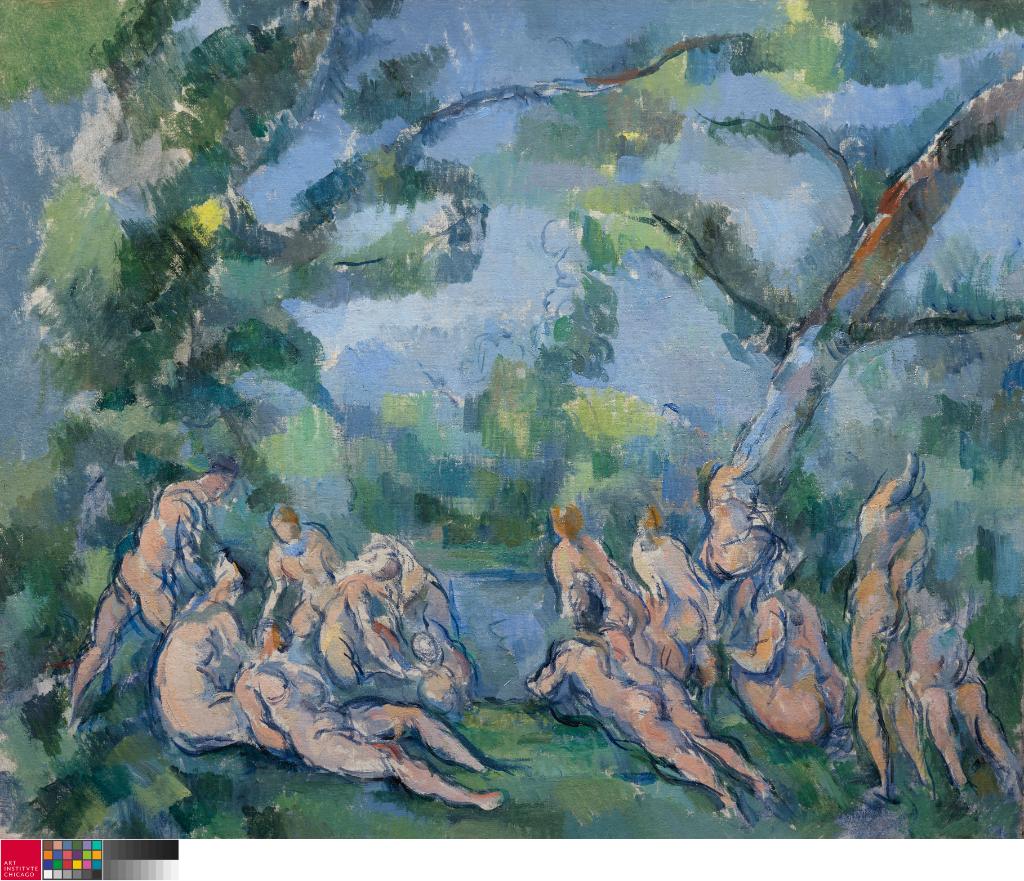
Paul Cezanne, Baigneuses et baigneurs, 1899–1904 © Art Institute of Chicago, Dist. GrandPalaisRmn _ image The Art Institute of Chicago
Echoes of Cézanne at Hôtel de Gallifet
While most of Cezanne 2025 looks back, the Gallifet Centre d’Art offers a contemporary response. The exhibition Echoes of Cézanne brings together emerging and established artists whose work, whether by design or otherwise, engages with his legacy, not through imitation but reinvention.
The show explores how Cézanne’s questions, about structure, colour, light and perception, still shape the art world today. It is a reminder that Cézanne’s influence remains a living force. Fittingly, Hôtel de Gallifet stands directly opposite the school where Cézanne and Émile Zola were students and inseparable childhood friends.
From his beloved Lauves studio to the museum that once rejected him, Aix is offering a full-circle tribute to an artist who defined what it means to carve your own path. And now, more than a century later, the city where it all began is finally ready to see it clearly.
For full information and booking: cezanne2025.com/en
Lead photo credit : Atelier des Lauves © Sophie Spiteri
Share to: Facebook Twitter LinkedIn Email
More in Aix en Provence, art, Cézanne 2025, French artist, Provence, South of France
Related Posts

Leave a reply
Your email address will not be published. Required fields are marked *