
Love Letter to France: Lemony Hues of Winter
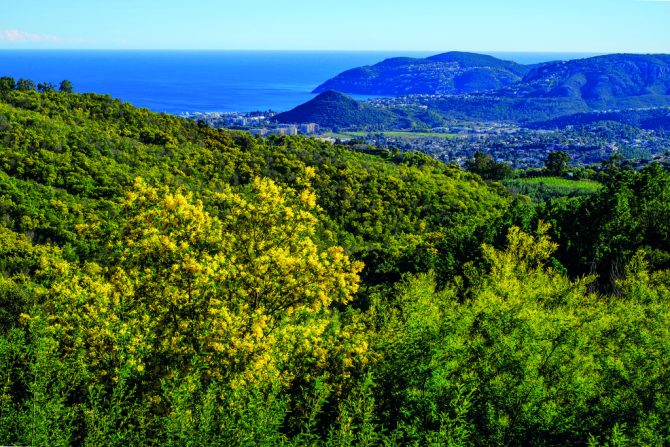
Provence in winter is bursting with vibrant hues of yellow from the mimosa and citrus fruits.
It is still not quite spring but the days are already inching towards the light. Each day a new, illuminated second or two is added to our early mornings and evenings. The early-year season is a time of oranges and lemons, both colours and fruits. It seems to me that all the seasons offer a variety of tones that dominate. Perhaps they are signals for the early-bird pollinators? Late January brings us the pale pink almond blossoms, first food for early-rising honey bees. Everyone around the Med knows that the flowering almond signals the debut of spring.
The citrus crop
Down our way, January and February are the months of les agrumes, the citrus fruits. When I stroll about the terraces and gaze upon our small trees with their shiny green leaves, garlanded with many baubles of fruits, I think of Christmas trees. Is this where the idea of decorating trees was first conceived? We grow luscious oranges, seeping with juice, clementines, lemons of many varieties and crazy shapes. Limes, also. Our bitter oranges are for vin d’orange and marmalade.
If we leave all fruits on the trees till after Christmas, it really looks as though someone has decorated the groves with these naturally-grown baubles. Bursting balls of vitamin C. The peel or zest of a lemon with its essential oils in the pores is edible. Some claim that zest consumption can aid with resistance to certain cancers. I don’t know. It’s interesting, though, that the word zest also describes energy. Occasionally, we candy our lemon or orange skins, making jars of delicious sweets. We use whole citrus fruits for roasting fowl-chicken, turkey, guinea fowl. The lemon juice cuts through the fat and adds a wondrous Mediterranean tang to the meat.
If you have never visited the Menton Lemon Festival, held this year between February 15 and March 2, I urge you to add it to your bucket list. I wrote a novella for Amazon titled The Girl in Room Fourteen so inspired was I by my first outing to the festival. In this chillier season and in a world where the news is so dark, the floats, created out of thousands of kilos of citrus fruits, are awe-inspiring. Every year there is a theme. 2025’s is Journey to the Stars.
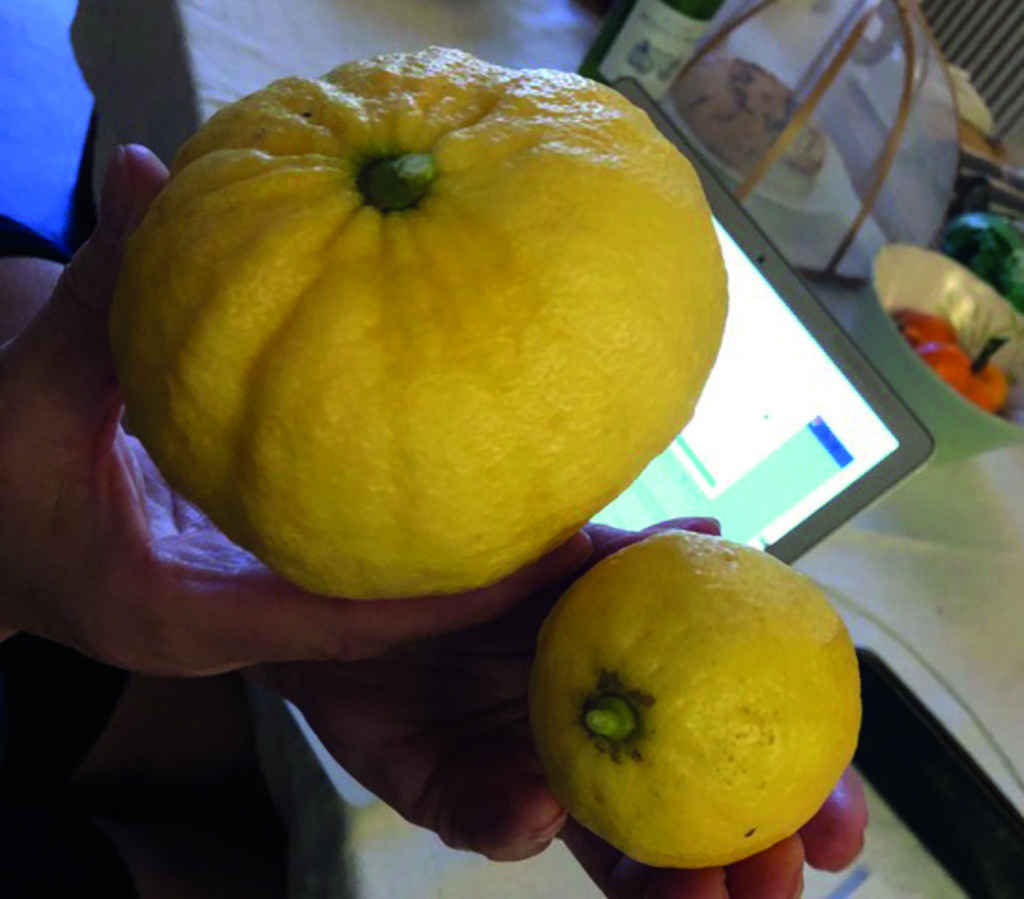
homegrow very large lemon
The heady scent of mimosa
Thinking of January yellow, let’s not forget the mimosa, which is an intoxicating addition to this season of twilights. As golden as the sun, a million fluffy balls make up the flower, soft like a newly-born chick’s down feathers, and perfumed to the hilt. A flower intent on seduction. The bouquet is short-lived if picked and taken indoors, but for a few short days the house is redolent with the sweetest of scents. If you want to drown in this perfume, head to Mandelieu-la-Napoule for the Mimosa Festival, which was founded in 1931.
While there, enjoy a cocktail. The mimosa cocktail was perhaps, or not invented by Coco Chanel at the Ritz in Paris to toast days of glorious sunshine and her heady yachting life along the Côte d’Azur. From Mandelieu, take a ride inland to the village of Tanneron. In January, the route is ablaze with these flowering trees, seas of mimosa spreading in every direction as you ascend the hills. Once you arrive, order your mimosa cocktail, sit back, relish the view. These are the secrets of Provence, never enjoyed by those who only visit in summer.
Carol Drinkwater is an award-winning actress and the best-selling author of The Olive Farm series. Her latest work is An Act of Love, set in WWII France.
From France Today Magazine
Lead photo credit : (c) Shutterstock
Share to: Facebook Twitter LinkedIn Email
More in column, Côte d’Azur, life in France, Riviera, winter in France
Related Posts



Leave a reply
Your email address will not be published. Required fields are marked *